
PAKISTAN
By Ramesh Raja
Karachi at a Crossroads
Karachi stands at a critical juncture where social failure is directly undermining physical infrastructure. As a civil engineer who has spent many years working on public projects and as a reform-minded citizen, I must say this clearly: Karachi’s bridges are not just aging—they are being deteriorated, and Karachi’s people are not just addicted—they are being neglected. This double failure of infrastructure and humanity demands urgent and combined action based on engineering sense, public health, and responsible governance.
The City Being Stripped Bare
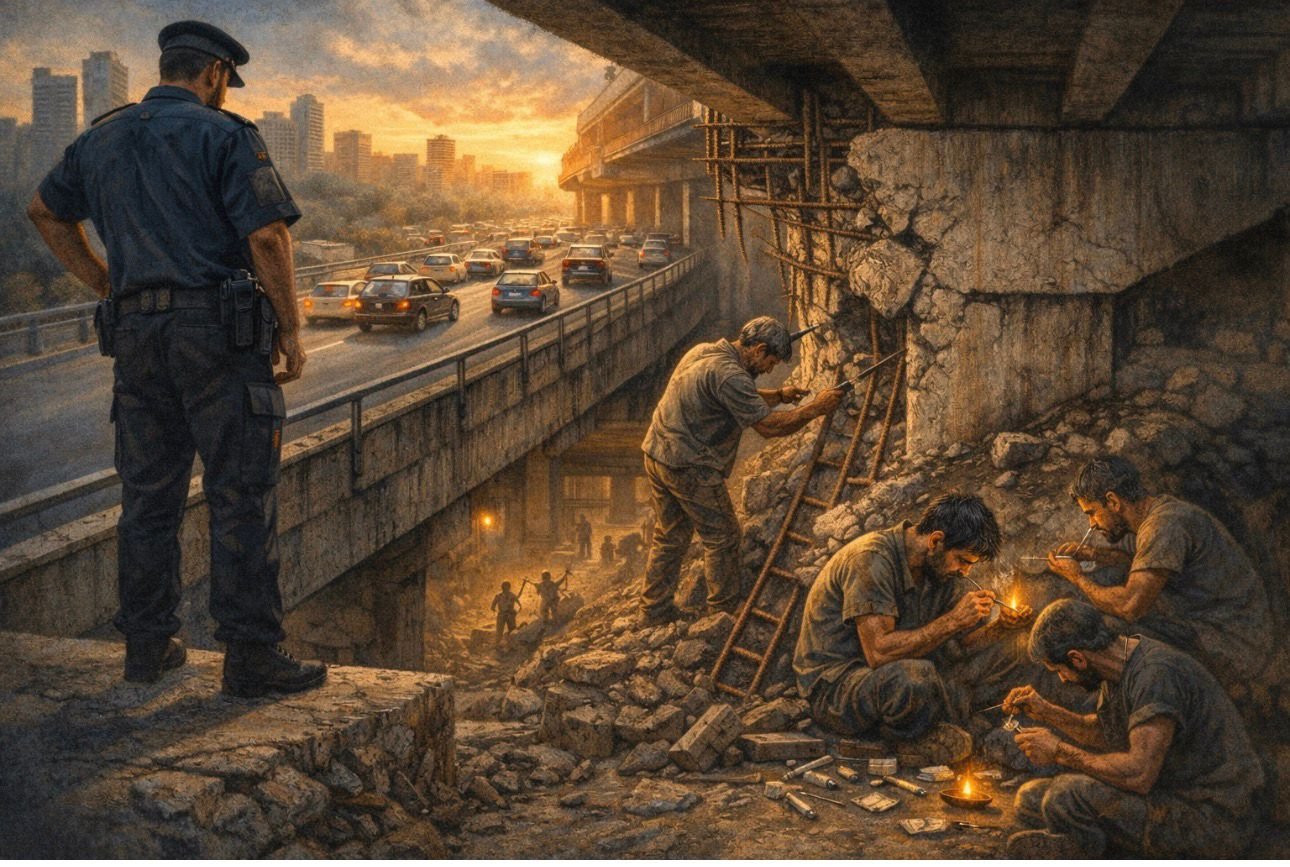
Karachi is facing a kind of damage never seen before. Drug addiction, especially heroin, has pushed people to steal iron from everywhere—barbed wire, manhole covers, road guardrails, iron poles, and even traffic-control spikes. These items are stolen daily, sold cheaply, and exchanged for small packets of drugs. When the government replaced iron with plastic, the problem did not stop; instead, it became worse. The addicts shifted their focus to bridges and flyovers and started removing steel rods from inside concrete using simple tools like hammers, cutters, and drills, often in open areas and without fear. According to reports, nearly 80 percent of Karachi’s bridges have been partially damaged in this way. This is not a small theft; it is direct damage to the city’s backbone.
The Engineering Danger
From an engineering point of view, the danger is very serious. Concrete bridges depend on steel inside them for strength. When steel is removed, the bridge becomes weak and unsafe. Bridges designed to last 60 to 70 years are now being damaged within 10 to 15 years. Many bridges are still standing, but they are injured from the inside. When failure happens, it will be sudden and deadly. This will not be an accident—it will be the result of long neglect.
Addiction Is a Health Problem
Drug addiction is a disease, not just bad behavior. Expecting addicted people to act normally without treatment is unrealistic. These individuals show great physical strength and technical ability—skills that could be useful in construction or public work. Yet addiction is wasting this human potential. Treating addicts only as criminals will not solve the problem. Treating them as patients and helping them return to normal life can.
The Untouched Supply Chains
While addicts are punished, the drug suppliers are mostly untouched. The easy availability of heroin shows organized networks working freely. Punishing users while ignoring suppliers is not justice—it is failure. This selective action destroys public trust and allows the problem to grow.
A Plan to Protect Karachi
To address this crisis, we need an integrated approach. Infrastructure must be protected immediately through inspections of all major bridges and flyovers, installation of cameras and monitoring systems, securing areas under bridges with lighting and controlled access, using theft-resistant materials in future projects, and creating an independent body to oversee Karachi’s infrastructure safety.
Addicts must be rehabilitated and their lives rebuilt by declaring drug addiction a public health emergency, setting up rehabilitation centers in every district, providing skill training and jobs in public works, and offering counseling, shelter, and family support. Drugs must be controlled at the source by taking action against suppliers and financiers, tracking drug money and illegal supply chains, punishing officials who protect or ignore drug networks, and educating youth and communities about the dangers of drugs.
Scrap markets must also be regulated by registering all dealers digitally, banning cash payments for metal purchases, punishing buyers of stolen government steel, and marking government metal assets for identification.
Shared Responsibility
The government must stop denying the problem and act firmly, engineers must speak up to protect public safety, and citizens must understand that stolen infrastructure puts their own lives at risk. Saving a city is a shared duty. Karachi’s crisis is not about lack of money or knowledge—it is about lack of coordinated thinking. Saving bridges without saving people will never last. Saving people will automatically protect bridges.
The Choice Before Us
As an engineer, I warn of physical collapse. As a reformist, I warn of social collapse. Both are close if ignored. The choice is simple: reform systems, rehabilitate people, and protect infrastructure—or accept a city that collapses both morally and physically. This is not emotional writing. It is a professional and ethical warning.
Engr. Ramesh Raja is a civil engineer and managerial/ planning professional who also contributes as a freelance writer on technical matters. He may be reached at engineer.raja@gmail.com
READ MORE
Govt Moves to Reform Power Sector Regulatory Framework
Federal Minister for Finance and Revenue Senator Muhammad Aurangzeb chaired the first meeting of the…

Apple Appoints Salman Dar as First Head of Government Affairs in Pakistan
Apple has appointed Salman Dar as its first Head of Government Affairs for Pakistan, marking…
From Slide Rules to Artificial Intelligence — An Engineer’s 60-Year Journey
Engr. Farooq Mehboob reflects on six decades of engineering, from manual calculations and slide rules…
Engineering, Public Service and Nation Building: The Journey of Engr. Mukhtiar A. Shaikh
From the classrooms of Dawood Engineering College to leadership roles in public service, industry, and…
Building a Stronger Nation: Tahir Sultan on Engineering, Governance, and Economic Revival
Engineering Review: In the aftermath of the Middle East war, Pakistan’s fault lines and weaknesses…

Anthropic Researcher Resigns Over AI Safety Concerns
An Anthropic researcher has resigned from the artificial intelligence (AI) company, warning that leading AI…