

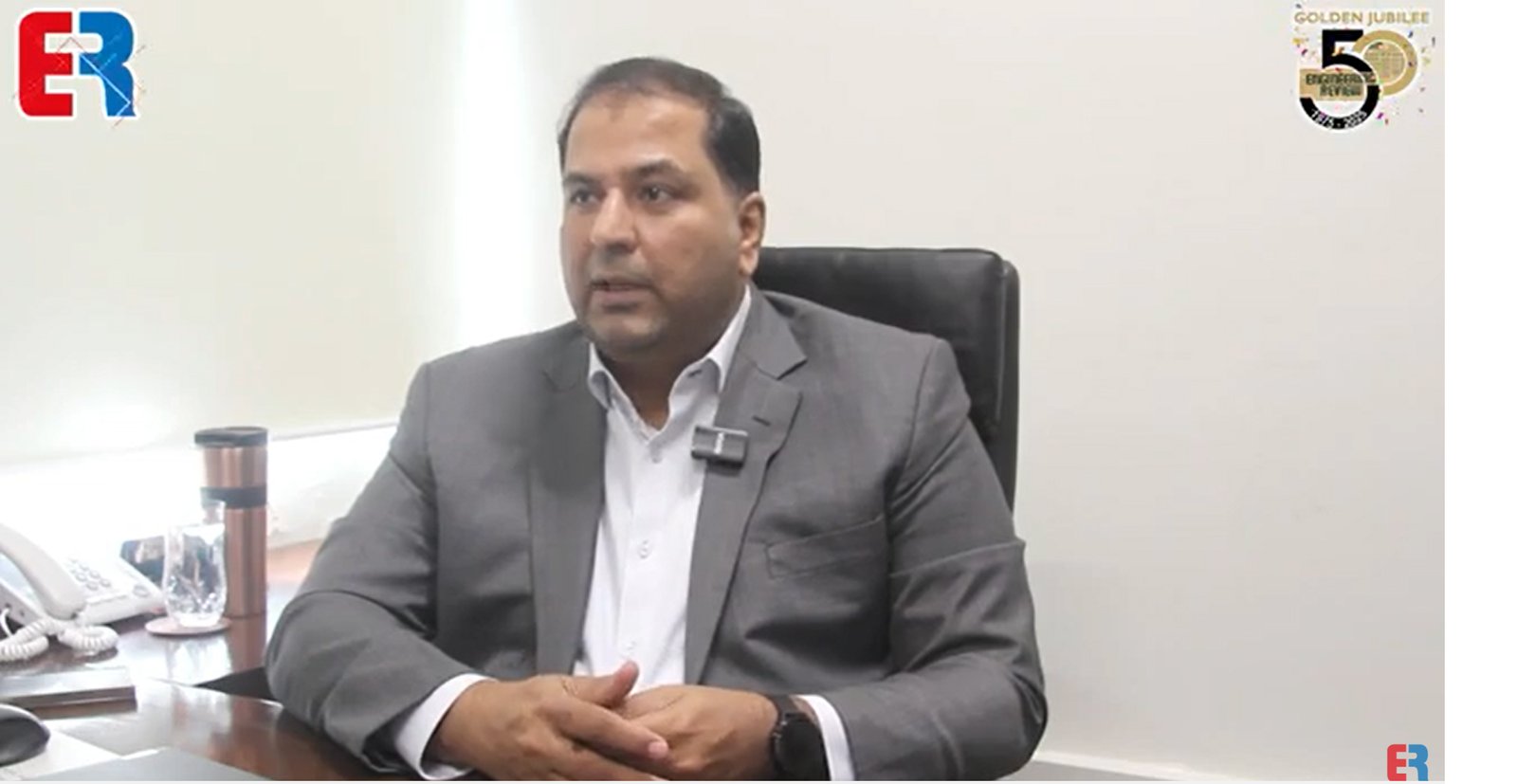
Mujtaba Shaikh , Country Director AI Engineers Pakistan
Country Director AI Engineers Pakistan, Mujtaba Shaikh Speaks on AI Adoption, Talent Retention, and Global Delivery in an Interview with ER
Pakistan and the Challenges for AI
The answer to your question is interesting, as I have been working in the United States for the past 12–13 years. So, for my organization, this is not only a challenge of working in Pakistan, but also a personal challenge for me. Pakistan is a difficult country from a business perspective. There are many challenges, and local systems are not as advanced or sophisticated.
For the projects we are working on—particularly large infrastructure projects or those in international markets—bringing foreign firms into Pakistan, getting them registered locally, and sending their remittances abroad, or transferring remittances from our parent company, are major challenges. Another significant issue Pakistan faces is talent retention. When we graduated, people used to go abroad for master’s or PhD programs; now students are leaving at the high-school level. Acquiring engineering talent has become extremely difficult.
Compensation packages in the Middle East are far higher than what Pakistan can match. Additionally, there has been a major influx of technology-driven remote delivery services. At present, AI Engineers Pakistan—together with our parent company and other clients—derives around 40–45 percent of its business from international markets. Remote delivery also has challenges, including infrastructure limitations, internet availability, and connectivity issues.
Finally, for local clients, project approvals through authorities and the overall uncertainty in the environment make investors reluctant. Unfortunately, multinational companies have to deal with these issues, and we are facing the same challenges. Over the past six years, we have learned to understand the system, and we are hopeful that things will turn positive in the next few years.
Coping with the Technology Gap
There is a significant difference between the technologies used in the United States and those in Pakistan. I recently visited the US to attend conferences. AI is currently a major buzzword, and its growth is accelerating. For some time, I believed that adoption would take one or two decades, but I realized that this thinking was wrong.
At the conferences, it became clear that AI is not just about using ChatGPT or Copilot. Many advanced AI and generative software tools have emerged and are being widely adopted in the industry. Tools are now available that can complete engineering applications in hours—tasks that previously took engineers months. In this context, Pakistan has a lot of catching up to do.
There is growth, especially among the younger generation, which is rapidly adopting these technologies. However, there is still a strong need for improvement in infrastructure.
How Is AI Engineers Pakistan Catching Up?
We have made significant investments in our offices. Our foreign clients and overseas projects had high demands for data security and connectivity, so AI Pakistan invested heavily in technology, including firewalls, switching, and security systems. We are also actively and rapidly working on AI adoption.
A positive development is that AI Pakistan US has initiated its own Enterprise Artificial Intelligence system, which is currently under development. This is a costly investment and will be installed at our global headquarters in the US. Once implemented, the entire company will operate within an AI-enabled environment. The company also has a dedicated task force working on technology adoption. We are trying to overcome Pakistan’s limitations through our own technologies, tools, and team training, and progress is being made.
AI and AI Engineers Pakistan’s Work
AI has already been integrated into tasks such as letter drafting, report writing, and imaging, and we are actively using it. Beyond ChatGPT and Copilot, we have invested in customized software solutions as well. Engineering design, however, still lags behind—even internationally—due to licensing and professional liability issues.
Engineering drawings must be certified, stamped, and vetted by engineers. If drawings are produced by AI, the question of ownership arises. This is an issue the industry needs to address. In this regard, Pakistan is somewhat behind, but I believe these challenges are global. Until authorities responsible for approving drawings resolve these issues, AI-driven engineering design will not fully enter the mainstream. Even when AI is used as an assistance tool, liability ultimately rests with engineers.
Ownership issues also exist in reports, but the usefulness of AI depends on how and for what purpose it is used. For drafts, charts, rendered images, and 3D models, AI provides substantial assistance and significantly reduces time. However, for written deliverables, caution is exercised. AI plays a supporting role—ideas are taken from it, but the final content is written and reviewed by professionals. Blind submissions are not acceptable, and a proper review process is essential.
Export of Services
I am a strong advocate of exporting services. Even during my earlier career in Pakistan, remote services and service exports were a major focus—and they still are. Currently, around 40–45 percent of our revenue comes from export services. We have delivered and continue to deliver work in seven countries.
There are several benefits. First, local talent that cannot go abroad still gets exposure to international projects, which excites and motivates them. International deliverables require higher quality and stricter QA standards than local projects, pushing engineers to perform better and learn more. From a business perspective, international clients offer greater leverage and growth opportunities.
With the rise of the freelance ecosystem, this type of business has become more routine. Initially, many professionals started as freelancers, but now companies are engaging in structured collaborations and bidding processes. We bid jointly with local partners in the Middle East and other regions. Pakistan ranks among the top offshore markets globally due to its large, cost-competitive talent pool, making international markets eager to work with Pakistani firms. We are keen to further push this business.
Partnerships of Consultants Abroad
For contractors, arranging financial capital and bank guarantees from Pakistan is difficult, which is why Pakistani companies are often unable to take the lead role. Competition from other Asian countries—such as China, Turkey, and Korea—has also increased. Due to global risk perceptions, Pakistani firms often do not lead major projects.
In consultancy, only a few Pakistani firms operate at a large scale with the required pool of qualified experts. Our advantage as a multinational is that where Pakistan lacks capacity, we leverage our parent company by forming joint ventures with our US entity. Through this approach, we have bid on projects in the Middle East, Central Asia, and Pakistan.
Pakistan is now seeing an increase in technology-driven infrastructure projects. For example, we are working with the World Bank on a pilot project involving AI-based monitoring of housing developments in flood-affected areas of Sindh. Similarly, projects related to digital project management and carbon monitoring are growing. Since this expertise is limited in Pakistan, partnering with our parent company allows us to compete effectively. Over time, as local capacity increases, Pakistani firms will be able to participate directly.
AI Engineers’ Business Model
We operate a self-sustained business model. We registered as a Pakistan private limited company to compete locally. Opportunities from abroad are executed from Pakistan in a cost-effective manner, while we maintain a strong local market presence. Currently, we work with multinationals, donors such as the World Bank and ADB, and also with selected public-sector organizations. Our approach is balanced between local and international markets.
Future Plans
In Pakistan, we have developed strong expertise in high-rise towers. We are currently involved in six to seven tower projects in Karachi and Islamabad. Additionally, we are working with the World Bank on technology-driven initiatives and on road projects with the ADB. In the public sector, we are engaged with the National Highway Authority and the Pakistan Airports Authority.
Growth is currently evident in these sectors. There is increasing emphasis on technology-driven and smart infrastructure. High-rise towers are now incorporating IoT-based tools and devices. Our strategy is to continue growing in these areas. – By Muhammad Salahuddin
Watch The Interview
MORE INTERVIEWS
Leave a Reply