
PAKISTAN
By Manzoor Shaikh
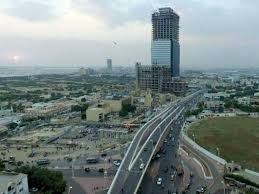
The Sindh government’s decision to forge a long-term partnership with the Frontier Works Organization (FWO) for the development of Karachi marks a significant shift in how major urban infrastructure projects are planned and executed in the province.
The move is being viewed by engineers and urban planners as an attempt to address long-standing issues of delayed completion, cost overruns, weak coordination, and governance gaps that have historically plagued development schemes in Karachi.
Sindh Chief Minister Syed Murad Ali Shah approved the Karachi Transformation Plan while presiding over a joint meeting of the FWO, the local government department, and the Karachi Metropolitan Corporation (KMC) at the CM House. The meeting was attended by senior provincial officials, including Local Government Minister Nasir Hussain Shah, Karachi Mayor Barrister Murtaza Wahab, the Chief Secretary, Commissioner Karachi, and Finance Secretary, while the FWO delegation was led by its Director General, Major General Abdul Sami.
Under the plan, the Sindh government announced a one-time grant-in-aid of Rs84.796 billion for 523 development schemes in Karachi, alongside Rs26.282 billion approved under the federal PSDP for Karachi-related projects. Additionally, six priority infrastructure projects worth Rs10.72 billion have been identified for immediate execution to ease traffic congestion, improve connectivity, and strengthen urban mobility.
These include rehabilitation of the M-9 to Malir-15 corridor via Jinnah Avenue and Shahrah-e-Faisal, construction of an underpass at Malir Halt, a flyover from Airport Road to Star Gate, road rehabilitation from Y-Junction to Machli Chowk in Hawksbay, and the construction of a flyover at Sohrab Goth—Karachi’s main intercity gateway.
According to the chief minister, the partnership with FWO is intended to ensure “quality, speed, and transparency,” with all major projects to be designed and executed at international standards.
Engineers believe this long-term collaboration has two primary drivers. First, Karachi’s development projects have frequently failed to meet timelines due to weak inter-agency coordination, poor governance, encroachments, and unresolved utility relocation issues. These delays often inflate project costs, disrupt daily life for commuters, and ultimately damage the government’s credibility.
Second, with elections approaching, the government is under pressure to demonstrate visible and substantive development. Faster execution, better construction quality, and timely completion are seen as politically crucial areas where FWO’s reputation for disciplined project management and rapid construction gives the government confidence.
Engineers point out that coordination with civilian utilities and removal of encroachments are among the biggest causes of delays in Karachi. The presence of a non-civilian executing agency like FWO is expected to significantly reduce such bottlenecks, even if they cannot be eliminated entirely. FWO’s operational structure, they argue, allows for quicker decision-making and enforcement, which is often difficult in purely civilian-led projects.
However, the partnership has also raised concerns within professional circles. Some senior engineers warn that large-scale involvement of FWO in the Karachi Development Package could sideline major local consultants and contractors by limiting competitive bidding. While FWO typically subcontracts work to smaller firms—benefiting small and medium contractors—large civilian construction companies may find themselves excluded, potentially impacting the broader construction industry.
Others argue that the issue lies less with FWO’s entry and more with the civilian sector’s own weaknesses. According to this view, large local firms have struggled with project management efficiency, timely completion, and coordination, creating difficulties for clients. Delays in fund releases, which are often seen as common in government projects, also remain a critical factor affecting project speed, regardless of the executing agency.
Transparency remains another debated aspect. Some engineers note that allegations of non-transparent contract awards and commissions have long surrounded public-sector projects in Sindh. They caution that unless governance reforms accompany the new partnership, structural issues related to accountability and fair procurement may persist, even if execution improves.
Meanwhile, work on smaller projects has already begun. Karachi Mayor Barrister Murtaza Wahab recently laid the foundation stone for the Suparco Road rehabilitation project in Keamari, being executed at a cost of Rs56 million. The project includes extensive paving and asphalt works aimed at improving traffic flow and civic facilities.
Overall, the Sindh government–FWO partnership represents a bold attempt to reset Karachi’s development trajectory. Whether it succeeds in delivering timely, high-quality, and transparent outcomes—while balancing the interests of the local construction industry—will determine if this model becomes a template for future urban development in Sindh.
Published in Engineering Review, Februray 2026 Issue – II
READ MORE

Microsoft to invest $10 billion in Japan for AI and cyber defence expansion
TECHNOLOGY Microsoft on Friday said it will invest 1.6 trillion yen ($10 billion) in Japan…

SG Power Limited Appoints Umer Ali Malik as CEO, Charts Strategic Transformation Plan
PAKISTAN SG Power Limited has appointed Umer Ali Malik as its Chief Executive Officer with…

ARCHION Corporation Listed on Tokyo Stock Exchange, Begins Operations
WORLD ARCHION Corporation, a newly formed holding company created through the business integration of Hino…

Pakistan HVACR Society to Hold 3rd Mini Expo in Faisalabad
PAKISTAN The Pakistan HVACR Society (Faisalabad Chapter) has announced the organization of its 3rd Mini…

Pakistan Signs First Carbon Market MoU under Paris Agreement with Norway
PAKISTAN Pakistan and Norway has signed the country’s first bilateral agreement under Article 6.2 of…
Gul Ahmed Textile Mills Limited Appoints Mohammed Zaki Bashir as CEO
PAKISTAN Gul Ahmed Textile Mills Limited (GATM) has appointed Mohammed Zaki Bashir as its Chief…
Leave a Reply