
PAKISTAN
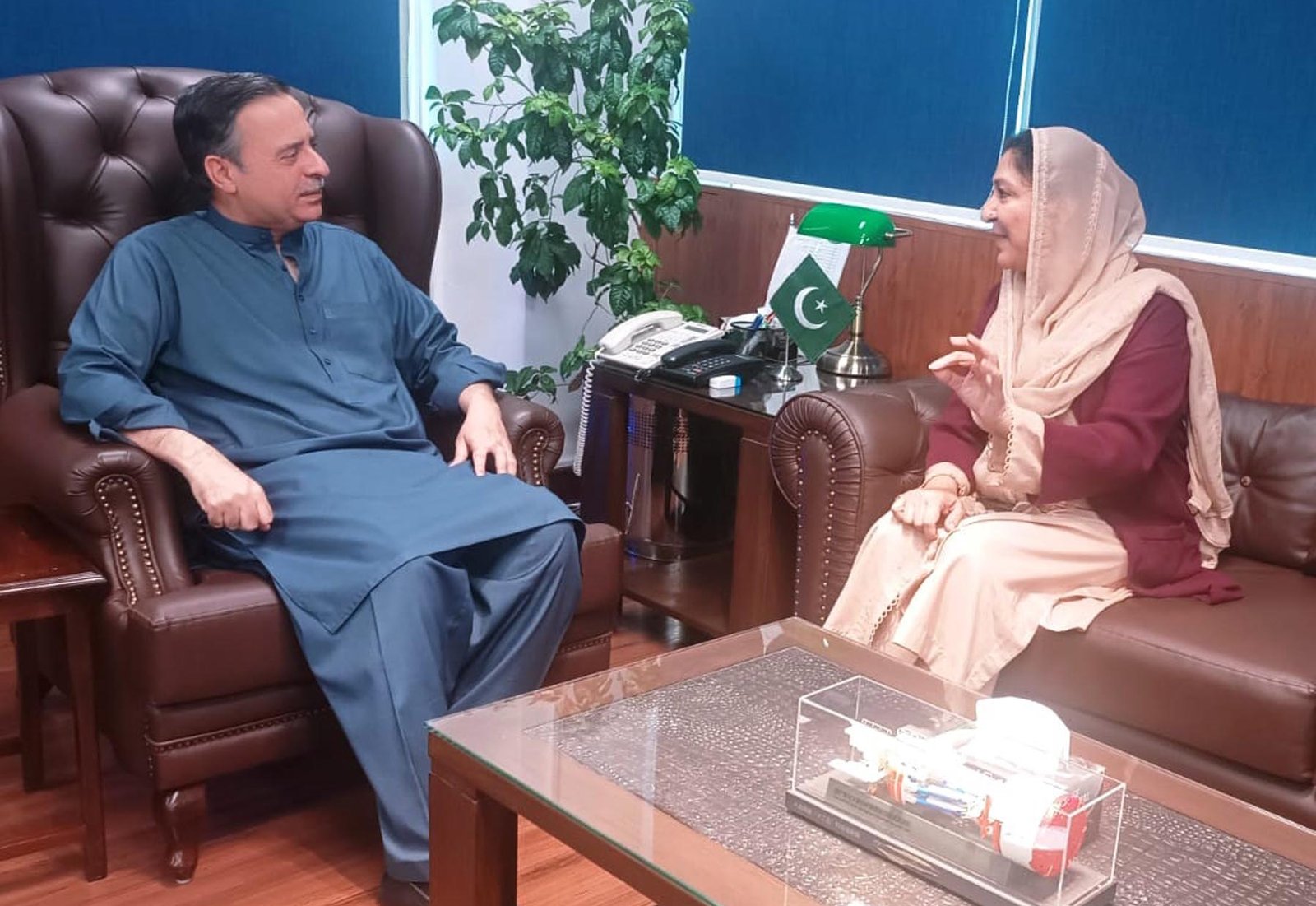
Federal Minister for Maritime Affairs Muhammad Junaid Anwar Chaudhry has called for integrating ocean awareness into formal education systems and empowering youth as active partners in preserving marine ecosystems.
He expressed these views during a meeting with Minister of State for Education and Professional Training Wajiha Qamar, who called on him to discuss strategies for enhancing marine education, literacy, and youth engagement in sustainable ocean management.
Highlighting the critical role of marine literacy, Minister Junaid Chaudhry said, “Understanding our oceans is no longer optional; it is essential for climate resilience, sustainable development, and the long-term health of our maritime resources.” He added that education equips youth to make informed decisions and actively contribute to marine conservation and the blue economy.
He stressed aligning marine education with Sustainable Development Goal (SDG) 4.7, which promotes education for sustainable development by embedding knowledge of marine ecosystems, conservation, and human–ocean interactions into curricula, teacher training, and global citizenship programs.
“Initiatives like ‘Ocean Literacy for All’ can mainstream these elements in national policies, school programs, and community workshops to build proactive citizenship on marine challenges,” the minister added.
“Ocean Literacy for All” is a UNESCO Intergovernmental Oceanographic Commission (IOC)–coordinated global initiative under the UN Ocean Decade (2021–2030) that promotes ocean awareness, education, and conservation. Minister Chaudhry emphasized advancing marine education in line with multiple SDGs, including SDG 14 (Life Below Water), SDG 4 (Quality Education), SDG 13 (Climate Action), and SDG 2 (Zero Hunger through sustainable fisheries), with a focus on reducing pollution, strengthening ecosystem management, and ensuring the sustainable use of marine resources.
He also announced reforms in maritime education, including granting degree-awarding status to the Pakistan Marine Academy and establishing the Maritime Educational Endowment Fund (MEEF) to provide scholarships for deserving children from coastal communities.
“The scholarship program promotes inclusive development by enabling access to quality education for youth from over 70 coastal and fishing communities, particularly in Sindh and Balochistan,” he said.
The federal minister said a dedicated oversight committee has been formed to ensure transparency, equitable distribution, and robust monitoring of the scholarship process. In its initial phase, MEEF will target coastal regions, with plans for national expansion.
The discussion underscored the need to raise awareness about oceans, coastal ecosystems, and marine resources. Both ministers stressed the importance of integrating climate and marine education from classrooms to community programs, addressing risks such as rising sea temperatures, coastal erosion, biodiversity loss, and pollution.
“Marine literacy is a strategic investment,” Minister Chaudhry said. “By equipping young people with knowledge of fisheries, mangroves, and sustainable maritime practices, we can cultivate a generation that protects our oceans while unlocking blue economy opportunities.”
State Minister Wajiha Qamar highlighted education’s transformative power in building social resilience, saying, “Incorporating marine science and ocean literacy into curricula can help students connect local challenges with global trends.”
The meeting also explored ways to translate complex marine science into accessible public knowledge through sustained, solution-oriented awareness campaigns. With the coastline facing pressures from climate change, pollution, and overexploitation, the ministers called for a coordinated approach combining formal education, informal learning, and youth-led advocacy.
Minister Chaudhry urged the introduction of curriculum modules on marine biodiversity, fisheries management, ecosystem protection, disaster risk reduction, and sustainable resource use.
He concluded, “A joint effort by the Ministries of Maritime Affairs and Education can cultivate an ocean-literate generation, transforming vulnerability into resilience and ensuring the long-term sustainability of coastal and marine ecosystems. – ERMD
READ MORE
Ocean Literacy to Be Integrated into Education to Protect Marine Ecosystems
PAKISTAN Federal Minister for Maritime Affairs Muhammad Junaid Anwar Chaudhry has called for integrating ocean…
PEC, CDA Join Hands to Elevate Engineering Standards in Mega Projects
PAKISTAN The Pakistan Engineering Council (PEC) and the Capital Development Authority (CDA) have agreed to…
Pakistan, China Sign LoI to Strengthen TVET and Youth Skills Development
PAKISTAN Pakistan and China have signed a Letter of Intent (LoI) to enhance bilateral cooperation…

Mari Energies’ Subsidiary Enters JV with Canada’s MSALABS to Establish Assay Laboratory in Pakistan
PAKISTAN Mari Energies Limited has announced that its wholly owned subsidiary, Mari Minerals (Private) Limited,…

Kot Addu Power Company Discloses SPA for Sale of Majority Stake in Attock Cement
PAKISTAN Kot Addu Power Company Limited (KAPCO) has informed the Pakistan Stock Exchange that a…
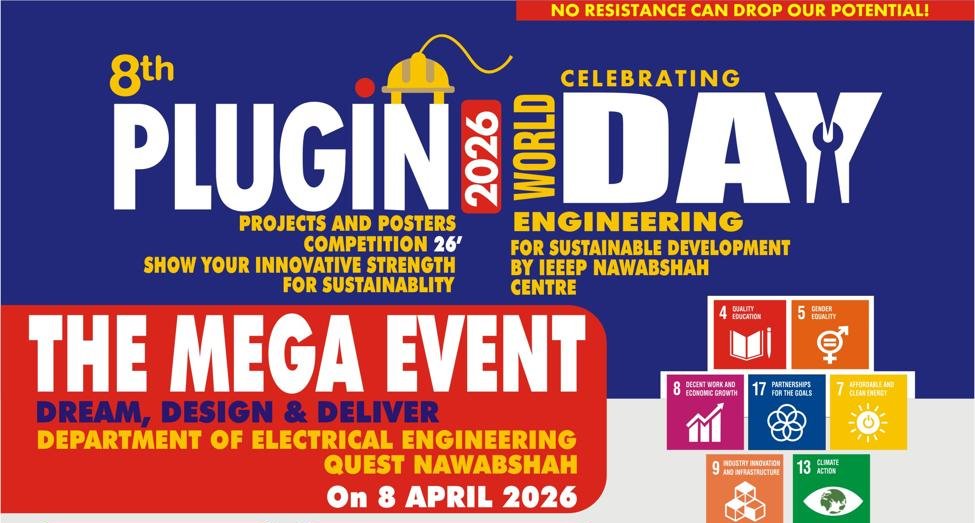
IEEEP Nawabshah, QUEST to Host 8th PLUGIN Projects & Posters Competition on World Engineering Day 2026
PAKISTAN – Academia The IEEEP Nawabshah Centre, in collaboration with the Department of Electrical Engineering,…