
From NED to Nation Building
THE INTRVIEW
Engineering Review: You graduated from NED University with a degree in Mechanical Engineering. After completing your studies, did you start working immediately, or did you venture into business? What was your first experience as a professional engineer, and how different was it from what you had learned at university?
Engr. Abbas Sajid: Before answering that, let me go back to how I entered NED University. I completed my Intermediate in 1977. In those days, career options were quite limited compared to today. You either became a doctor or an engineer. Since mathematics was always my strongest subject, I chose pre-engineering and applied to NED.
Admission procedures were very different then. There were no entry tests. Admission depended entirely on your Intermediate marks. I had around 70 percent marks, which was considered excellent at that time. Mechanical Engineering was the most sought-after discipline, and fortunately, I secured admission.
Unfortunately, those years coincided with a politically turbulent period in Pakistan. Student unions were very active, and due to the national political situation after 1977, our four-year degree stretched into almost six years. We finally completed our studies in 1982.
Soon after graduation, I applied for several jobs and received an offer from an HVAC company. My first assignment was at the construction site of Avari Towers in Karachi. That was the moment I realised there was a significant gap between classroom knowledge and real-world engineering.
University had provided us with solid engineering fundamentals, but the technologies being taught were already years behind what the industry was using. Everything at the construction site was new to me.
ER: What was your first assignment at Avari Towers?
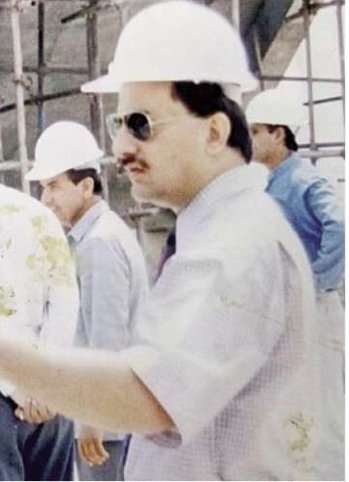
AS: My very first responsibility was supervising the assembly of a cooling tower on the twentieth floor. There were no operational lifts at the time, so climbing twenty floors several times a day became part of my routine.
Initially, it was physically exhausting, but looking back, I consider it one of the greatest learning experiences of my life.
Every time I stopped on different floors, I would spend time with technicians, welders and fabricators. I would sit with them over tea, ask questions, observe their work and learn everything—from welding techniques and duct fabrication to insulation systems and piping.
That practical exposure taught me more than any textbook could.
ER: How important were technicians and experienced supervisors in shaping your career?
AS: They played an enormous role.
Interestingly, many of my immediate supervisors were diploma engineers, while I was a graduate engineer. However, they possessed decades of practical experience.
The technicians initially saw me as a “young engineer” who only knew theory. But I never behaved like an office engineer. I always believed in learning from the people actually doing the work.
Even today, I feel comfortable sitting on a roadside tea stall with technicians. Practical engineering cannot be learned from an office desk alone.
ER: After Avari Towers, what came next?
AS: After about eight months, I was transferred to another major national project—the construction of Karachi Airport’s Terminal Two.
It was the era of General Zia-ul-Haq, and the project was progressing on a war footing. Work continued day and night.
That project exposed me to high-pressure project management. Senior government officials visited the site regularly, and deadlines were extremely tight.
There were days when I spent two or even three nights continuously at the construction site instead of going home. Those experiences taught me discipline, responsibility and decision-making under pressure.
ER: Even today, there is a debate that universities teach theory while industry demands practical skills. Did you experience this gap yourself?
AS: Absolutely.
When I studied at NED between 1977 and 1982, the curriculum was quite old. Most textbooks reflected technologies that were already 15 to 20 years outdated. The fundamentals were excellent, but students had very little exposure to the latest industrial developments.
Fortunately, the situation has changed dramatically today.
Many faculty members now hold PhDs from universities in the UK, the US, Australia, New Zealand and other countries. They bring global exposure and modern teaching methods into classrooms.
I frequently visit NED, deliver lectures and interact with faculty and students. The difference between today’s engineering education and what we experienced is remarkable.
ER: You have often spoken about strengthening university-industry collaboration. Why is this so important?
AS: Because engineering cannot survive in isolation.
For many years, I have encouraged universities to maintain strong links with industry.
One initiative I strongly supported was faculty internships.
Students have always undergone industrial internships, but I suggested that university faculty should also spend time in industries. If teachers regularly work in industrial environments, they can continuously update their knowledge and ensure their teaching remains aligned with industry requirements.
I’m pleased that NED implemented this idea. Faculty members now spend time in industries, gain practical exposure and bring that knowledge back into their classrooms.
ER: Engineering has changed dramatically over the past four decades. How do you compare today’s engineering profession with the one you entered in 1982?
AS: Honestly, when I visit universities today, I sometimes feel like taking admission again.
Today’s students have access to opportunities we could only dream of.
The number of engineering disciplines has expanded tremendously. When I studied, NED offered only three major disciplines—Mechanical, Civil and Electrical Engineering.
Today, there are more than twenty engineering disciplines.
Students have access to modern laboratories, advanced software, artificial intelligence, robotics, automation and global knowledge networks.
It is an exciting time to become an engineer.
ER: Some people believe emerging technologies such as Artificial Intelligence may reduce the importance of traditional engineering. Do you agree?
AS: Not at all.
Artificial Intelligence will change engineering—it will not replace it.
Civil engineering, mechanical engineering, electrical engineering and electronics will always remain the foundation of technological development.
Whether a vehicle runs on an internal combustion engine or electricity, it still requires mechanical systems, structures, braking systems, suspension and manufacturing.
Engineering is evolving rather than disappearing.
AI, automation and digital technologies are becoming powerful tools that engineers must learn to use.
ER: You left your job quite early and started your own company. How did that happen?
AS: I worked for only about two years.
Even during my job, one of my senior colleagues constantly encouraged me to start my own business. He believed I was meant to become an entrepreneur.
Interestingly, he even suggested the name of my company—Engineering Services—which I still use today.
In August 1984, I established my own business.
I had almost no financial resources. My office was literally the trunk of my car.
There were no laptops or mobile phones then. I carried a typewriter, letterheads and a briefcase. Wherever my project site was, that became my office.
Looking back today, it seems unbelievable.
ER: How did your company expand over the years?
AS: We initially focused only on HVAC engineering.
Within a few years, we expanded into plumbing and fire-fighting systems, offering complete mechanical engineering solutions.
Later, two of my university classmates joined me as partners, and together we expanded further.
Over time, we entered telecommunications infrastructure, particularly during the rollout of Mobilink’s network in Pakistan.
We were involved in constructing a significant portion of the company’s telecom infrastructure, including BTS stations and towers across Pakistan, particularly in remote regions.
We also entered the CNG sector during its early expansion, established multiple CNG stations, and even trained technicians after receiving specialised training from New Zealand, Italy and Argentina.
Today, after more than four decades, our businesses span multiple engineering sectors.
ER: Finally, what message would you like to give to young engineers?
AS: My advice is simple.
Do not think only about finding a job.
Think about creating jobs.
Pakistan needs engineers who become entrepreneurs.
Industrialisation cannot happen without engineers taking risks, establishing companies and developing new technologies.
I started my company from the trunk of my car.
If I could build a successful engineering business from such humble beginnings, today’s young engineers—who have access to far greater knowledge, technology and opportunities—can achieve much more.
The future of engineering in Pakistan is bright. The country needs innovation, industrial growth and engineering leadership more than ever before. – By Manzoor Shaikh
WATCH THE INTERVIEW