
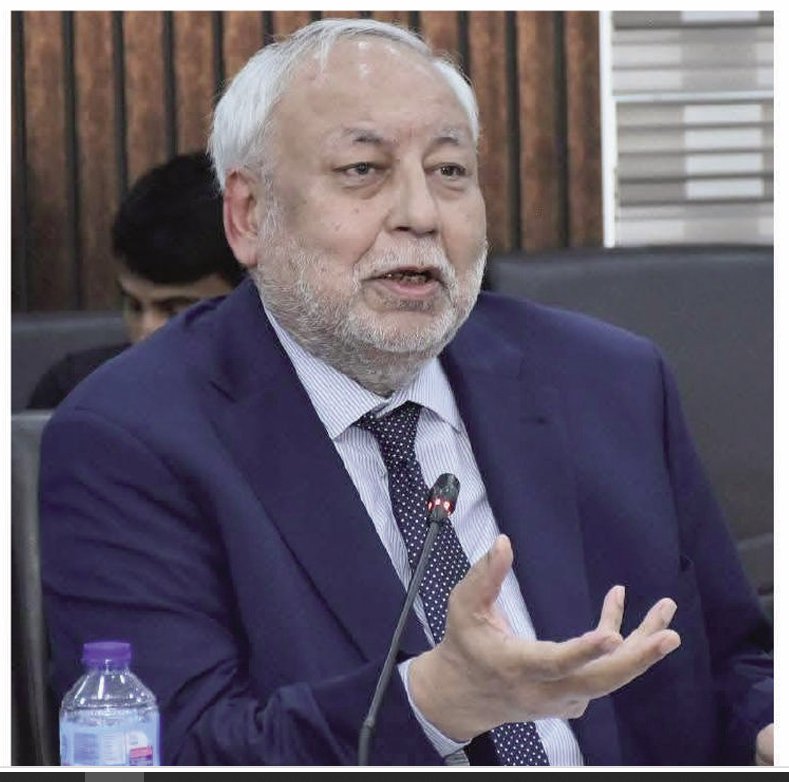
Manzoor Shaikh
For more than half a century, engineering has played a pivotal role in shaping Pakistan’s infrastructure and economy. Yet, despite its contributions, the profession has rarely occupied a central place in national policymaking. Few individuals understand this reality better than Engr. Javed Saleem Qureshi.
An engineer, entrepreneur, former Chairman of the Pakistan Engineering Council (PEC), and advocate for institutional reform, Qureshi has spent decades working across industry, business, and public service. His journey—from student leader at the University of Engineering and Technology (UET) Lahore to leading Pakistan’s premier engineering regulator—offers valuable insights into the country’s successes, shortcomings, and opportunities.
In this exclusive interview with Engineering Review on its 50th anniversary, Engr. Javed Saleem Qureshi discusses Pakistan’s engineering landscape, the economic opportunities that emerged following the Iran–US tensions, the need for stronger engineering institutions, and why artificial intelligence and innovation will define the next generation of engineers.
Engineering Review: How do you view Pakistan’s position following the recent Iran–US tensions, particularly from an engineering and economic perspective?
Engr. Javed Saleem Qureshi: The developments created both challenges and opportunities for Pakistan. Historically, Pakistan and Iran have never achieved the level of economic integration that neighboring countries should ideally enjoy.
During my visits to Iran, I was genuinely impressed by the country’s industrial capabilities. Despite decades of sanctions, Iran succeeded in building substantial indigenous manufacturing capacity. It has invested heavily in local production, infrastructure, and industrial self-reliance.
That experience reinforced an important lesson: countries that invest in engineering and manufacturing ultimately become more resilient.
The regional tensions also altered perceptions. Iranian business communities began looking toward Pakistan as a potential partner for technology transfer, agriculture, engineering products, and industrial collaboration. There was considerable interest in joint ventures and manufacturing partnerships.
However, opportunities alone are not enough. The real challenge lies in our ability to capitalize on them.
Engineering Review: What prevented Pakistan from fully benefiting from those opportunities?
Engr. Javed Saleem Qureshi: The biggest challenge has never been demand; it has been connectivity and coordination.
Trade requires efficient logistics, reliable transportation, and internal stability. Border infrastructure, transit arrangements, and administrative bottlenecks continue to limit trade potential.
Pakistan possesses significant export potential in engineering products, agricultural machinery, rice, and industrial goods. But unless we create an environment that supports commerce and investment, these opportunities will remain unrealized. Ultimately, economic growth is not merely a function of geography. It depends on governance, planning, and institutions.
Engineering Review: Let us go back to your student days. What inspired you to pursue engineering?
Engr. Javed Saleem Qureshi: My engineering journey began in the early 1970s, but alongside academics, I developed a strong interest in leadership and public service.
At that time, university politics was highly competitive. Becoming the first opposition president of the student union at UET Lahore was not easy, but it taught me valuable lessons about leadership and responsibility.
Our focus was simple: solve problems.
We worked to expand transportation facilities, improve hostel conditions, provide hot water during winters, distribute course material in advance, and encourage extracurricular activities. Those experiences taught me that leadership is not about titles; it is about improving people’s lives. That philosophy has stayed with me throughout my career.
Engineering Review: After graduation, why did you choose entrepreneurship instead of remaining in government service?
Engr. Javed Saleem Qureshi: I began my professional career in the public sector, but I soon realized that I wanted greater independence and the ability to create something of my own.
Like many entrepreneurs, I started with limited resources.
A turning point came in the late 1980s and early 1990s through our engagement with Chinese partners. At a time when financing was difficult, they demonstrated trust and provided support. That relationship enabled us to expand from agricultural equipment into telecommunications, software, hardware, and information technology. Over the years, our businesses diversified, but one lesson remained constant: success is built on relationships, credibility, and persistence.
Engineering Review: You later became Chairman of the Pakistan Engineering Council. What surprised you most after taking office?
Engr. Javed Saleem Qureshi: The condition of the system itself.
Many processes were heavily manual. Documentation requirements were excessive, and inefficiencies had become normalized. Engineers frequently complained about delays, and there was a widespread perception that approvals required unnecessary intermediaries.
One of our priorities was digitization.
We introduced online systems, tracking mechanisms, and transparent timelines. We reduced paperwork and attempted to bring greater accountability into the process. Institutional reform is never easy. It requires persistence and, most importantly, a willingness to challenge the status quo. While significant progress was made, much more remains to be done.
Engineering Review: What reforms do you believe are most urgently needed today?
Engr. Javed Saleem Qureshi: Three areas require immediate attention.
First, Pakistan needs a proper engineering service structure within government. Engineers are responsible for implementing many of the country’s most important projects, yet they remain underrepresented in decision-making positions.
Second, engineers must have a greater voice in policymaking. Around the world, countries that excel in technology and infrastructure place technical professionals in strategic roles.
Third, we need a national innovation ecosystem that connects universities, incubation centers, startups, investors, and industry.
Innovation cannot flourish in isolation.
During my tenure, we also advocated for a Technology and Construction Bank to support engineering startups, contractors, and technology ventures. Unfortunately, many long-term initiatives lose momentum when leadership changes. National development requires continuity.
Engineering Review: How is artificial intelligence changing engineering education?
Engr. Javed Saleem Qureshi: Artificial intelligence represents one of the most significant technological shifts of our time.
Traditional engineering education is no longer sufficient. Today’s engineers must understand AI, automation, data analytics, and digital systems alongside their core disciplines.
Universities must continuously revise their curricula. The world is changing too rapidly for academic programs to remain static for decades.
Engineering graduates of the future will need to combine technical knowledge with adaptability. Those who embrace change will thrive; those who resist it may struggle to remain competitive. Fortunately, Pakistani engineers have repeatedly demonstrated their ability to compete internationally. What they need is access to modern tools, better institutions, and greater opportunities.
Engineering Review: What is your vision for Pakistan’s engineering future?
Engr. Javed Saleem Qureshi: I remain optimistic.
Pakistan possesses extraordinary talent. Our engineers are working successfully across the Middle East, Europe, North America, and Asia. Their achievements prove that capability has never been our problem.
Our challenge is institutional.
We must create an environment where engineers can innovate, entrepreneurs can invest confidently, and young graduates can build meaningful careers at home rather than seeking opportunities abroad.
Engineering should not merely implement policy—it should help shape it. If we strengthen our institutions, invest in innovation, and empower technical professionals, Pakistan can emerge as a regional leader in engineering, manufacturing, and technology.
Engineering Review: Finally, how do you assess the role of Engineering Review?
Engr. Javed Saleem Qureshi: Engineering Review occupies an important place within Pakistan’s engineering community.
For fifty years, it has served as a bridge between academia, industry, policymakers, and practicing engineers. More importantly, it has provided space for diverse opinions and encouraged meaningful dialogue on issues that matter.
I believe publications such as Engineering Review have a responsibility beyond reporting news. They must continue highlighting issues such as engineering service structures, professional representation, innovation, technology policy, and industrial development. Nations progress when ideas are discussed openly and consistently.
READ MORE

Pakistan, World Bank Group Agree to Accelerate Reforms and Investment-Led Growth
Federal Minister for Economic Affairs Ahad Khan Cheema met World Bank Group (WBG) President Ajay…
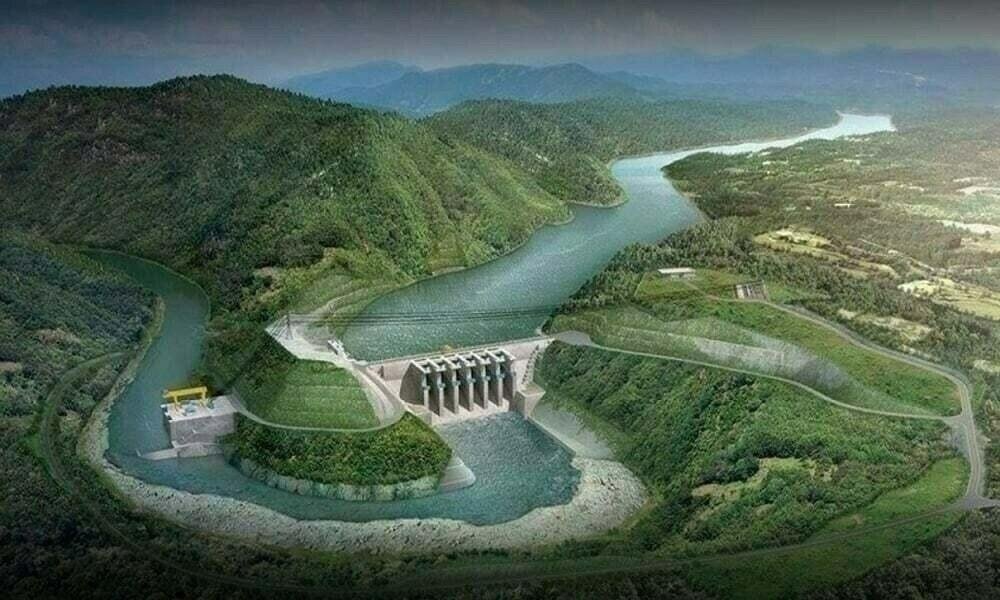
ECNEC Approves 11 Development Projects in Energy, Infrastructure, Healthcare, Technology
The Executive Committee of the National Economic Council (ECNEC), chaired by Deputy Prime Minister and…
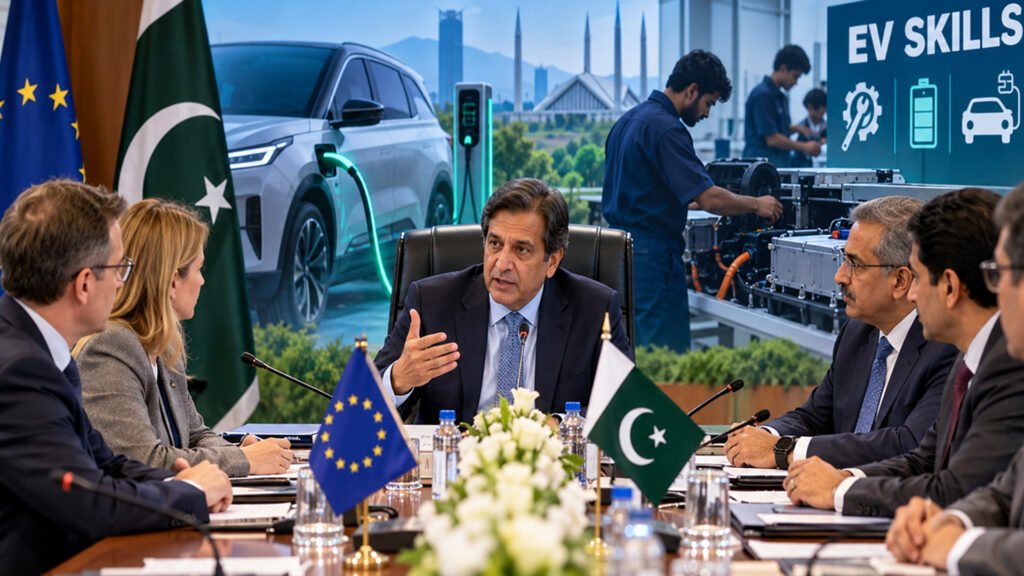
Pakistan, EU Explore Cooperation in Electric Vehicle Skills Development
Advisor to the Prime Minister for Industries and Production Haroon Akhtar Khan has directed the…
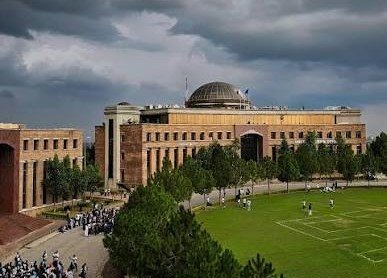
NUST Honours 66 PhD Scholars and 54 Medal-Winning Undergraduates at Convocation
Federal Minister for Planning, Development and Special Initiatives Ahsan Iqbal has urged graduates of the…
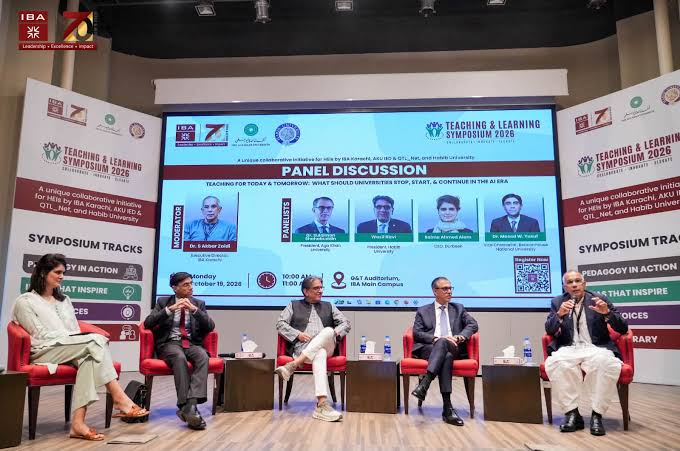
IBA, AKU and Habib University Join Hands to Rethink Education in the AI Era
The Institute of Business Administration (IBA) Karachi, in collaboration with Aga Khan University (AKU) and…

ABB Reports Strong Growth as AI Data Centre Spending Surges
Swiss engineering company ABB has reported strong growth in earnings, driven by a continued surge…