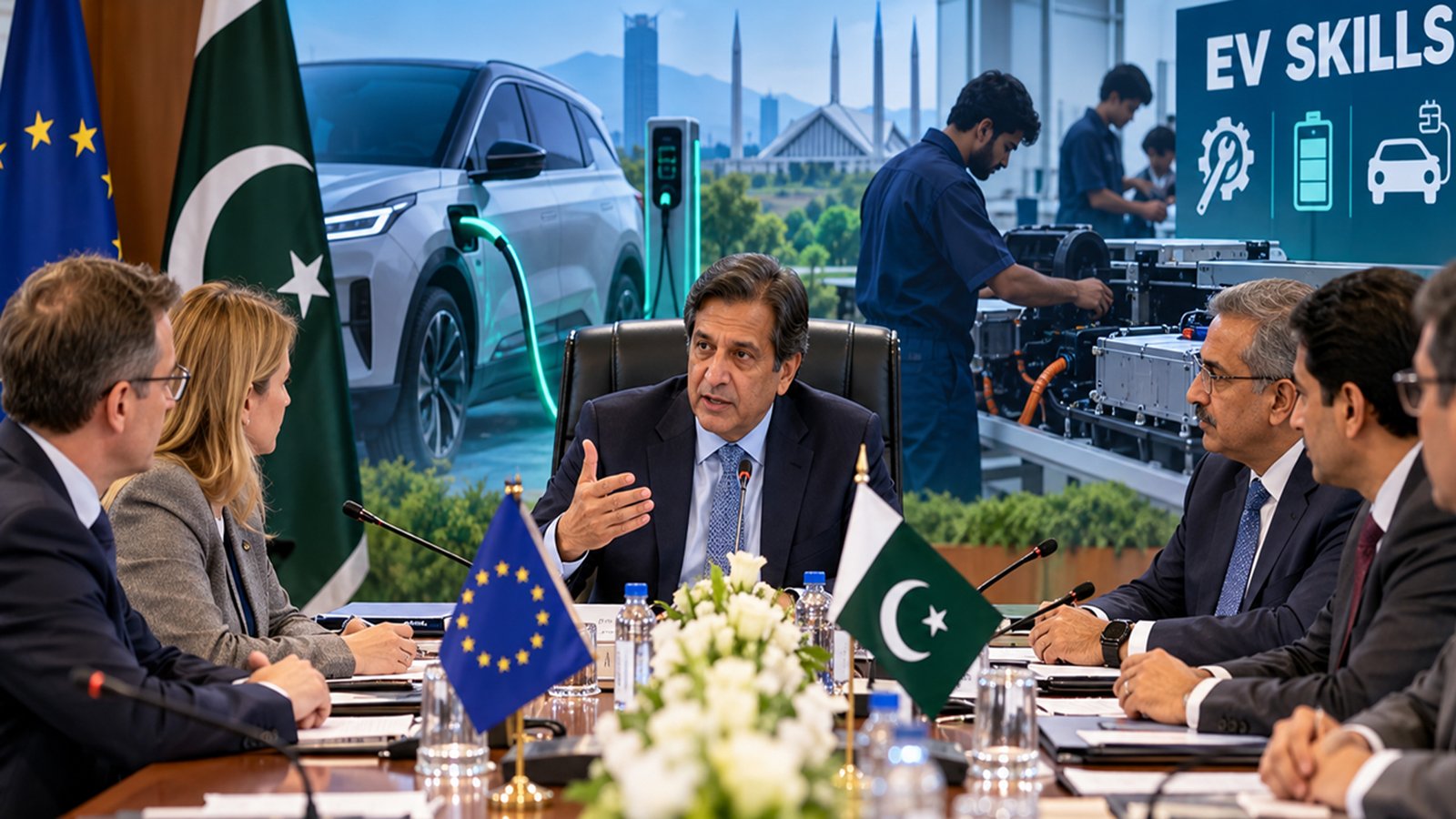
Advisor to the Prime Minister for Industries and Production Haroon Akhtar Khan has directed the Engineering Development Board (EDB) to engage with the European Union (EU) and identify practical areas of cooperation in electric vehicle (EV) skills development, technical training and capacity building. He said Pakistan was keen to benefit from European expertise to develop the skilled workforce and technical capabilities needed by the rapidly evolving automotive industry.
Haroon Akhtar Khan met the EU delegation to discuss ways to strengthen cooperation in preparing Pakistan’s workforce for the transition towards electric mobility. He said developing EV-related skills alongside the promotion of electric vehicles was an important part of Prime Minister Muhammad Shehbaz Sharif’s vision for a modern, competitive and sustainable industrial economy.
“Pakistan has set a target of increasing the share of electric vehicles to 30 percent by 2030. Achieving this transition requires more than introducing new vehicles; it demands a skilled workforce, technical expertise and the development of a supporting industrial ecosystem,” the Advisor said.
He noted that several companies had entered Pakistan’s EV market, increasing demand for trained technicians, engineers and other professionals with expertise in emerging automotive technologies. He stressed that investment in technical training and skills development was essential to prepare young Pakistanis for new employment opportunities and strengthen the country’s ability to adopt and manufacture advanced technologies.
“Pakistan missed important opportunities during earlier phases of the global automobile revolution, but we cannot afford to miss the electric vehicle revolution. Our objective is to build local capabilities, develop technical expertise and ensure that this transition creates jobs and industrial opportunities for Pakistan,” he said.
The Advisor said the government’s forthcoming Auto Policy, expected to be introduced in the coming weeks, would give particular attention to electric vehicles and the development of the automotive sector. Work was also underway on a Battery Energy Storage System (BESS) Policy, which would support the wider shift towards cleaner energy technologies and help create favourable conditions for emerging industries.
Highlighting the economic and environmental benefits of electric mobility, Haroon Akhtar Khan said the transition could help reduce Pakistan’s oil import bill, improve energy sustainability and create opportunities for local value addition. He emphasised that the shift to EVs must be supported by stronger technical skills, domestic supply chains and greater industrial capacity.
He directed the EDB to work closely with the EU delegation to identify practical opportunities for collaboration in EV training, technical education and capacity building. He said European experience could help Pakistan develop the skilled workforce and technical expertise needed to support the changing automotive landscape.
Secretary of Industries and Production Ihsan Ali Mangi stressed the need to align skills development programs with the emerging requirements of the automotive industry. He said coordination among government institutions, industry and international partners would help identify skills gaps, strengthen training programs and prepare workers for new technologies.
He added that cooperation with the EU could facilitate the exchange of technical knowledge, improve training standards and equip Pakistani workers and technicians with skills relevant to the evolving electric vehicle ecosystem.
Prime Minister’s Coordinator Rana Ihsan Afzal also highlighted the importance of preparing young people for emerging technologies and future employment opportunities. He said the transition to electric mobility should be seen not only as a technological change but also as an opportunity to develop human resources, encourage innovation and broaden economic participation.
Rana Ihsan Afzal said international cooperation could help link training initiatives with industry’s practical needs, enabling young Pakistanis to acquire competencies relevant to the automotive and clean-energy sectors.
The EU delegation expressed interest in exploring cooperation with Pakistan in EV skills development. Discussions also covered the importance of institutional coordination and engagement with industry in identifying areas where joint initiatives could be developed.
The meeting was attended by Secretary of Industries and Production Ihsan Ali Mangi, Prime Minister’s Coordinator Rana Ihsan Afzal, the Chief Executive Officer of the Engineering Development Board, senior officials of the Ministry of Industries and Production, including additional and joint secretaries, and representatives of the European Union delegation.- ER Report/PID
Appeared in ER Oct 2026 – Issue – II
READ MORE
Pakistan, EU Explore Cooperation in Electric Vehicle Skills Development
Advisor to the Prime Minister for Industries and Production Haroon Akhtar Khan has directed the…
NUST Honours 66 PhD Scholars and 54 Medal-Winning Undergraduates at Convocation
Federal Minister for Planning, Development and Special Initiatives Ahsan Iqbal has urged graduates of the…
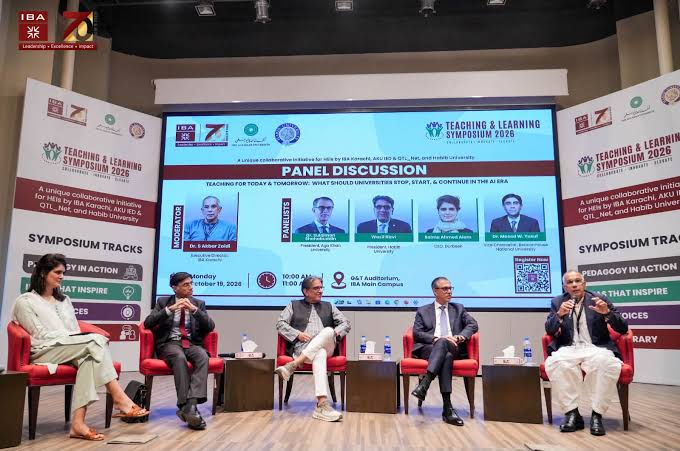
IBA, AKU and Habib University Join Hands to Rethink Education in the AI Era
The Institute of Business Administration (IBA) Karachi, in collaboration with Aga Khan University (AKU) and…
ABB Reports Strong Growth as AI Data Centre Spending Surges
Swiss engineering company ABB has reported strong growth in earnings, driven by a continued surge…
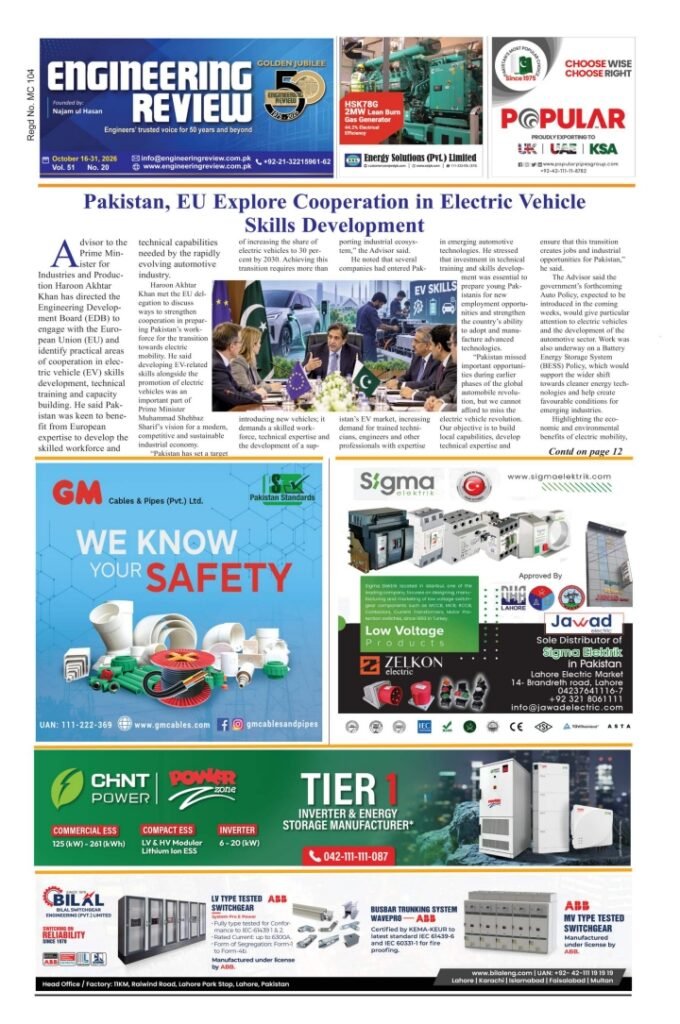
Engineering Review | October 16-31, 2026
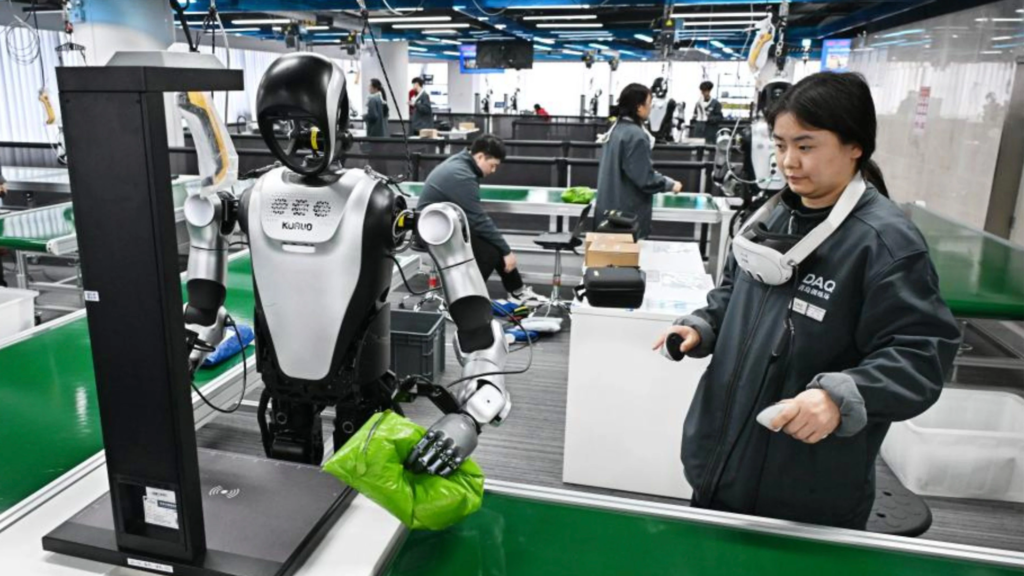
China’s Robot Trainers Turn Household Chores into AI Training Data
Across China, a growing number of freelance workers are training robots by performing everyday household…