
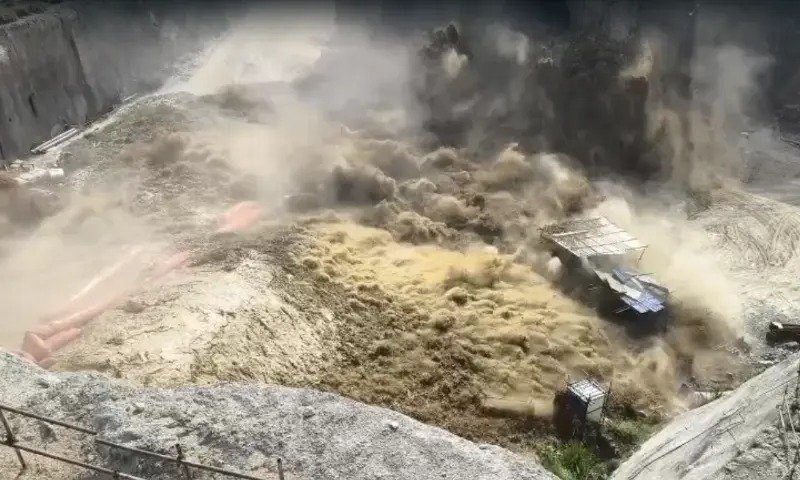
The Tarbela 5th Extension Hydropower Project (T5), one of Pakistan’s major ongoing energy infrastructure projects, suffered another setback on November 9, 2026, when a section of rock collapsed during excavation work, allowing a large volume of water to enter an under-construction tunnel and powerhouse area.
The incident raised fresh questions about construction safety, geological assessments, engineering supervision and the ability of the project’s stakeholders to manage risks at a site that has already experienced a major construction failure, substantial cost escalation and delays.
Although the authorities managed to evacuate workers without any reported casualties, the incident has once again placed the performance and responsibilities of the project’s three principal stakeholders — the Water and Power Development Authority (WAPDA), the consultants and the contractors — under scrutiny.
How the incident happened
According to WAPDA’s initial statement, the incident occurred during excavation of the second bench of the connecting tunnel at the T5 construction site. A weak section of rock mass collapsed, allowing water from the intake pit to enter the connecting tunnel and the under-construction powerhouse area.
The sudden inflow prompted authorities to declare an emergency, suspend construction activities and immediately evacuate workers from the affected areas. Fortunately, all workers were moved to safety, and no injuries or loss of life were reported. Initial reports also created confusion about whether the main tunnel of the T5 project had collapsed.
WAPDA subsequently clarified that the incident did not involve the collapse of the main tunnel. Rather, it was a rock-mass failure during excavation of the connecting tunnel. The authority maintained that the main Tarbela Dam and its critical structures were not under threat.
However, the incident was serious enough to require an immediate technical assessment involving WAPDA officials, consultants and contractors. The authorities needed to establish not only how water entered the construction area but also whether the incident had compromised the stability of surrounding rock formations or affected any completed sections of the project.
Damage assessment and restoration efforts The immediate priority was to stop the water inflow, drain the affected areas and make the construction site safe. WAPDA reported that water accumulated in the intake pit had been completely drained shortly after the incident. Dewatering operations at the under-construction powerhouse were also initiated using heavy-duty pumping equipment. By November 13, restoration work had moved to the next stage, with engineers and construction workers engaged in round-the-clock efforts to plug the crater created by the rock collapse.
According to a report, the concrete pouring was underway to fill the affected opening and stabilize the area. Project officials indicated that the concrete work and powerhouse dewatering could take approximately one week, although this was an anticipated timeline rather than confirmation of completed restoration.
The initial assessment by WAPDA, consultants and contractors suggested that the main tunnel, powerhouse, tailrace culvert and switchyard had not sustained structural damage. Nevertheless, the full condition of the affected underground construction area required further technical verification.
The November 15 visit of Federal Minister for Water Resources Mian Muhammad Mueen Wattoo emonstrated that remedial work remained a priority. The minister reviewed the progress of restoration activities and directed the relevant teams to accelerate their work while maintaining safety and quality standards. He also instructed the consultants, contractors and WAPDA project management to prepare contingency arrangements to minimize any potential delay in the project’s completion.
The distinction between restoring the immediate work area and certifying the structural safety of the underground facilities is important. Draining water and filling a crater do not, by themselves, establish that the surrounding rock mass has regained its required stability.
An independent geological and engineering assessment will therefore be essential before normal construction activities can resume fully.
Who is responsible: WAPDA, consultants or contractors?
Perhaps the most important question arising from the incident concerns responsibility. WAPDA Chairman Lieutenant General (Retd) Muhammad Saeed visited the project site on November 9 and 10 and ordered a departmental inquiry into the incident. He also directed the consultants to prepare a comprehensive report covering all aspects of the failure.
The Ministry of Water Resources had sought an initial assessment from WAPDA, which was submitted on November 10. Further technical reports and remedial measures were also being pursued. However, no publicly available final inquiry finding had established responsibility for the November 9 incident so far. It would therefore be premature to blame any one of the three stakeholders. Nevertheless, the project’s history makes the question of accountability particularly important.
In July 2026, a government-constituted inquiry committee investigating the August 2025 cofferdam collapse held WAPDA, the contractor and the consultant responsible for various contractual and technical failures. The committee identified unauthorized post-contract design changes, inadequate technical scrutiny and failures in supervision and approval procedures among the reasons behind that earlier collapse.
The contractors involved included Power Construction Corporation of China, HEI and HEM, while the consultancy arrangements involved Mott MacDonald and associated partners. WAPDA was the employer.
That inquiry concerned the earlier cofferdam failure, not the November 2026 rock collapse. Its findings cannot automatically be applied to the latest incident. However, they raise legitimate questions about whether lessons from the previous failure were adequately incorporated into construction supervision, geological risk assessment and safety management.
The November inquiry must therefore establish whether the rock failure was an unforeseen geological event or whether weaknesses in site investigation, excavation methodology, rock support, drainage, monitoring or engineering supervision contributed to it.
It must also examine whether the contractor followed approved construction procedures, whether the consultant adequately monitored and reviewed the excavation work, and whether WAPDA exercised effective oversight as the project employer.
A project that cannot afford another setback T5 has an installed generation capacity of 1,530 megawatts and is being developed with financial assistance from the World Bank and the Asian Infrastructure Investment Bank.
The project has already experienced substantial financial and scheduling difficulties. Following the earlier cofferdam collapse, its estimated cost rose from approximately Rs82 billion to Rs317 billion, while its completion target shifted from 2026 to June 2028.
The latest incident has consequently raised concerns about further delays and additional financial liabilities. For Pakistan, the issue goes beyond one construction accident. T5 is intended to increase electricity generation capacity at a time when the country needs reliable and affordable energy. The immediate emergency may have been contained, but the real test will be whether the authorities establish the technical cause, independently verify the safety of affected structures, fix responsibility where warranted and prevent a recurrence.
Without transparent findings and effective corrective measures, another expensive infrastructure project could remain vulnerable to the same cycle of construction setbacks, financial escalation and delayed public benefits. – ER Report
Printed in ER, Nov 2026 – Issue II
READ MORE
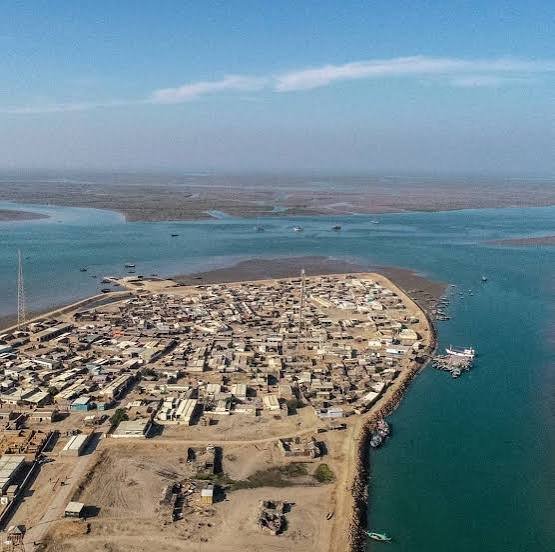
Keti Bandar to Become Maritime and Economic Hub as Sindh Approves Major PPP Projects
The Sindh government has approved a plan to develop Keti Bandar into an integrated maritime,…
Water Ingress at Tarbela T5: Another Setback for a Project Already Under Pressure
The Tarbela 5th Extension Hydropower Project (T5), one of Pakistan’s major ongoing energy infrastructure projects,…
Engineering Review | November 16-30, 2026
Engineering Review | November 1-15, 2026
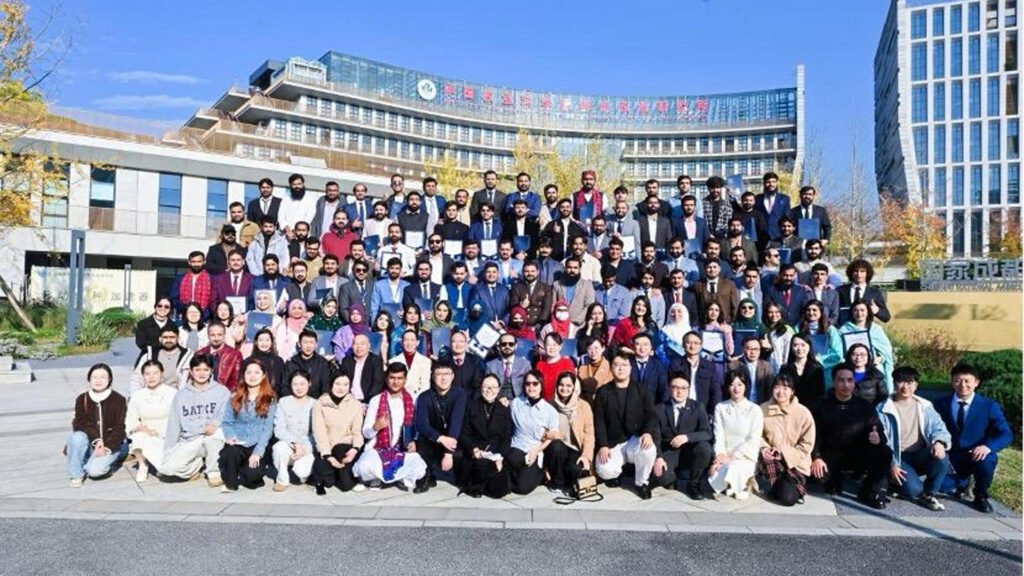
China-Pakistan Agricultural Cooperation Trains 885 Professionals, Supports 15 Startups
Program focuses on AI, seed technology, livestock disease surveillance, genomics and water-efficient farming, with more…
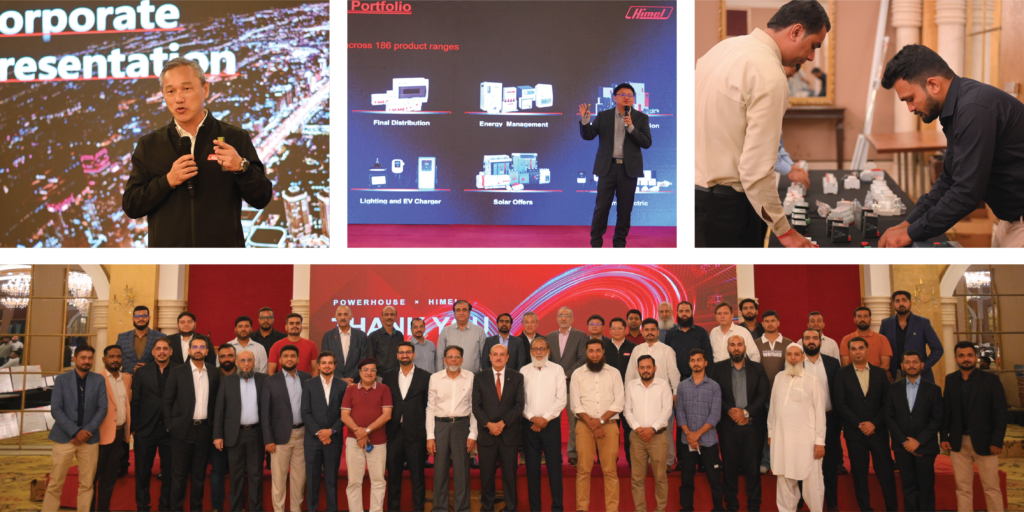
HIMEL Sees Strong Growth Opportunities in Pakistan Amid Rising Energy Demand and Infrastructure Development
HIMEL, a leading provider of reliable and accessible electrical solutions, has reaffirmed its long-term commitment…