
Program focuses on AI, seed technology, livestock disease surveillance, genomics and water-efficient farming, with more than 50,000 farmers and professionals reportedly reached
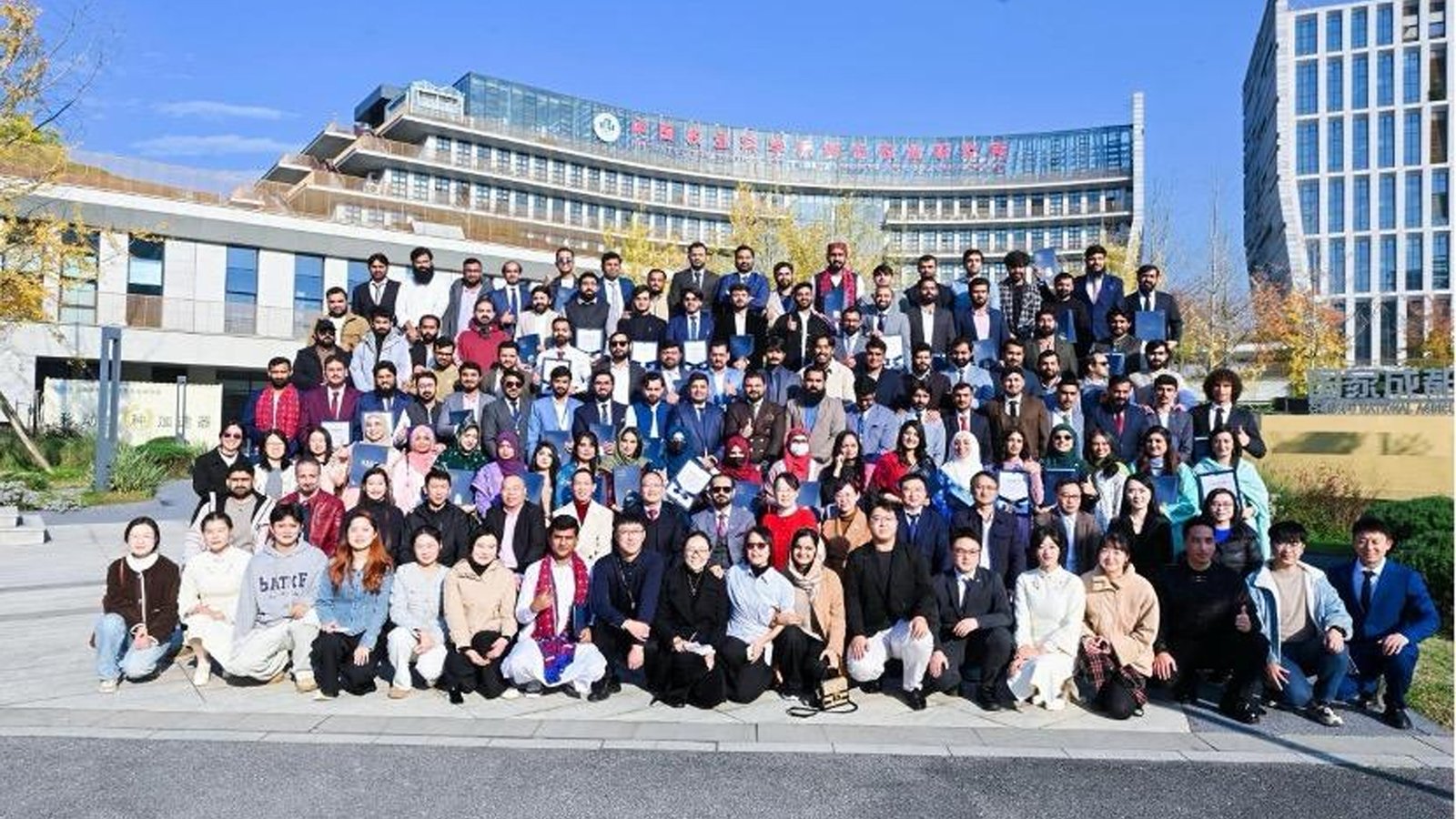
A bilateral agricultural cooperation program between Pakistan and China has trained 885 Pakistani agricultural professionals, supported the establishment of 15 startups and reached more than 50,000 farmers and agricultural professionals, according to a report published on October 30.
The program, which aims to strengthen Pakistan’s agricultural research and technological capabilities through cooperation with Chinese institutions, covers a wide range of emerging fields, including artificial intelligence (AI), seed production, livestock disease surveillance, genomics, aquaculture, high-efficiency irrigation and food processing.
The latest progress was highlighted at the China-Pakistan Agricultural Science and Technology Exchange Event held in Yangling, China, on October 27. Meanwhile, another 107 Pakistani participants are attending the third batch of the training program at Northwest A&F University.
The initiative reflects growing efforts by the two countries to extend their cooperation beyond conventional agricultural trade and investment towards research, technology transfer and the development of skilled human resources.
The program’s areas of focus are particularly relevant to Pakistan, where agriculture faces persistent challenges involving low productivity, water scarcity, crop diseases, livestock health, poor seed quality and post-harvest losses.
Artificial intelligence and digital technologies, for example, can support precision farming, crop monitoring and more efficient use of irrigation water and fertilizers. Similarly, advances in genomics and seed production could help develop crop varieties better suited to local environmental conditions, including heat, drought and disease resistance.
Livestock disease surveillance is another important area. Improved monitoring and early detection systems can help farmers and veterinary authorities respond to outbreaks more effectively, reducing economic losses and strengthening food security.
The program has also encouraged entrepreneurial activity. According to the report, 15 startups have emerged from the wider training and cooperation initiative, suggesting that some participants are attempting to translate their exposure to Chinese technologies and research practices into commercial ventures.
One example is NanoDrop, a Pakistani startup whose founder described work on membrane-based water filtration technology with potential applications in agriculture.
Water treatment and filtration technologies could have particular relevance in Pakistan, where farmers in several regions face problems associated with poor-quality irrigation water, salinity and limited freshwater availability. Membrane-based systems can be used for different filtration and water-treatment applications, although their suitability for agricultural use depends on factors such as operating costs, energy requirements, water quality and the scale of deployment.
The reported training of more than 50,000 farmers and agricultural professionals is another important component of the initiative. Technology transfer cannot produce meaningful results if it remains confined to universities and research institutions. Farmers, extension workers and agricultural businesses need access to practical knowledge, equipment and technical support to adopt new methods.
However, the real measure of the program’s success will be its impact on agricultural productivity and the ability of Pakistani institutions and businesses to sustain the technologies introduced through the cooperation.
The establishment of 15 startups is an encouraging development, but their commercial progress, investment requirements, locally developed products and market reach will need to be assessed. Similarly, the number of people trained does not necessarily indicate how many have adopted new technologies or achieved improvements in production.
For Pakistan, the next challenge is to build stronger links between agricultural universities, research centres, technology companies, government departments and farmers. Such collaboration could help convert research and training into locally manufactured equipment, affordable digital solutions and commercially viable agricultural technologies.
China’s experience in agricultural mechanization, research-led farming and technology adoption offers opportunities for cooperation. But successful transfer will require adapting technologies to Pakistan’s soil conditions, climate, farm sizes, water availability and economic realities.
The training initiative provides a platform for that cooperation. Its long-term value, however, will depend on whether the knowledge acquired in China leads to stronger domestic research capabilities, viable agricultural enterprises and measurable improvements in the livelihoods of Pakistani farmers. – ERMD
READ MORE

Engineering Review | November 1-15, 2026
China-Pakistan Agricultural Cooperation Trains 885 Professionals, Supports 15 Startups
Program focuses on AI, seed technology, livestock disease surveillance, genomics and water-efficient farming, with more…
HIMEL Sees Strong Growth Opportunities in Pakistan Amid Rising Energy Demand and Infrastructure Development
HIMEL, a leading provider of reliable and accessible electrical solutions, has reaffirmed its long-term commitment…
HVACR Trends 6.0 Draws 3,283 Visitors to Karachi as ASHRAE President Joins Pakistan’s Cooling Industry
The ASHRAE Pakistan Chapter concluded HVACR Trends 6.0, its sixth conference and exhibition, on 16–17…
From Rock to Reality: Bridging Academia and Industry
The Department of Chemical Engineering at NED University of Engineering & Technology, in collaboration with…
Pakistan HVACR Society, Lahore Chapter Signs MOU with UMT Lahore
A delegation of the Pakistan HVACR Society, Lahore Chapter led by Chairman Jafar Raza Haidery…