
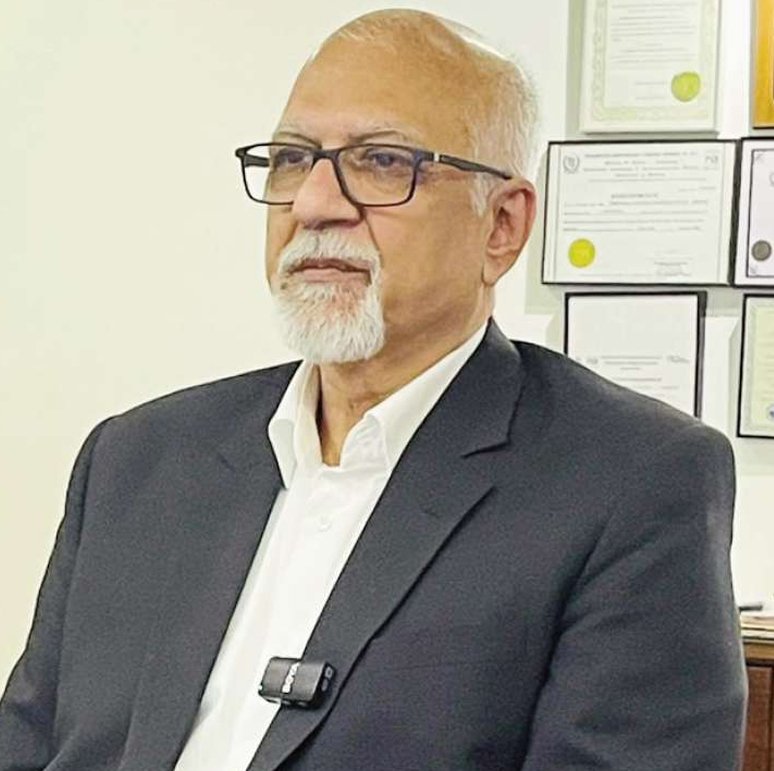
Engr, Khalid Mirza, leading ECIL explains reasons why Pakistan Keeps Falling Despite Repeated IMF Programs in an interview with ER
Any Good News
Good news is hard to come by in Pakistan, unfortunately. However, the government’s claim that the economy is improving may be true to the extent of the stock exchange or certain numerical indicators. The reasons behind this are not clear to me. Remittance figures also appear to have improved; I do not know the dynamics behind that either. Still, as long as they are increasing, it is good news.
But the stock exchange and remittances alone do not define an economy. There are many other sectors that need improvement. If we closely examine different sectors, I believe most of them require serious reforms. The single factor controlling all of this is governance—and that is absent from our system.
For example, look at the introduction of the e-challan system. Once fines were imposed, many things improved automatically. This shows that the law must be applied equally to everyone. Until we discipline ourselves at the most basic level, neither development nor evolution is possible.
Any Fresh Breeze of Hope?
No, I don’t think so. There is no doubt that the volume of construction contracts has increased. One reason is rising prices, and in my personal view, another reason is the lack of governance, which itself inflates volumes.
If you look at other countries, their large projects are iconic—projects you can showcase on international platforms. Which project do we have that we can proudly present internationally? Can anyone point to even one?
Increase in Projects Is Not Necessarily Positive
This increase is not beneficial because Pakistan’s dynamics require that all provinces be developed together. We cannot uplift one region or one city while ignoring others. The result is disparity, increased polarization, and—most importantly—the inability of the entire nation to rise together, which is essential for real development.
China lifted 600 million people out of poverty, and you can see where China stands today. In Pakistan, poverty is increasing, which means no matter what we do, the pace of development will remain slow. There is a saying related to the army: the speed of a convoy is determined by its weakest link, because the convoy has to move together. Strengthen everyone, and the pace will increase.
Nothing meaningful can happen until we eliminate poverty and document our undocumented economy. We don’t even know the true size of our economy; it is said that what we see is only one-tenth, with ten times more underground. As a result, taxes keep being imposed on the documented and salaried class, destroying them. Today, people are paying more than 50 percent of what they earn in taxes.
Industry and Its Influence on Policy
Industry and professional representative bodies have so far failed to bring about any policy change. Suggestions are given, but there is no implementation. We provided many recommendations to PEC, the Ministry of Commerce, and other forums, but no positive outcome emerged. Ultimately, decisions are made by those in power, according to what they want.
Governance and the IMF
Pakistan is among the countries that have gone to the IMF the most. Over the last 60–70 years, few countries have approached the IMF as frequently as Pakistan. Has this led to improvement? In real terms, we have only declined.
Look at our standards: education has deteriorated, civic duties and responsibilities have weakened, and our international image has declined. If positive progress were actually happening, this situation would not exist.
You may have heard recently that the UAE imposed visa restrictions—why did that happen? Look at the reasons. Mere speculation achieves nothing. We never address root causes. We always make superficial policies, take superficial actions, and the result is zero. If development is desired, root causes must be examined and addressed, even if the decisions are bitter.
Corruption has become so deeply entrenched that even a vegetable vendor is involved in some form of it. Corruption is embedded throughout society.
Alternatives
Look at the figures showing how many people are leaving Pakistan. These are mostly highly educated and capable individuals who want to stay away from corruption. The country is losing its best human capital. Meanwhile, those involved in malpractice are being posted here. Eventually, we will be forced to bring in foreign professionals to execute projects.
The only way to stop this is to review policies, rely on our own people, and—most importantly—learn to respect ourselves. Until we do, the world will not respect us. Asking people to bring in dollars from abroad will never work. Our economy is considered high-risk, so no one wants to invest.
Look at Dubai’s figures and see how many Pakistanis have invested in real estate there. If that same money were invested in Pakistan, the situation would be very different. We need to look inward and ask what we are doing wrong. Identify the root causes and address them. Malaysia does not borrow from the World Bank, ADB, or the IMF—and that itself is a lesson. – By Manzoor Shaikh
WATCH THE INTERVIEW
READ MORE

Industry 5.0 and Green Engineering: Human-Centric Sustainable Production
INDUSTRY 5.O Industry 5.0 redesigns the production architecture in order to place human beings at…

Navigating the Future of Careers in Pakistan in the AI Era
AI ERA By Prof. Dr. Tariq Rahim Soomro, SMIEEE We rode the wave of freelancing…

US–Israel–Iran War: Where Does Pakistan’s Food Security Stand?
FOOD SECURITY By Manzoor Shaikh For now, doomsday scenario such as a full-scale escalation involving…

A Milestone Achievement in 5G Railway Communication Research
INTERBATIONAL COLLABORATION Mehran University of Engineering & Technology (MUET) proudly announces the successful completion of…

Where does Pakistan stand in unprecedented surge of AI, emerging technologies?
TECHNOLOGY CEO Rastek Technologies, Engr. Rafik Ahmed Lakhani, in a conversation with ER, explained how…
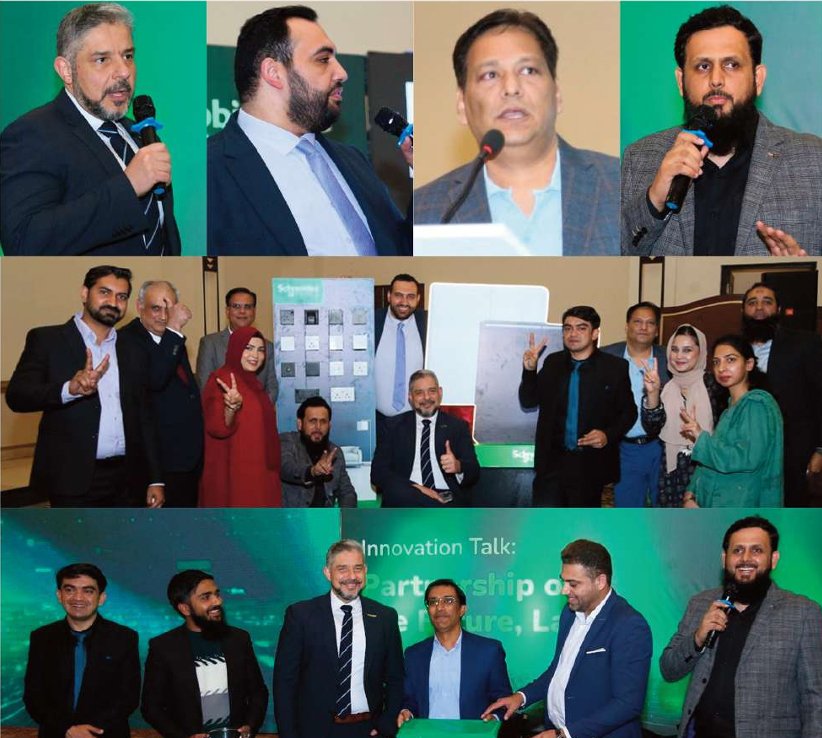
Advancing Energy, Digital Transformation: Schneider Electric Hosts Future Partnership
ENERGY Schneider Electric Pakistan hosted Partnership of the Future – Lahore, bringing together contractors, consultants,…
Leave a Reply