
PAKISTAN
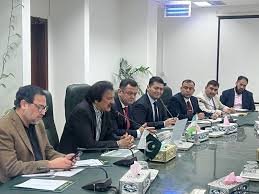
ISLAMABAD: Special Assistant to the Prime Minister (SAPM) on Industries and Production, Mr. Haroon Akhtar Khan, chaired the 8th Review Session of Pakistan–Uzbekistan Cooperation on Tuesday. The meeting was attended by Uzbek Ambassador Mr. Alisher Takhtayev, senior government officials, SIFC representatives, business leaders, and diplomats.
The session opened with both sides reaffirming their commitment to deepening historic and strategic ties. Discussions focused on expanding collaboration in textiles, pharmaceuticals, surgical instruments, mining, and information technology, as Pakistan works toward achieving the bilateral trade target of USD 2 billion set by Prime Minister Shehbaz Sharif. Ambassador Takhtayev highlighted Uzbekistan’s interest in further integrating Central and South Asian markets.
Pharma Cooperation and Faster Certification
Pharmaceutical collaboration received special attention. Uzbek representatives acknowledged Pakistan’s strengths in the pharma sector and noted that Uzbekistan’s Pharma Park model could be adapted locally. Pakistani stakeholders, however, raised concerns about slow certification of medicines in Uzbekistan. In response, SAPM Haroon Akhtar Khan announced the formation of a joint committee comprising DRAP, the Pakistan Pharmaceutical Association, and Uzbek regulators to expedite approvals and resolve related challenges.
Direct Flights Proposed
Aviation connectivity was another major topic. The Uzbek Ambassador expressed interest in starting direct flights from Karachi, calling it essential for boosting trade and tourism. The SAPM said direct air links are a priority for the government and noted that Uzbekistan could serve as a gateway between the Gulf and Europe. He urged Pakistani airlines to support early implementation of this initiative.
Improving Banking Channels
Both sides discussed the need for stronger banking mechanisms to facilitate trade. While Uzbekistan pointed out existing financial barriers, the State Bank of Pakistan assured that solutions are underway. The SAPM announced that the National Bank of Pakistan will open a branch in Uzbekistan to support smoother cross-border transactions.
Provincial Role and Regional Connectivity
Mr. Haroon Akhtar Khan emphasized the Prime Minister’s directive to ensure provincial involvement in all joint projects. He encouraged provincial industries departments to capitalize on new opportunities. The meeting also stressed the importance of land and rail connectivity, with the SAPM noting that the Trans-Afghan Railway Project could become a regional “game-changer.”
The session concluded with a review of potential mineral-sector cooperation and instructions for joint working groups to present progress at the next review meeting. Both sides reaffirmed their commitment to strengthening economic ties and advancing long-term regional cooperation. – PID/ERMD
MORE NEWS
Pakistan, Netherlands Explore Expanded Energy Cooperation
PAKISTAN Federal Minister for Petroleum Ali Pervaiz Malik held a meeting with H.E. Robert Jan…
Proposal to Establish Blue Economy Sectoral Council to Boost Exports
PAKISTAN Rana Ihsaan Afzal Khan, Coordinator to the Prime Minister on Commerce, held a meeting…

Pakistan raises climate concerns at Arctic Circle Rome Forum
WORLD Federal Minister for Climate Change Musadik Masood Malik represented Pakistan at the Arctic Circle…
OGDCL, PPL Announce Oil and Gas Discovery at Baragzai X-01 Well
PAKISTAN Oil and Gas Development Company Limited (OGDCL) and Pakistan Petroleum Limited (PPL) have announced…
Supernet Announces CEO Change, Jamal Nasir Khan Appointed as New Chief Executive
PAKISTAN Supernet Limited has announced a change in its top management, informing the Pakistan Stock…
Building Future with Tech-Skilled Youth
By Ramesh Raja Sindh, with its rich cultural heritage and industrious population, is home to…
Leave a Reply