

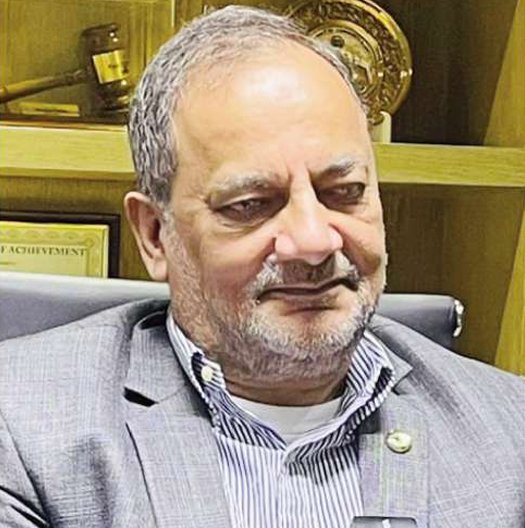
Why Stability Matters: Engineering Services Company Chief Speaks on Investment, Industry, and Pakistan’s Economic Future in an Interview with ER
Pakistan’s Economy
To some extent, I agree that certain things are improving in our country. This is natural when a government is stable. Whenever a government comes in and people have the perception that it will remain in place and its policies will continue consistently for several years, investment follows—both from the private sector and from abroad—and natural economic growth takes place. I have personally observed this over the past two to two-and-a-half years: perceptions have turned positive and investors are investing.
If we look at indicators, for example automobiles, we can see how car consumption in Pakistan has increased. The influx of large vehicles and SUVs itself indicates demand; companies would not bring in vehicles or start importing CKDs and setting up manufacturing plants if there were no consumption. Recently, a very large tyre plant has been set up, and we are currently completing work there; commissioning is underway. These are some examples, but overall, if we look at the bigger picture, perceptions are positive. We pray that this positivity continues so that progress can move forward.
Along with this, allied industries such as construction also pick up. People’s capacity increases, investment grows, buying power improves, and sectors like real estate, cement, and steel become active. I am a very hopeful and positive person. I have lived in Pakistan all my life and struggled here. I want stability to prevail, government policies to be long-lasting, and continuous dialogue between the government and business community so that things can improve.
Are things moving in the industry?
Absolutely. We observe this directly in our own field. We are from the mechanical side, and in any project you see everything—mechanical, electrical, civil, and allied industries. I see new people entering this field every day, which is a very positive sign. That is why they are establishing themselves.
Let me mention another positive aspect. I am involved with NED University and also serve as the General Secretary of the NED Alumni. We run two programs there, so I regularly seek feedback from NED about where our graduating students are going—whether they are being absorbed by the market or sitting idle at home. I will tell you something surprising: around 95 percent of students are finding jobs. And this is not limited to government universities; students from private universities are also being employed. NED has 24 disciplines, and about 94 percent of its graduates are being absorbed, which is a big achievement.
Where do our engineering companies stand in today’s fast-changing world full of opportunities?
I have two answers to this question: one at the local level and the other at the international level. If you compare our local construction industry today with where it was 30 or 40 years ago, you will see a huge difference. The quality of construction, techniques, and materials being used today were unimaginable in the past. High-rise buildings are now common; constructing 20- to 24-storey buildings is no longer unusual. Earlier, buildings rarely went beyond four or five storeys. This is the result of the development and expertise of local companies, and I consider this a major achievement, even if people do not always recognize it.
Our people have learned abroad and then implemented that knowledge back home—whether in civil construction, mechanical engineering, or electrical works. There has been tremendous improvement across all fields.
Internationally, if we look at neighboring regions such as Saudi Arabia, Dubai, and Abu Dhabi, there is massive development and a boom. Yes, they have money and their dynamics and demographics are different, but we should be proud of the role Pakistanis have played in building those countries. When I went to Dubai more than 40 years ago, I clearly remember what it was like—sandstorms, camels, and very limited infrastructure. There were hardly any decent hotels in Dubai; we used to stay in Sharjah, which was better at the time. We would visit Dubai in the morning for exhibitions and return to Sharjah in the evening. Today, look at where Dubai stands. Up to 50 percent of the contribution has come from Pakistani workers and engineers. This is a big achievement. Our engineers, technicians, workers—even drivers—are operating at that level. All of this contributes significantly to improving the living standards of our people back home.
Do our companies have the desire to work abroad like foreign companies do?
Two years ago, the Big 5 exhibition was held in Riyadh. At that time, we considered opening an office in Dubai, as the opportunity seemed good. When we went there, we realized how many Pakistanis were present and how many Pakistani companies were already operating there, as well as how many were in the process of setting up. Alhamdulillah, many large Pakistani companies are working there, including major mechanical firms like Descon. Our own process there has also been completed. We met many people and felt encouraged. It is not true that the whole world is working there and we are not. That perception is incorrect.
Government policy push
Things improve policy-wise when continuity is maintained. Frequent policy changes create confusion and cause people to lose confidence. Investors say they invested under one policy, but then it changed—tax exemptions promised for ten years are withdrawn after four years, and such practices discourage investment. These things should not happen.
The government is part of us; often it is not the individuals but the system that creates problems. However, we have very capable people in our governments who understand how policies should be formulated. We have even helped other countries, including Korea, in policy development. There is no shortage of capability among us.
I have traveled to around 45–50 countries, met many people, and I enjoy interacting with them. The Pakistani nation is one of the smartest in the world. If our capabilities are properly utilized, if the government supports us, and if our population of 250 million—our biggest asset—is properly channeled, we can achieve a great deal. Our people are technically very strong. Whether engineers, doctors, actors, or singers—wherever they have gone, they have made a name for themselves. Pakistanis are recognized and respected across the world. By Manzoor Shaikh
WATCH THE INTERVIEW
READ MORE
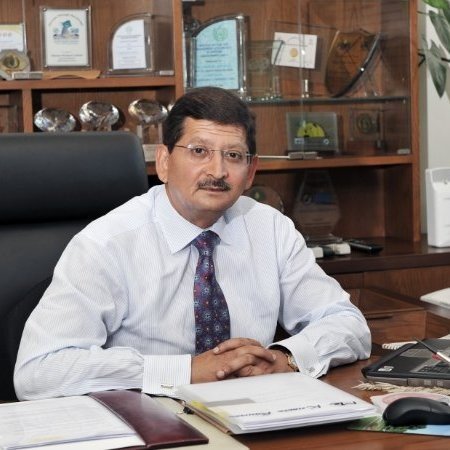
Pakistan Petroleum Limited Extends CEO’s Term
ENERGY Pakistan Petroleum Limited has announced an extension in the term of appointment of Mohammad…
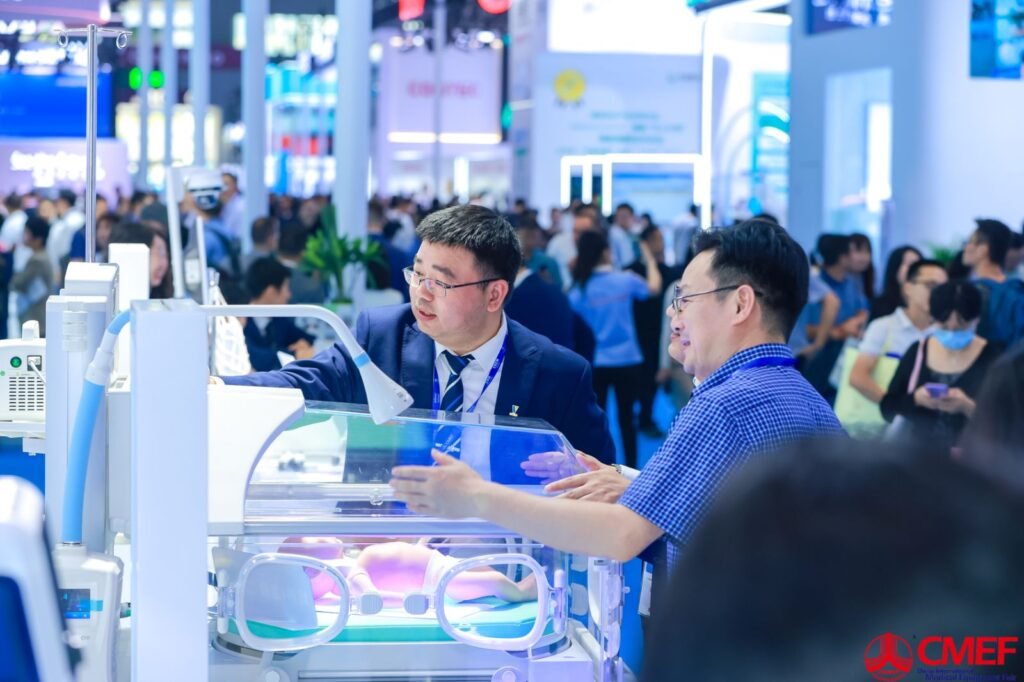
Medical Equipment Manufacturers to Showcase Innovations at CMEF 2026 in Shanghai
HEALTHCARE The 93rd edition of the China International Medical Equipment Fair will be held from…

Pak Elektron to Hold 70th AGM on April 28
INDUSTRY Pak Elektron Limited has announced that its 70th Annual General Meeting (AGM) will be…
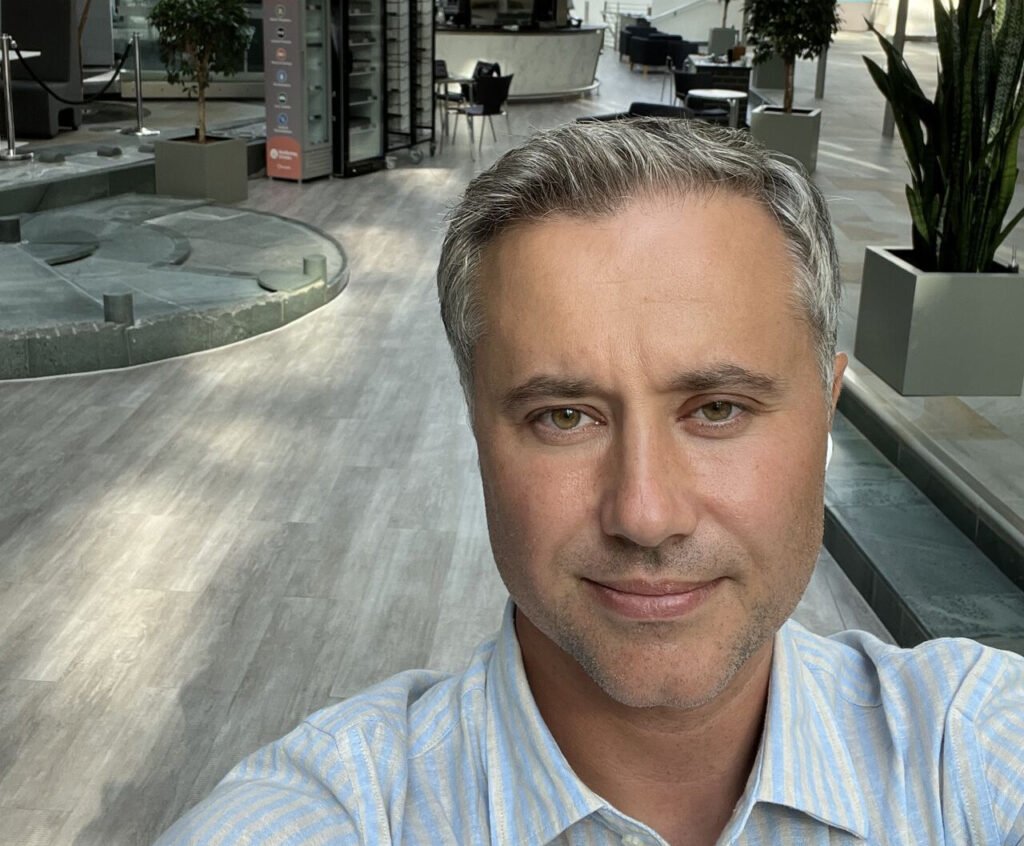
GSK Pakistan Appoints Dmytro Oliinyk as Chairperson
CORPORATE WORLD GlaxoSmithKline Pakistan Limited has announced the appointment of Dmytro Oliinyk as Non-Executive Director…

Industry 5.0 and Green Engineering: Human-Centric Sustainable Production
INDUSTRY 5.O Industry 5.0 redesigns the production architecture in order to place human beings at…

Navigating the Future of Careers in Pakistan in the AI Era
AI ERA By Prof. Dr. Tariq Rahim Soomro, SMIEEE We rode the wave of freelancing…