

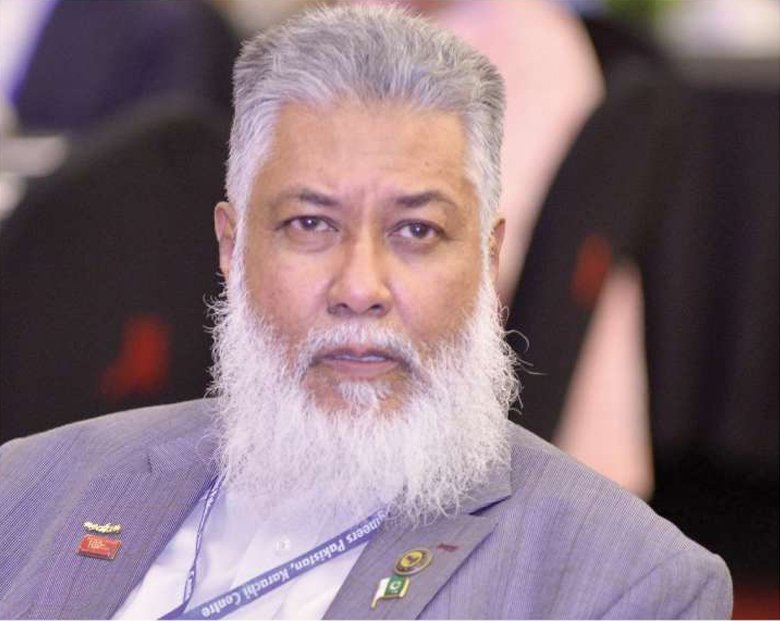
Newly elected President of IEP speaks on solarization, skills development, and the future of Pakistan’s engineering sector in an interview with Engineering Review.
Is Pakistan’s economy improving?
This is a comparative issue—whether the economy is improving depends on the point in time we compare it with. Are we comparing it with the period before 2018 or after that? If we compare it with the pre-2018 period, we have not yet reached that level, because the economy was quite buoyant then. Subsequently, the political situation deteriorated, changes took place, and the economy weakened. Despite political challenges, the economy has improved to some extent.
There are significant challenges, especially for the manufacturing sector. High energy costs prevent our products from being competitive in international markets. In the local market, where monopolies exist, this is not a major issue. However, internationally—whether in garments or the textile industry—production costs are very high due to energy prices. That is a major challenge. Having said that, if the current upward trend continues, economic indicators suggest further improvement. Despite challenges, progress is taking place.
Does improvement in the economy encourage the engineering industry to move ahead? There is a lot of solarization in the industry.
As far as solarization is concerned, the industry has adopted it to a large extent. Many see it as a capital investment that can be recovered in the short term. Solar costs have fallen significantly. However, in the recent past, some government policies have been unfavorable toward solar energy. Due to surplus capacity in power plants and issues related to capacity charges, the government—while earlier strongly encouraging solar—has slowed its support.
Even so, the industry believes that operating solar systems, even beyond net metering and as captive plants, can result in substantial savings. By reducing energy costs, industries can make their products more competitive. Solar prices have dropped from around Rs150 per watt in the past to Rs80, Rs75, and even Rs60 per watt. Panels are also becoming more efficient. This is a booming area, and if the government extends benefits beyond net-metering users, a very positive situation could develop for our industry.
Export of engineering services
The picture is not as rosy as it once was, particularly in the 1970s and 1980s, when Pakistani construction companies were active globally. About a decade ago, Iranian companies came to Pakistan to build bridges—for example, an Iranian company constructed the Shaheed-e-Millat Road—whereas earlier, Pakistani companies used to work in Iran, building highways, and also executed projects in Iraq, Saudi Arabia, and across the Gulf.
Today, Pakistani manpower is still being used, but Pakistani companies are not being engaged in the same way. In Saudi Arabia’s NEOM Project, some individuals have gone, but not in the significant numbers seen in the past. Pakistanis are going as labor or individual consultants, not as companies, unlike earlier when organizations like NESPAK executed major projects.
One reason is that Gulf countries’ confidence in European and American firms has increased significantly. When you visit Dubai, it feels like a European country, with offices of almost every European firm. Pakistani consultants are present, but not at the same scale. Perhaps Europeans have a technical edge, and while they are more expensive, they are perceived to deliver better results. Chinese companies have also emerged as strong competitors, particularly in infrastructure projects.
To move forward, we must operate on a company-to-company basis and also send more trained manpower abroad. Many European firms employ Filipino, Bangladeshi, Indian, and Pakistani workers. If we send more of our skilled people, many opportunities can be created.
Have we lagged behind in new technologies?
The definition of skilled manpower has changed globally. Here, we consider anyone who can work as skilled, but internationally, a worker must not only know the job but also be certified. We face certification issues, and there is also a lack of full exposure to Health, Safety, and Environment (HSE) standards. Companies abroad are certified in these areas.
Some efforts have been made locally, particularly for plumbers and carpenters, to provide certifications. Once certified, opportunities open not only in the Gulf but also in Australia, Japan, Canada, and Korea. Japan and Korea, in particular, have strong demand—provided workers know the local language. We should develop programs that include language training along with professional certifications.
Are our engineering bodies thinking of doing something in this regard?
Some Pakistani companies are outstanding and continue to compete internationally, such as Descon, NESPAK, and Paragon. They have developed themselves well. In Pakistan, international companies operate and engage Pakistani firms in the same manner as they do in Dubai, with international consultants and trained manpower executing projects.
We also need to bring our contractors in line with these standards. One contractor once said that HSE is a “problem.” Anyone who sees HSE as a problem cannot function in today’s environment. Practices have changed—earlier, workers might have worked barefoot with tar on their feet, but that is no longer acceptable.
No new technologies, no skills—no work
That is correct. Without upgrading skills and technology, the scope of work becomes limited. Many well-established companies are now adapting and moving toward AI. New engineering graduates are being taught modern technologies, which is helping companies evolve.
There is also a large consulting sector in Pakistan that handles work outsourced from the United States—performed here at lower cost but to international standards. Another major emerging area over the next four to five years is data centers, with projects worth billions of dollars worldwide. Data centers require large amounts of energy, which is why many are being established in the Gulf, where electricity is cheaper.
If we train our people in data center development, this could become a major source of jobs and business. AI will permeate every field—medicine, arts, and engineering alike. Engineering bodies such as ACEP, PEC, and IEP are making efforts to train engineers in these areas and create more opportunities.
Many Pakistani engineers are already delivering results across the world—in the USA, the Middle East, Japan, and Germany. There is no reason why we cannot continue to do so. – By Manzoor Shaikh
WATCH THE INTERVIEW
READ MORE

Industry 5.0 and Green Engineering: Human-Centric Sustainable Production
INDUSTRY 5.O Industry 5.0 redesigns the production architecture in order to place human beings at…

Navigating the Future of Careers in Pakistan in the AI Era
AI ERA By Prof. Dr. Tariq Rahim Soomro, SMIEEE We rode the wave of freelancing…

US–Israel–Iran War: Where Does Pakistan’s Food Security Stand?
FOOD SECURITY By Manzoor Shaikh For now, doomsday scenario such as a full-scale escalation involving…

A Milestone Achievement in 5G Railway Communication Research
INTERBATIONAL COLLABORATION Mehran University of Engineering & Technology (MUET) proudly announces the successful completion of…

Where does Pakistan stand in unprecedented surge of AI, emerging technologies?
TECHNOLOGY CEO Rastek Technologies, Engr. Rafik Ahmed Lakhani, in a conversation with ER, explained how…
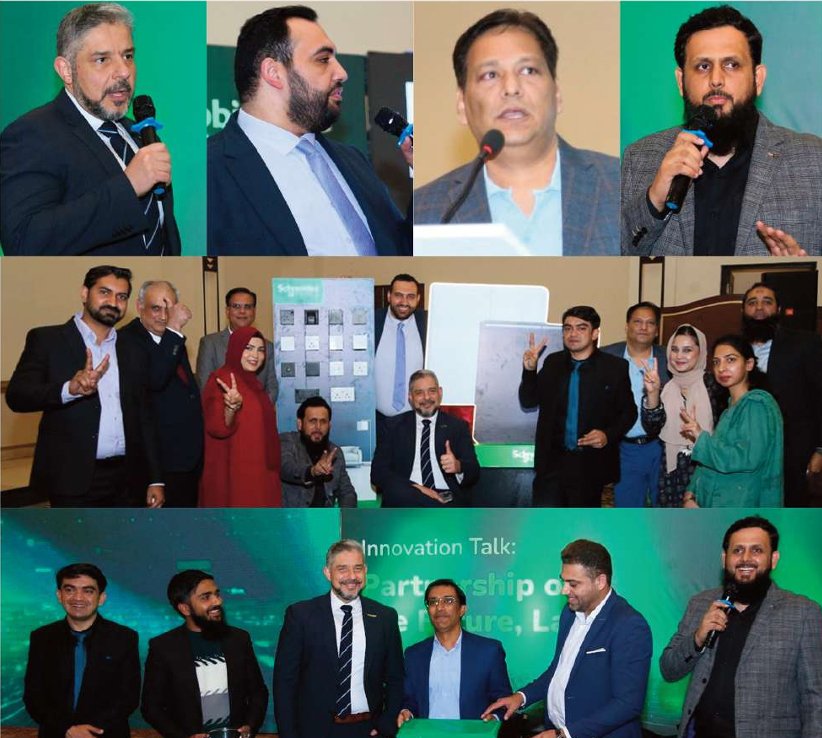
Advancing Energy, Digital Transformation: Schneider Electric Hosts Future Partnership
ENERGY Schneider Electric Pakistan hosted Partnership of the Future – Lahore, bringing together contractors, consultants,…
Leave a Reply