
Pakistan
Punjab Chief Minister Maryam Nawaz Sharif has announced the establishment of four new industrial estates across the province to attract foreign investors, marking a major step toward revitalizing Punjab’s industrial and manufacturing landscape.
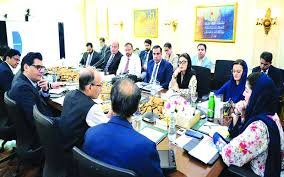
Chairing a high-level meeting to review the performance and development of industrial estates, the chief minister said the initiative aims to create new opportunities for global investors and strengthen local production capacity. She also revealed that Saudi investors are actively considering potential investments in the existing industrial estates at Bhalwal, Vehari, and Bahawalpur.
In a significant policy decision, Maryam Nawaz approved the establishment of a new industrial estate in Sialkot, to be developed on 400 acres near Sialkot International Airport, which will cater to the region’s expanding export-oriented manufacturing sector. She also approved the transfer of the Chunian Industrial Estate to the Fisheries Department, allowing the area to be utilized for specialized aquaculture and allied industries.
During the meeting, the Chief Minister was presented with audit reports of the Faisalabad Industrial Estate Development and Management Company (FIEDMC) and the Punjab Industrial Estates Development and Management Company (PIEDMC). The reports revealed financial irregularities and administrative lapses. Taking serious notice, she directed immediate action against those responsible and called for strict financial discipline and governance reforms.
“Fraud was being committed right under the nose of the previous administration, and no one bothered to intervene,” she said. “It is our foremost duty to safeguard every inch of government land in the province.”
Punjab currently hosts more than 48,000 industrial units, ranging from small and medium enterprises to large-scale manufacturing facilities. The province’s industrial sector — concentrated in Faisalabad, Lahore, Gujranwala, Sialkot, Multan, and Sheikhupura — contributes the largest share to Pakistan’s industrial GDP, with an estimated annual economic activity exceeding Rs 3 trillion.
The province’s industries produce a wide range of goods that are both exported globally and consumed locally. Textiles and garments dominate production, with Faisalabad known as the “Manchester of Pakistan” for its textile exports. Sialkot leads in sports goods, surgical instruments, leather products, and cutlery, while Gujranwala specializes in ceramics, fan manufacturing, and sanitary fittings. Sheikhupura and Lahore are major centers for engineering, chemicals, and processed food products, whereas Multan and Bahawalpur contribute significantly to cotton processing, fertilizer, and agro-based industries.
The Chief Minister emphasized that industrial development must align with sustainability and competitiveness in global markets. She directed departments to restructure the industrial estate policy framework, making it more transparent, investor-friendly, and results-oriented. The new framework, she said, should promote modern infrastructure, digitized estate management, environmental compliance, and a strong focus on renewable energy integration.
The government also plans to enhance facilities in the existing industrial estates, including Quaid-e-Azam Business Park (Sheikhupura), Multan Industrial Estate, Rahim Yar Khan Industrial Estate, Vehari Industrial Estate, Bhalwal Industrial Zone, and the Bahawalpur Industrial Estate. These estates already accommodate hundreds of operational industries employing thousands of workers and generating significant export revenue.
Maryam Nawaz underscored the need to restore investor confidence through good governance and efficient management, saying Punjab’s industrial transformation could play a decisive role in reviving the national economy.
“Industrial estates are not just plots of land; they are engines of economic growth,” she said. “We are determined to make Punjab the preferred destination for both local and international investors by ensuring transparency, quality infrastructure, and ease of doing business.”
The Chief Minister also directed a comprehensive review of the administrative structures of FIEDMC and PIEDMC, recommending amendments to rules and regulations to enhance efficiency, accountability, and transparency.
With four new estates on the horizon and a renewed focus on governance and modernization, Punjab’s industrial future appears set for a major transformation — one that could significantly strengthen Pakistan’s economic backbone and attract long-term foreign investment.