
WORLD
President Masoud Pezeshkian warned that Tehran might have to be “evacuated,” as experts say the worsening crisis could accelerate Iran’s economic collapse and erode its regional influence.
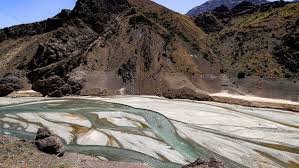
Iran announced on Saturday that it is preparing to implement periodic water cuts across Tehran, a city of more than 10 million people, as the country battles its worst drought in decades. Officials say rainfall in the capital has dropped to its lowest level in a century, with half of Iran’s provinces experiencing months without a single drop of rain.
“This will help avoid waste even though it may cause inconvenience,” Energy Minister Abbas Ali Abadi said on state television, confirming that some neighborhoods have already reported overnight water shortages.
President Masoud Pezeshkian, in a national address on Friday, warned that Tehran might even have to be “evacuated” if the drought persists through the end of the year, though he gave no details on how such a massive operation would be managed.
Tehran, nestled at the foot of the Alborz Mountains, has long relied on seasonal rainfall and snowmelt to fill its reservoirs. But this year, the city’s main water sources are nearing depletion.
According to Behzad Parsa, director general of the Tehran Water Company, the Amir Kabir Dam — one of five major reservoirs serving the capital — now holds only 14 million cubic meters of water, compared to 86 million at the same time last year.
At current consumption levels of roughly three million cubic meters per day, Tehran’s reserves could run dry within two weeks unless new rainfall replenishes the system.
Similar conditions have been reported in other major cities, including Isfahan, Tabriz, and Mashhad, where authorities are also considering nighttime water cuts.
The government already declared two emergency public holidays in July and August to reduce water and energy usage during a brutal summer heatwave that triggered daily power outages.
The water crisis adds yet another layer of hardship to an economy already battered by years of U.S., European Union, and United Nations sanctions. These restrictions — originally imposed over Iran’s nuclear program and regional activities — have crippled key sectors including energy, manufacturing, and trade.
Now, the drought threatens to choke agriculture, industry, and urban living standards, potentially triggering further inflation and unrest.
Iran’s currency has already lost much of its value, and with water shortages worsening, industries such as petrochemicals, mining, and steel production — which rely heavily on water — face significant slowdowns.
This will likely deepen unemployment and social tension in a nation already struggling with high living costs and periodic protests.
Beyond its domestic impact, the crisis could undermine Iran’s regional influence at a critical geopolitical juncture. As Tehran’s financial and resource constraints grow, its ability to sustain funding and logistical support for allied groups — including Hezbollah in Lebanon, the Houthis in Yemen, and various militias in Iraq and Gaza — could weaken.
Washington and Tel Aviv have long sought to curtail Iran’s influence through economic pressure and diplomatic isolation. The environmental catastrophe now unfolding may inadvertently advance those goals by forcing Tehran to focus inward on survival and domestic stability.
Environmental analysts warn that Iran’s chronic mismanagement of water resources — including decades of dam construction, inefficient agriculture, and poor conservation policies — has transformed a natural drought into a national emergency.
The crisis, they say, is not just about water, but about the sustainability of Iran’s political and economic model itself.
As one Iranian environmental activist put it in a social media post: “The real drought is not only in our rivers and lakes, but in our governance and our priorities.”
If Tehran fails to adapt quickly, the nation’s environmental disaster could become a geopolitical one — reshaping Iran’s position in a Middle East already on edge. – Kurdistan24
MORE NEWS
Rethinking Restructuring: Why Organization Design Matters More Than Layoffs
Why Pakistan’s Rising Cost of Labour Demands Better Organization Design, Not Bigger Layoffs By Syed…

OpenAI Pledges Greater Transparency on AI Misbehavior
OpenAI on Wednesday pledged to systematically report incidents in which its artificial intelligence (AI) models…
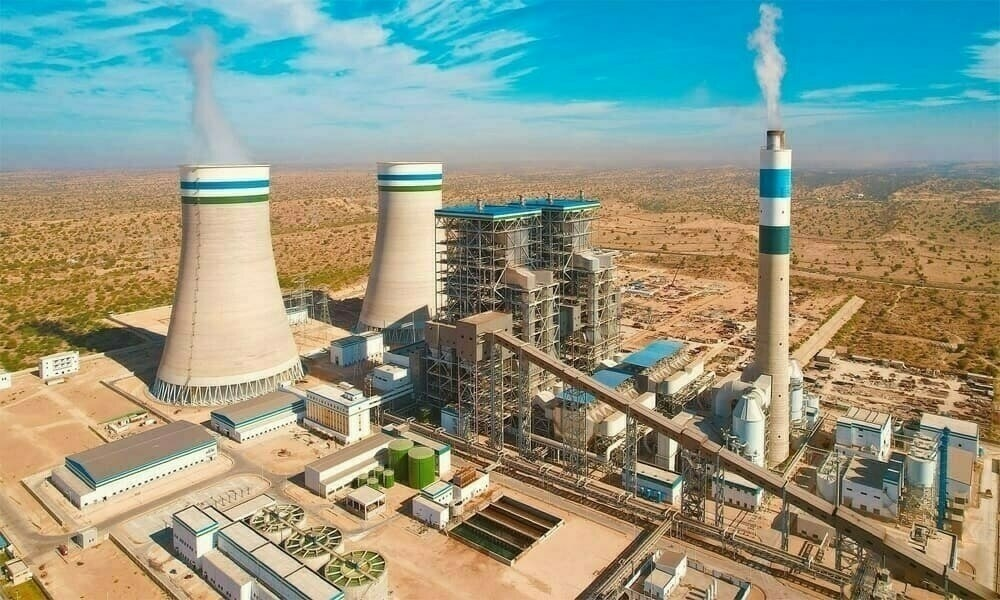
Govt Moves to Reform Power Sector Regulatory Framework
Federal Minister for Finance and Revenue Senator Muhammad Aurangzeb chaired the first meeting of the…

Apple Appoints Salman Dar as First Head of Government Affairs in Pakistan
Apple has appointed Salman Dar as its first Head of Government Affairs for Pakistan, marking…

From Slide Rules to Artificial Intelligence — An Engineer’s 60-Year Journey
Engr. Farooq Mehboob reflects on six decades of engineering, from manual calculations and slide rules…
Engineering, Public Service and Nation Building: The Journey of Engr. Mukhtiar A. Shaikh
From the classrooms of Dawood Engineering College to leadership roles in public service, industry, and…