
WORLD
Scottish and US team calls procedure potential ‘game changer’ that could transform stroke treatment if approved for patient use
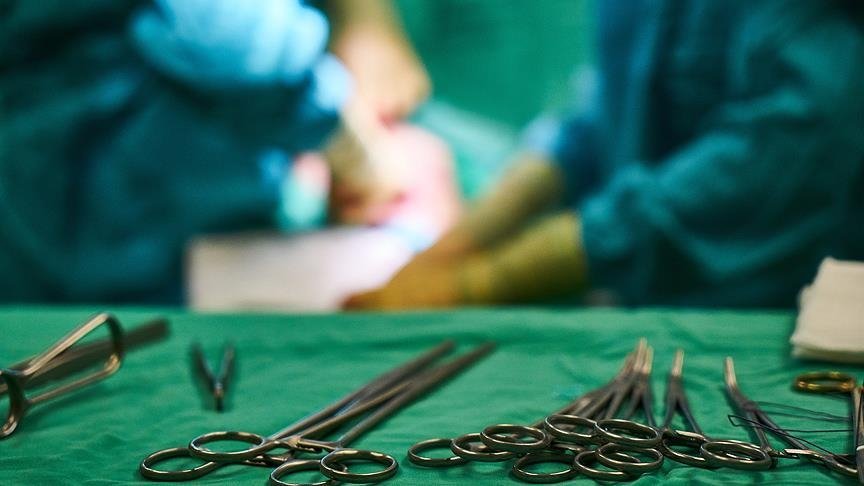
Surgeons from Scotland and the US have successfully performed what is believed to be the world’s first remote stroke operation using robotic technology, BBC reported Monday.
Prof Iris Grunwald of the University of Dundee carried out a remote thrombectomy — the removal of a blood clot after a stroke — on a human cadaver donated to medical science. Grunwald operated from Ninewells Hospital in Dundee, while the body was located across the city at the university.
Hours later, Ricardo Hanel, a neurosurgeon based in Florida, performed the first transatlantic robotic procedure from his Jacksonville office on a human body in Dundee, more than 4,000 miles (6,400 kilometers) away.
The team described the achievement as a potential “game changer” if approved for clinical use, saying it could revolutionize stroke care by allowing specialists to treat patients remotely.
Delays in reaching specialized treatment centers can significantly affect recovery outcomes. Experts said robotic systems could help close that gap, especially in remote or underserved areas.
Prof Grunwald said: “It felt as if we were witnessing the first glimpse of the future. Where previously this was thought to be science fiction, we demonstrated that every step of the procedure can already be done.”
The University of Dundee, a global training center for the World Federation for Interventional Stroke Treatment, is the only institution in the UK where doctors can operate on cadavers with liquid circulating through vessels to mimic human blood flow.
“This was the first time that we could perform the whole mechanical thrombectomy procedure in a real human body to show that all steps of the procedure are possible,” Grunwald said.
Juliet Bouverie, chief executive of the Stroke Association, called the transatlantic operation “a remarkable innovation.”
“For too long, people living in remote and rural areas have been deprived of access to thrombectomy,” she said. “Robotics like this could rebalance the inequity which exists in stroke treatment across the UK.”
Researchers said the success of the trials could pave the way for global adoption of remote stroke care, allowing patients in isolated regions to receive life-saving treatment without traveling long distances. – ERMD
READ MORE
First-Year QUEST Nawab Shah Student Found Dead; Students Allege Brutal Torture
The body of a first-year student of the Quaid-e-Awam University of Engineering, Science and Technology…

AI Voices May Increase Scam Risks for Some Dialect Speakers
The growing use of artificial intelligence (AI)-generated voices is raising concerns that increasingly realistic synthetic…

China Reassesses AI Risks as Cybersecurity Threats Grow
China is reassessing the risks posed by artificial intelligence as increasingly capable AI models demonstrate…

Pakistan Moves Towards Competitive Electricity Market with First Wheeling Auction
Pakistan has taken a major step towards shifting its power sector from the traditional single-buyer…

Sindh CM Orders Enrolment Drive to Fill New Schools
Sindh Chief Minister Syed Murad Ali Shah has directed the School Education Department, district administrations…

Closing the HVAC Lifecycle Gap
INDUSTRY PERSPECTIVE Lessons from Big 5 Construct Saudi 2026 By Eng. Javeria Asad Saudi Arabia’s…