

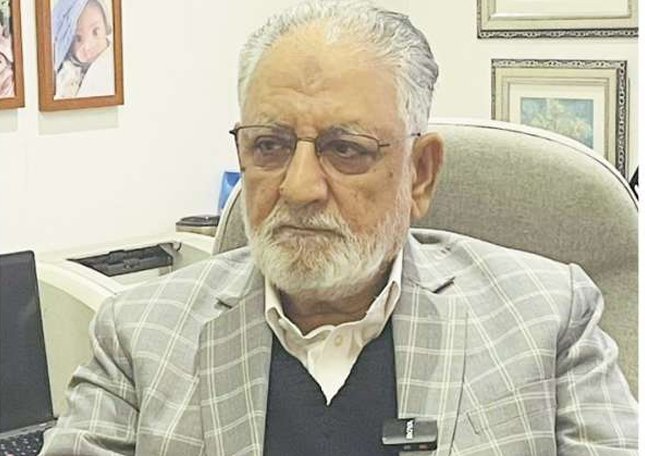
Faheen Siddiqi, the head of ‘Fahim, Nanji & deSouza’ (Pvt.) Limited, a private multi-disciplinary consulting engineering firm based in Karachi, Pakistan on Reform, Technology, and Survival of Consultants
Where Our Consultancy Services Stand in a Changing World
A short answer is that, in this regard, the country stands exactly where everything else stands—at a low point. It is unfortunate. The detailed answer is that there was a time when Pakistan was a country that Korea, Thailand, and other nations used to come to study. They studied our five-year plans, and in fact benefited by implementing those plans. Whatever the reasons may be, a downward trend in society has been continuing for a long time and shows no sign of stopping. Not only consultants—any other business you take up is part of this society, and its reflection also falls upon us.
The biggest challenges facing consultancy, in my view, are two. First, the appropriate fees that should be received are not received. Second, for one reason or another, there is a curve that is continuously declining. I started my career in 1974 with an international consultancy firm owned by Sibte Murtaza Kazmi. I worked there for 14 years, and after three years became a 30 percent partner. In those days, consultancy costs were a percentage of the project cost. For a design worth 100, one would receive 2–4 percent. A reasonable livelihood was possible. Technology was not advanced then; its growth was slow and work volume was lower. Today, in the time of one project back then, three projects emerge. Pressure has increased. Communication has become much faster, but consultancy fees keep declining, creating a downward spiral, and things have reached an unsustainable level.
A consultant is not an individual anymore. Designs have become complex and require large teams. Construction requires close attention. The quality of contractors has also declined; they too have become like factories. Extracting correct work takes a lot of time. Top supervision has changed as well—you now have to stand on-site to get work done. Sustainable fees are those that can cover an organization’s basic salaries and around 20 percent other overheads, as in our case.
The More Projects, the Lower the Fees
Yes, the number of projects today is greater, and that is necessary. In the past, all calculations were manual; work that took a month can now be done by software in two hours, with 45 minutes to an hour for input. So shouldn’t returns be higher? Yes—but the issue is that if fees are taken below even 1 percent, they are no longer sustainable. An organization must function, retain good people, keep some savings, maintain staff during slow periods, and generate some profit.
Why Are Consultancy Fees Declining?
In a nutshell, it is consultants’ own stupidity. We have cut our own legs with an axe. Fees keep falling; greed is also a factor. There are other reasons too—people say, “Just secure the work; the money will come anyway.” Alhamdulillah, at F&D, the fees we receive come only from consultancy—our only source of income. We hear people say, “Your fees are double or triple,” often from those who are our competitors. We have spoken with many architects and consulting firms, and the consensus is that what is happening is very wrong. Yet despite this, the belief persists that we cannot fix it.
Now there is a need for institutions to come into the system. If an owner wants work done, they know a consultant will save them money. But commonly it is said, “This consultant works for 10 rupees—why are you asking for 20?” There is no further thinking beyond that. In large organizations, supply chain management has been introduced. Consultants are procured through supply chain departments, and managers follow SOPs as if they are buying furniture. You can’t do consultancy like that—though a few do avoid this practice.
I say that on an investment of 100 rupees, you should be willing to spend 1 rupee to ensure the project’s safety and smooth execution—but they are not even willing to pay that one rupee. Today, I have come down to the level of saying, “All right, give me one percent of the project cost.” Now a trend has started of charging per square foot, and competition has pushed this down to levels like 0.7 to 0.3. In this situation, we will have to do something.
Consultants’ Registration with PEC
If we look at it from another angle, PEC registers consultants. PEC has set a criterion: if someone is a graduate engineer with ten years’ experience, or a master’s degree holder with the required experience, that is considered sufficient. But when contractors are registered, there are many categories. There is nothing similar for consultants. So F&D with 150 people and a three-person firm in Islamabad are both simply “consultants.” Competition is not fair. I think PEC needs to play a role here. My wish is to form a committee and take this up. There is also a need to sit with ACEP and take it forward. So far, their thinking has not gone in the direction of categorizing consultants. When I went to receive an Engineering Excellence Award at PEC, I had a brief conversation that made me realize more dialogue is needed. That needs to happen.
Regulatory Intervention
There is a need for regulatory authorities to step in and set some market standards. In fact, there is profiling of consultants, but it is not like contractors, who are categorized according to experience, size, and capacity. Among architects and consultants, some do quality work, but people have long said that one day foreign consultants and architects would replace locals—and that is happening. There are two reasons for this. First, our people have not achieved the technological level they should have, leading to weaknesses in presentation.
I must say that for anything good to happen, there must be good people behind it—a strong team. Where will that come from? If I search the market for a good engineer with five years’ experience, I won’t find one because they are all abroad. There is brain drain—another major challenge. It is happening in engineering and architecture as well. As a result, people cannot deliver quality work here, while those working abroad deliver and get results.
CPEC and Pakistani Companies
I am focusing on consultancy services, but it is true that most of this work has gone to Chinese companies. Since it is their investment, complete designs come from China—this has happened. The same applies to construction. Whenever you take a loan, baggage comes with it.
Technology vs. Human Resources
As a company owner, I should be very happy—I could reduce the workforce by 50 percent. There is talk that AI will take over 90 percent of jobs over time, and it may happen, because the evolution of AI over the past two to three years is astonishing. In our MEP engineering, the impact has been limited so far—mainly in documentation, not in design. Design is still done in a traditional manner using software, but not AI-supported design yet. I did some research and found that a few companies have integrated AI into MEP; this still needs to be observed.
When computers were introduced around the year 2000, a rosy picture was presented—that a day’s work would be done in an hour. That didn’t fully happen. I believe that as AI evolves, other factors will emerge, and the importance of humans will remain. I am talking about the short term, because right now we are discussing AI. Then there is something called Artificial General Intelligence, which would be equal to human cognitive capability—imagine what that would mean. After that comes AI superintelligence, many times more powerful. What that will be, we don’t know. The world will definitely change.
In the long term, there is fear that AI could take over the world. They say we will build safeguards into AI to ensure it is human-friendly and ensures the continuity of the human race. But it is also said that one day AI may realize that humans are the worst enemies of humanity and decide to wipe them out. I don’t know how the world will evolve, but I must say this is not far in the future.
I think we need to integrate with AI, because everything in use will involve AI and it facilitates human life. These are very exciting times—I would love to live and see where this is going. Most importantly, learning has become very simple. Every piece of information is available at the click of a button. It is up to you to turn that information into knowledge. – By Manzoor Shaikh
WATCH THE INTERVIEW
READ MORE
PEC Deadlock: How Did the Two-Year Crisis Develop?
The Pakistan Engineering Council (PEC) is facing a serious institutional deadlock, raising questions about how…
Prof. Dr. Altaf Mukati appointed SZABIST President
Prof. Dr. Muhammad Altaf Mukati has been appointed President of Shaheed Zulfikar Ali Bhutto Institute…
Sheikh Tariq Nazir elected CAP chairman unopposed
Sheikh Tariq Nazir has been elected unopposed as Chairman of the Constructors Association of Pakistan…
Civil Service Restructuring Brings Engineering Back Into the Spotlight
By Manzoor Shaikh Pakistan’s federal government has finalized a sweeping plan to restructure the country’s…
PEC’s Seven Recurring Problems: Is the Institution Bigger Than Its Chairman?
By Manzoor Shaikh There are seven interesting—and increasingly uncomfortable—observations about the Pakistan Engineering Council (PEC)…

Kaspersky Raises Alarm Over Cyber Threats to Young Pakistani Users
Cybersecurity company Kaspersky has warned that children in Pakistan may face a range of online…