

China registered a record 5,215 clinical drug trials in 2025, underscoring the country’s rapid rise as a global biotechnology hub even as its expanding pharmaceutical sector comes under increased scrutiny from the United States.
According to a report released on Monday by China’s National Medical Products Administration, the number of clinical drug trial registrations more than doubled from 2020 levels.
New drug trials accounted for 57.5% of the total, marking an 18% increase from the previous year, while the remainder were bioequivalence studies evaluating whether generic medicines perform the same as their branded counterparts.
Most trials were conducted in Beijing, Shanghai, Guangdong and Jiangsu, with Chinese companies and research institutions initiating or funding 93% of all registered studies. Around 92% of the trials were carried out entirely within China, while the remainder formed part of multinational clinical studies.
Cancer therapies remained the largest area of research, followed by treatments for skin, eye, ear and throat diseases, hormonal and metabolic disorders such as diabetes and thyroid conditions, and vaccines for infectious diseases. Clinical studies involving traditional Chinese medicine primarily focused on respiratory, mental and neurological disorders.
The record figures reflect Beijing’s continued push to develop biotechnology as a strategic industry to support economic growth. Chinese pharmaceutical firms have steadily advanced up the global value chain, with an increasing number of domestically developed drugs entering international markets.
Data presented at the Outsourcing in Clinical Trials conference in California in February showed that clinical trials in China cost 50% to 60% less than those conducted in the United States and are completed in a shorter timeframe.
China’s growing influence in biotechnology has also raised concerns in Washington. On June 2, US lawmakers introduced the Biotech Investment National Security Act (BINSA), legislation that would require national security reviews of American licensing agreements, joint ventures and equity investments involving Chinese biotech companies.
Tony Ren, head of Asia healthcare research at Macquarie Capital, said the proposed legislation had weighed on investor sentiment, lowering valuation multiples for Chinese biotech firms. However, he noted that a complete decoupling of the US and Chinese biotechnology sectors was unlikely and said he saw limited downside risk for the industry from current levels.-ERMD/TS
READ MORE

Pakistan, World Bank Group Agree to Accelerate Reforms and Investment-Led Growth
Federal Minister for Economic Affairs Ahad Khan Cheema met World Bank Group (WBG) President Ajay…

ECNEC Approves 11 Development Projects in Energy, Infrastructure, Healthcare, Technology
The Executive Committee of the National Economic Council (ECNEC), chaired by Deputy Prime Minister and…

Pakistan, EU Explore Cooperation in Electric Vehicle Skills Development
Advisor to the Prime Minister for Industries and Production Haroon Akhtar Khan has directed the…
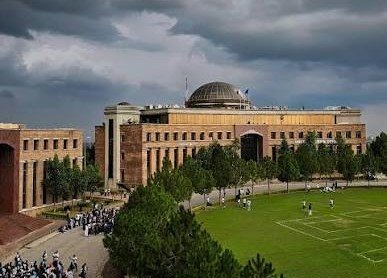
NUST Honours 66 PhD Scholars and 54 Medal-Winning Undergraduates at Convocation
Federal Minister for Planning, Development and Special Initiatives Ahsan Iqbal has urged graduates of the…

IBA, AKU and Habib University Join Hands to Rethink Education in the AI Era
The Institute of Business Administration (IBA) Karachi, in collaboration with Aga Khan University (AKU) and…

ABB Reports Strong Growth as AI Data Centre Spending Surges
Swiss engineering company ABB has reported strong growth in earnings, driven by a continued surge…