
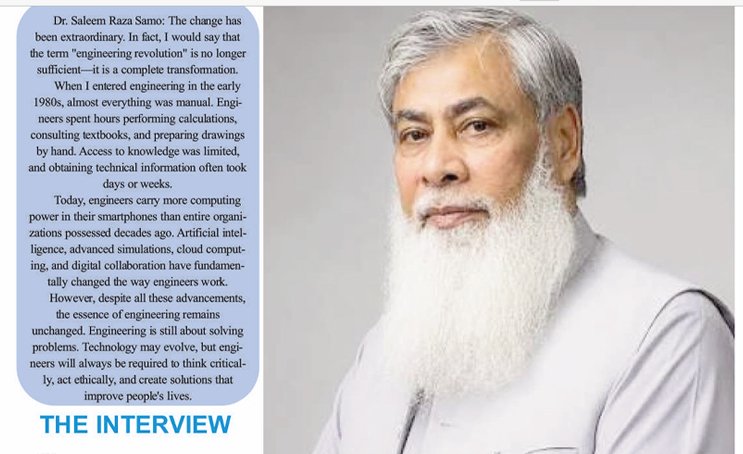
QUEST Vice Chancellor reflects on four decades of engineering education, his journey from gold medalist to university leader, the transformation of QUEST, and why the future of Pakistan depends on engineers who can combine strong fundamentals with artificial intelligence, innovation, and leadership.
THE INTERVIEW
ER: Take us back to your student days. What inspired you to become an engineer?
SRS: My interest in engineering began long before university.
I completed my Higher Secondary Certificate in 1980. During those days, a highly respected mathematics teacher in Nawabshah, Sir Vasdev, regularly advised students regarding their career choices. After assessing my academic performance, he told me I had the potential to become either a doctor or an engineer.
My elder brother was a doctor, so medicine was naturally an attractive option. However, another individual left a lasting impression on me.
A mechanical engineer used to visit Nawabshah regularly to work on industrial machinery. I still remember him clearly. He wore a blue engineering apron, confidently inspected equipment, and always seemed to have practical solutions to complex problems.
Watching him convinced me that engineering was a profession where knowledge met action.
Although I was offered admission in both Electrical and Mechanical Engineering, I chose Mechanical Engineering because I wanted to work with machines and industrial systems. I wanted to become a practical engineer. Looking back, it was undoubtedly one of the best decisions of my life.
ER: What happened after graduation?
SRS: I graduated as a gold medalist and secured a top position in my class.
Soon after graduation, the university offered me a position as a lecturer. At the same time, I appeared for recruitment at Pakistan Ordnance Factories. The competition was intense, with hundreds of candidates applying.
By the grace of Allah, I was selected on merit, and Major General Talat Masood personally handed me my appointment letter immediately after the interview. For a young engineer, it was a proud moment.
However, life had other plans.
My family suffered the tragic loss of my sister, and I returned to Nawabshah. The university once again encouraged me to join the faculty, and what initially appeared to be a temporary decision eventually became my life’s work.
Since 1987, I have remained associated with the university system—as a teacher, researcher, administrator, and now Vice Chancellor.
When I look back, I realize that challenges often redirect us toward opportunities we never anticipated.
ER: What became your focus as a teacher?
SRS: Very early in my career, I noticed something important. Students from smaller cities possessed tremendous talent but often lacked confidence.
Technical knowledge alone is not enough. Engineers must be able to communicate, present ideas, and lead teams.
For that reason, I made classroom presentations compulsory. Every student had to stand before the class and explain a technical topic.
Initially, students were uncomfortable, but over time they developed confidence. Even today, many former students tell me that those presentations became one of the most valuable experiences of their careers.
I have always believed that education is not merely about producing graduates—it is about producing capable, confident, and responsible citizens.
ER: You became Vice Chancellor in 2018. What challenges did you inherit at QUEST?
SRS: There were several operational challenges.
Student concerns regarding hostel facilities, electricity, and basic services required immediate attention. We focused on improving sanitation, installing RO water plants, and ensuring uninterrupted electricity during study hours.
Fortunately, we succeeded in addressing many of these issues. Since then, not a single university examination has been disrupted because of such problems.
At the same time, we focused on financial sustainability. We expanded solarization across the campus, which now covers approximately 60 to 70 percent of our energy requirements. We digitized processes and reduced unnecessary expenditures.
As a result, QUEST has become one of the few public-sector universities in Sindh operating with a surplus budget.
ER: QUEST has recently achieved important rankings. How significant are these achievements?
SRS: They are significant because they demonstrate what is possible when an institution works collectively.
For the first time in its history, QUEST entered the Times Higher Education Rankings. More importantly, in the Sustainable Development Goal (SDG) category for Quality Education, QUEST emerged as the top-ranked engineering university in Sindh and among Pakistan’s leading institutions in that category.
These achievements belong to our faculty, students, officers, and staff. They also demonstrate that institutions outside major metropolitan cities can compete successfully at the national and international levels.
ER: What reforms have you introduced to modernize the university?
SRS: Digital transformation has been one of our major priorities.
Previously, admissions could take several weeks. Today, students can complete the process within a single day. Test scores are generated immediately, documents are verified electronically, and admission letters are issued promptly.
We have also established an RFID-enabled library, introduced new academic programs, expanded postgraduate education, and strengthened our research infrastructure.
When I assumed office in 2018, the university offered only a limited number of disciplines. Today, QUEST has 25 undergraduate departments and 35 postgraduate programs, including master’s and doctoral degrees recognized by the Higher Education Commission.
We introduced emerging disciplines such as Artificial Intelligence, Data Science, Cyber Security, Software Engineering, and Computer Science because universities must prepare students for the future rather than the past.
ER: Many people fear that artificial intelligence will replace jobs. What is your perspective?
SRS: I view AI as an enabler rather than a threat.
History shows that every technological advancement creates new opportunities. During the Covid-19 pandemic, entirely new industries emerged. Similarly, artificial intelligence will create opportunities that we cannot fully imagine today.
AI will not replace engineers; it will enhance their capabilities. Engineers who understand AI will have a significant advantage over those who ignore it.
That is why universities must ensure students possess strong engineering fundamentals while also becoming comfortable with emerging technologies.
The future belongs to engineers who can combine technical expertise, creativity, and digital skills.
ER: Finally, what role do you believe Engineering Review plays in Pakistan’s engineering community?
SRS: Completing fifty years of continuous publication is an extraordinary achievement.
Engineering Review has consistently connected academia, industry, and professional institutions. Through its publications, seminars, and digital platforms, it has helped engineers remain informed about technological developments and industry trends.
In many ways, publications like Engineering Review serve as bridges between universities and industry. They create awareness, encourage dialogue, and inspire collaboration.
Pakistan has immense engineering talent. If our universities, industries, policymakers, and professional platforms work together, I have no doubt that Pakistan can emerge as a regional leader in technology and innovation.
The future of engineering will not be defined solely by artificial intelligence or advanced machines. It will be defined by institutions that produce confident graduates, encourage innovation, and prepare engineers to solve the challenges of tomorrow. And that, ultimately, is the responsibility of every engineering university in Pakistan.
READ MORE
Read More
Pakistan, World Bank Group Agree to Accelerate Reforms and Investment-Led Growth
Federal Minister for Economic Affairs Ahad Khan Cheema met World Bank Group (WBG) President Ajay…
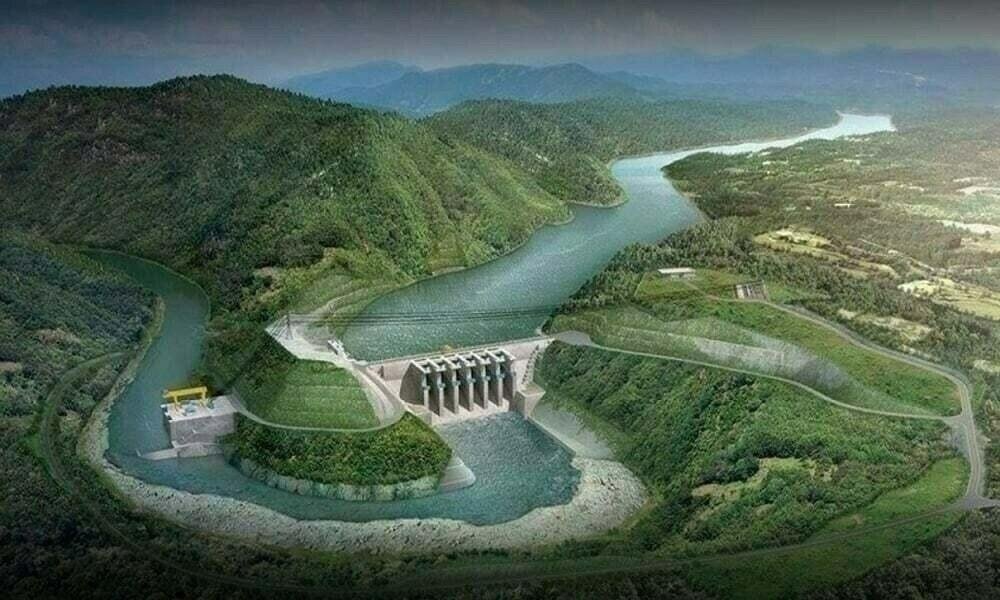
ECNEC Approves 11 Development Projects in Energy, Infrastructure, Healthcare, Technology
The Executive Committee of the National Economic Council (ECNEC), chaired by Deputy Prime Minister and…
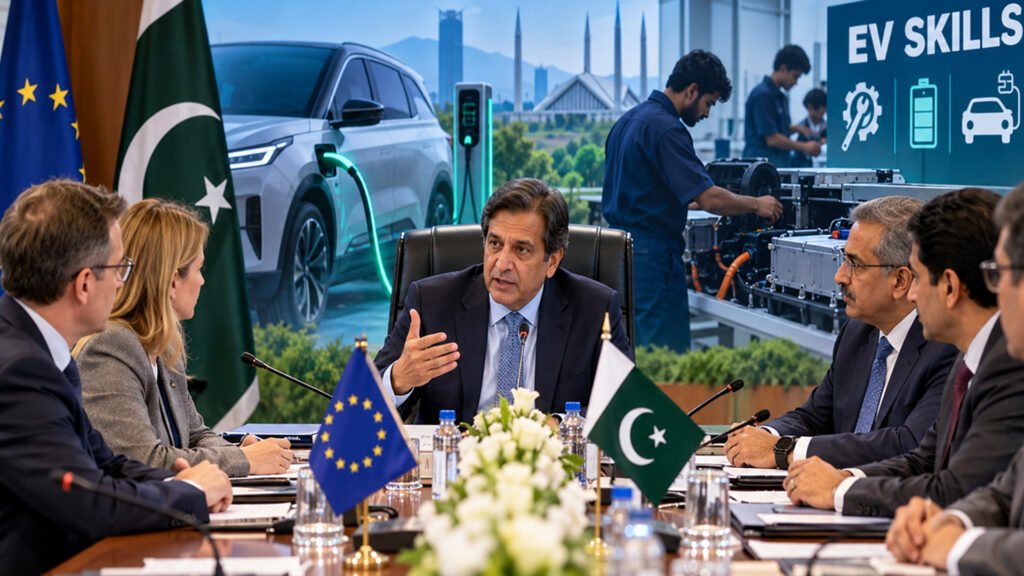
Pakistan, EU Explore Cooperation in Electric Vehicle Skills Development
Advisor to the Prime Minister for Industries and Production Haroon Akhtar Khan has directed the…
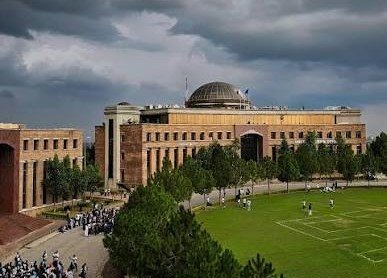
NUST Honours 66 PhD Scholars and 54 Medal-Winning Undergraduates at Convocation
Federal Minister for Planning, Development and Special Initiatives Ahsan Iqbal has urged graduates of the…
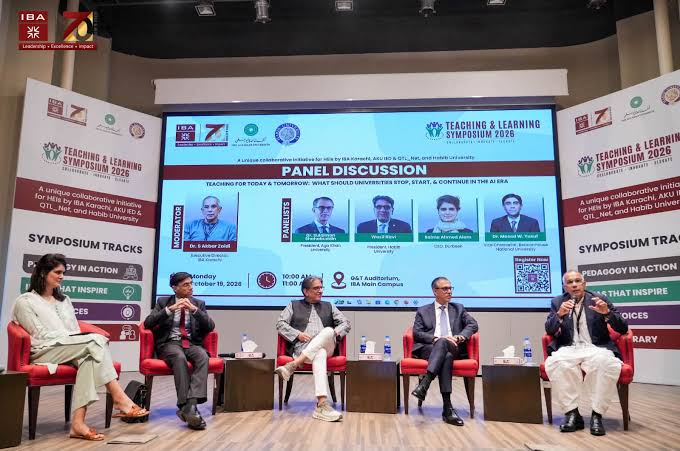
IBA, AKU and Habib University Join Hands to Rethink Education in the AI Era
The Institute of Business Administration (IBA) Karachi, in collaboration with Aga Khan University (AKU) and…
ABB Reports Strong Growth as AI Data Centre Spending Surges
Swiss engineering company ABB has reported strong growth in earnings, driven by a continued surge…