
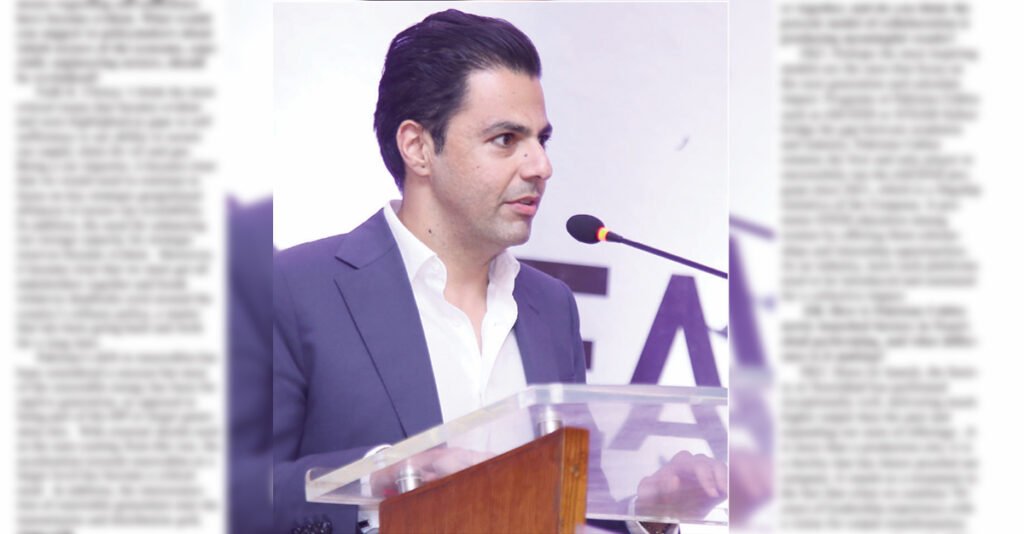
Fahd Kamal Chinoy, Chief Executive Officer, Pakistan Cables Limited
THE INTERVIEW
Engineering Review: In the aftermath of the Middle East war, Pakistan’s fault lines and weaknesses regarding self-sufficiency have become evident. What would you suggest to policymakers about which sectors of the economy, especially engineering sectors, should be revitalized?
Fahd K Chinoy: I think the most critical issues that became evident and were highlighted as gaps to self sufficiency is our ability to secure our supply chain for oil and gas. Being a net importer, it became clear that we would need to continue to focus on key strategic geopolitical alliances to secure our availability. In addition, the need for enhancing our storage capacity for strategic reserves became evident. Moreover, it became clear that we must get all stakeholders together and break whatever deadlocks exist around the country’s refinery policy, a matter that has been going back and forth for a long time.
Pakistan’s shift to renewables has been considered a success but most of the renewable energy has been for captive generation, as opposed to being part of the IPP or larger generation mix. With external shocks such as the ones coming from this war, the acceleration towards renewables at a larger level has become a critical need. In addition, the interconnection of renewable generation onto the transmission and distribution grid, along with debottlenecking of overloaded lines is equally important. Finally, the need to invest in battery storage to support the availability of renewable energy is evident.
You cannot have a self-sufficient industry if you have to import the machines that make the machines. The Pakistan Machine Tool Factory (PMTF) and similar hubs must be upgraded and revived to their true potential. Long-term agenda should be import substitution. We must provide tax holidays for firms producing dies, molds, and precision valves, which are currently imported for our textile and automotive sectors. Similarly, transition from mere “importers of panels” to domestic manufacturers of inverters, mounting structures, and storage batteries. Within the energy sector, grid modernization to reduce line losses and investing in technologies such as PCL’s ACCC Conductors that help smart-grid transformers and high-voltage transmission equipment to reduce line losses are some multi-sectoral recommendations.
“You cannot have a self-sufficient industry if you have to import the machines that make the machines.”
Restart the “Buy Pakistan” movement and legislate that all government-funded infrastructure projects must source at least 40% of engineering components from local manufacturers. By revitalizing these core engineering pillars, we turn our current “fault lines” into the bedrock of a self-reliant, export-oriented Pakistan.
ER: Where did you receive your education, and what is the best memory you would like to share with our readers?
FKC: I completed my MBA from INSEAD, France, before which I graduated with a BA in Economics and Political Science from the University of Pennsylvania (US). I completed by my early education in Pakistan, a foundation that has been instrumental in my career. Growing up and studying here provided me with a deep-rooted understanding of the resilience of our workforce, and the unique socio-economic dynamics that drive our markets.
My earliest memories of returning to Pakistan in 2008 and joining Pakistan Cables include the time I spent traveling across the country to meet and develop relationships with our customers and in particular our dealer network. Many of these customers had generational relationships with the Company and for me it was a significant adjustment from my previous career in banking on Wall Street and in Toronto. To understand the expectations and aspirations of our dealers and how our brand and product fit in, was a highly accelerated learning experience.
Another memory involves mentorship and community building when we undertook a recent initiative, where I had the opportunity to engage with middle government school students. We spoke about the concept of building positive habits—the small, incremental changes that lead to long-term success. Seeing the spark of curiosity in their eyes as they realized they have the agency to shape their own futures was incredibly rewarding. It reminded me of the mentors I had during my own youth who encouraged me to look beyond the immediate horizon.
ER: What kind of engineering and industrial environment did you encounter after completing your education, and what changes do you observe in modern engineering and industrial practices in Pakistan today?
FKC: Reflecting on the shift between the landscape I entered in the late 2000s and the one we operate in today, the transformation has been profound. This is particularly true for Pakistan Cables – as I started my career with our original factory which was based on SITE, Karachi and today we operate out of a bigger state-of-the-art factory, completed in 2025, located at Nooriabad, Sindh. The transformation over this period has been significant, with scale, capacity, modern technology all being enhanced within our organization.
Unfortunately, the reality is that at a macro level the pace of industrialization in Pakistan has declined significantly. With the industrial and organized sector carrying an overwhelming amount of tax burden, there has been a shift towards other segments of the economy and in some cases this has been towards rent seeking opportunities. The industrial sector has faced inconsistent policy interventions and uncertainty, and coupled with high interest rates and excessive tax burden, money has shifted away from industry. Having said that, of the companies that are operating within these challenging confines I think the focus has been one of survival but that some organizations are becoming increasingly focused on broader impact. Many progressive companies are starting to build sustainable systems that are ready for a global, digital-first economy.
ER: What would you suggest to bring industry and academia closer together, and do you think the present model of collaboration is producing meaningful results?
FKC: Perhaps the most inspiring models are the ones that focus on the next generation and calculate impact. Programs at Pakistan Cables such as ASCEND or STEAM Safeer bridge the gap between academia and industry. Pakistan Cables remains the first and only player to successfully run the ASCEND program since 2021, which is a flagship initiative of the Company. It promotes STEM education among women by offering them scholarships and internship opportunities. As an industry, more such platforms need to be introduced and sustained for a collective impact.
ER: How is Pakistan Cables newly launched factory in Nooriabad performing, and what difference is it making?
FKC: Since its launch, the factory at Nooriabad has performed exceptionally well, delivering much higher output than the past and expanding our suite of offerings . It is more than a production site; it is a facility that has future proofed our company. It stands as a testament to the fact that when we combine 70+ years of leadership experience with a vision for output transformation and sustainability, we create an asset that elevates the entire industry.
Our goal is to ensure it continues to operate efficiently. The facility has streamlined our production cycles, allowing us to meet the growing demand for specialized solutions, such as upto 69KV MV cables, Solar DC Cables, with speed and precision. We have expanded our capacities for Copper Rod and PVC compound and have backward integrated into Aluminium Rod manufacturing.
The facility’s footprint is optimized to minimize environmental impact, proving that large-scale industrial growth can—and must—be environmentally responsible. We have planted the largest forest in an industrial facility in Pakistan, with over 50,000 trees on 3 acres and have invested in solar and are actively exploring captive wind energy.
Through our Customer Connect program, we have hosted over 200 external stakeholders, showcasing the future of local manufacturing and building confidence in domestic industrial capabilities. In an era where regional instabilities have exposed the fragility of global supply chains, the Nooriabad facility is a pillar of resilience. By localizing the production of high-end engineering goods, we are enhancing Pakistan’s export potential by offering “Made in Pakistan” products that compete on a global quality tier. That’s why we are also Pakistan’s largest exporter of wires and cables.
ER: What is your opinion about the role of Engineering Review in highlighting and disseminating issues related to Pakistan’s engineering sector?
FKC: In a landscape often dominated by generalist media, Engineering Review has consistently built its authenticity over decades through credible stories. Its value lies in its ability to provide the technical depth and industrial focus necessary for informed policymaking. In my view, Engineering Review is not just a journal; it is a strategic partner for the industrial sector
READ MORE
Pakistan, World Bank Group Agree to Accelerate Reforms and Investment-Led Growth
Federal Minister for Economic Affairs Ahad Khan Cheema met World Bank Group (WBG) President Ajay…
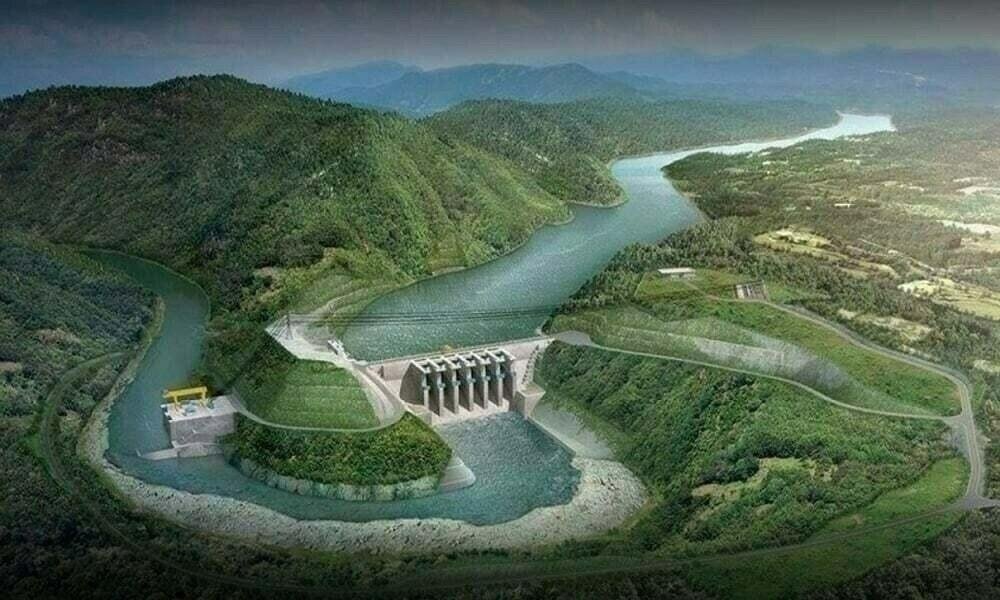
ECNEC Approves 11 Development Projects in Energy, Infrastructure, Healthcare, Technology
The Executive Committee of the National Economic Council (ECNEC), chaired by Deputy Prime Minister and…
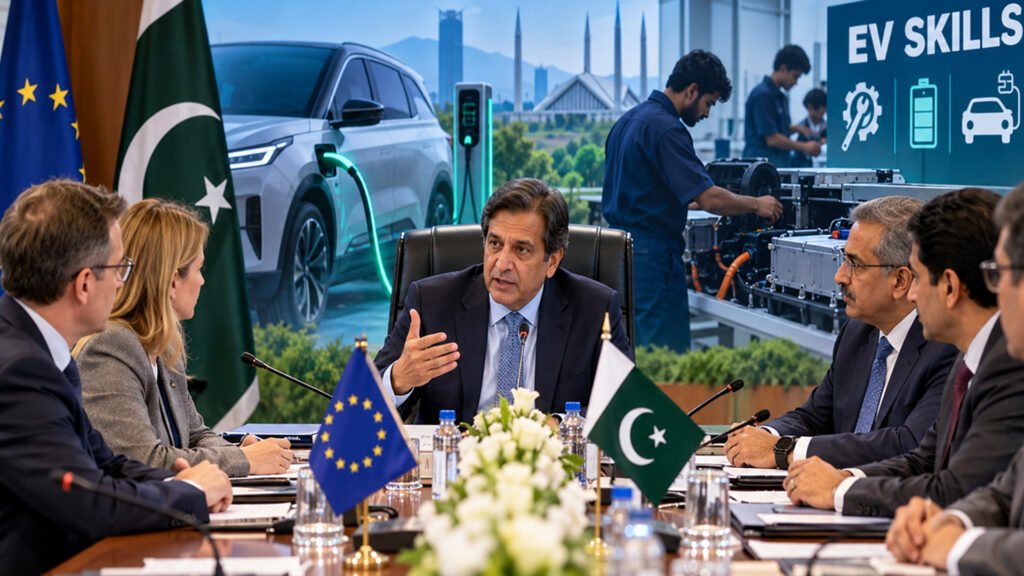
Pakistan, EU Explore Cooperation in Electric Vehicle Skills Development
Advisor to the Prime Minister for Industries and Production Haroon Akhtar Khan has directed the…
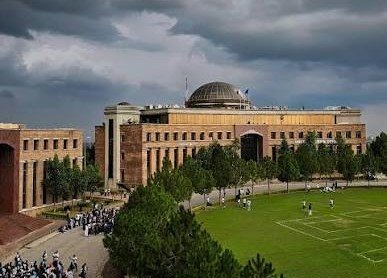
NUST Honours 66 PhD Scholars and 54 Medal-Winning Undergraduates at Convocation
Federal Minister for Planning, Development and Special Initiatives Ahsan Iqbal has urged graduates of the…
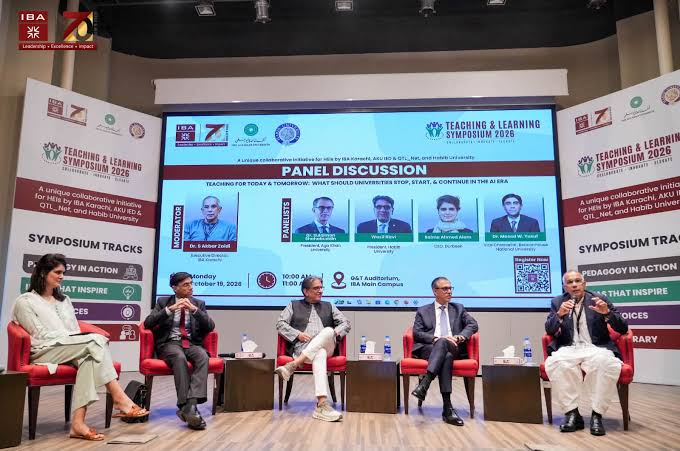
IBA, AKU and Habib University Join Hands to Rethink Education in the AI Era
The Institute of Business Administration (IBA) Karachi, in collaboration with Aga Khan University (AKU) and…
ABB Reports Strong Growth as AI Data Centre Spending Surges
Swiss engineering company ABB has reported strong growth in earnings, driven by a continued surge…