
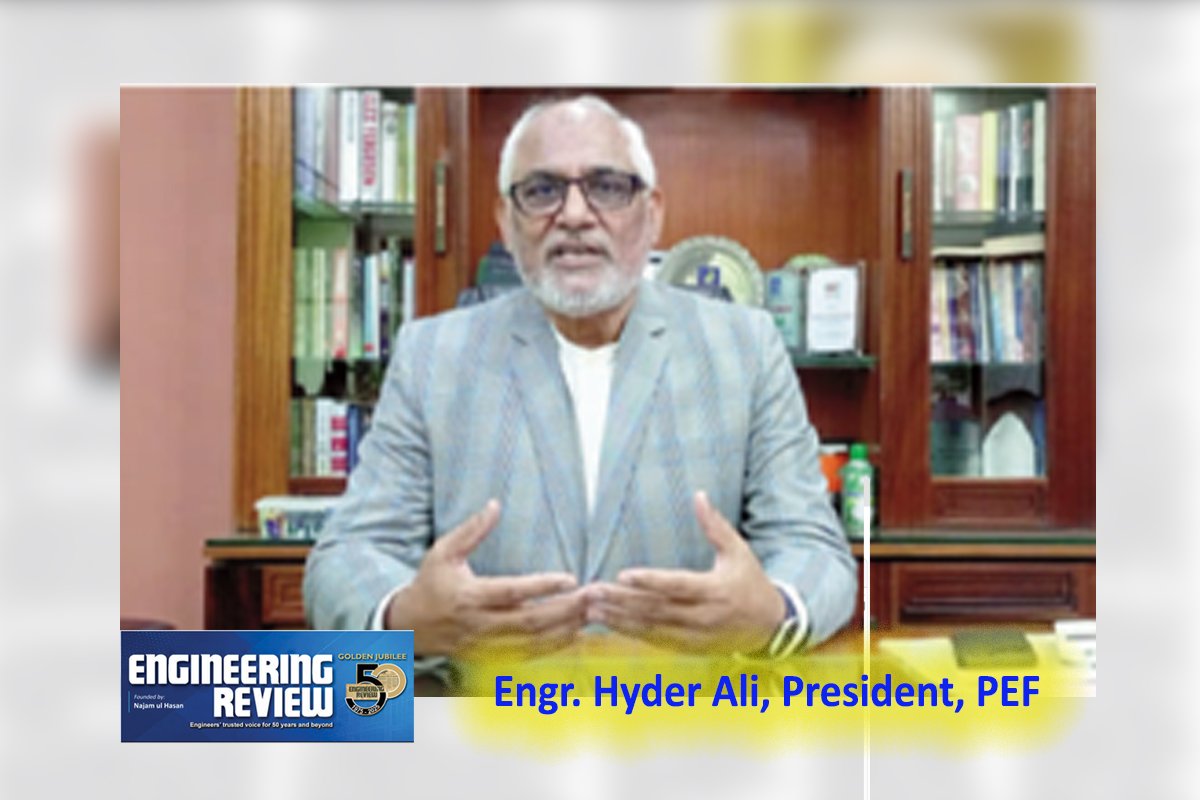
The Pakistan Engineering Council (PEC) is facing a serious institutional deadlock, raising questions about how the situation has developed over the past two years and whether the existing legal framework provides any mechanism to resolve the dispute, says Engr. Haider Ali, leading Pakistan Engineers Forum PEF).
According to the PEC’s governing framework, he said while talking to Engineering Review, its rules and procedures are clearly defined, while major policies are approved by the Governing Body. Various committees work under the Governing Body and deal with key matters, including accreditation, enrolment and other professional and regulatory issues.
However, the council has faced growing institutional difficulties over the past two years. While routine affairs continued during the first year, the situation became more complicated in the second year. There has been no meeting of the Governing Body for an extended period, and no Annual General Meeting (AGM) has been held for two consecutive years.
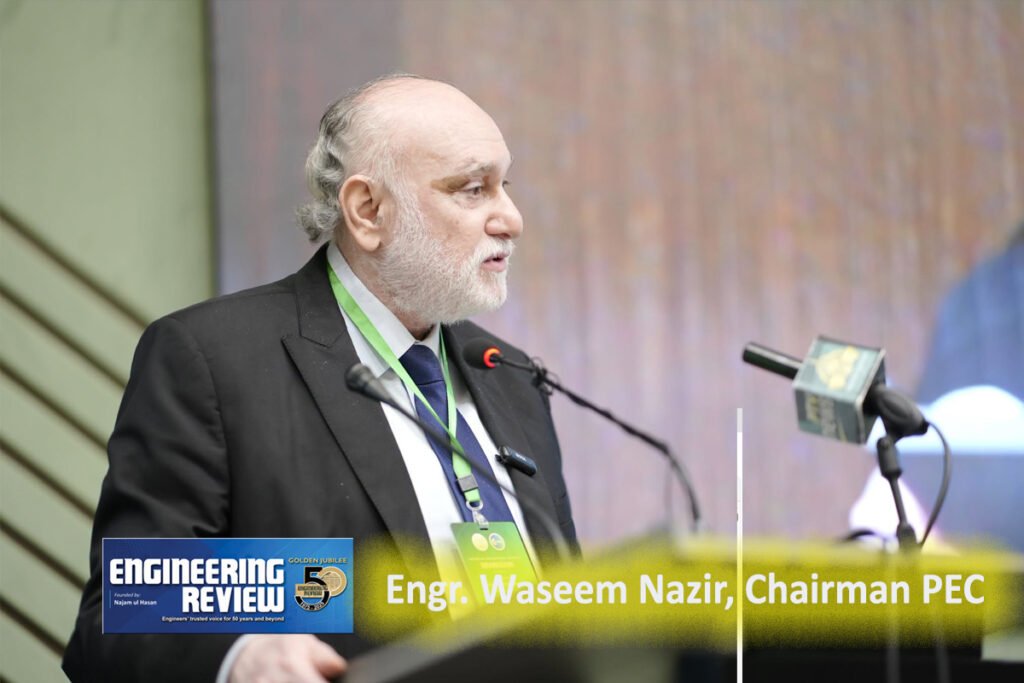
The present situation has effectively created two sides within the institution: one led by Chairman Engr. Waseem Nazir and the other represented by members of the PEC Council and its committees. A scheduled meeting on September 15 could not take place, further deepening the impasse.
Chairman Waseem Nazir maintains that he is working on the basis of meritocracy and institutional principles. The opposing side, however, alleges that the institution is being run by a single individual without adequate consultation. The disagreement has consequently developed into a broader institutional and governance dispute.
The fundamental reality is that the PEC is currently facing a deadlock, while the PEC Act appears to provide limited room for resolving such a dispute when the principal stakeholders remain divided.
There are concerns that if the deadlock continues, it could eventually lead to an undesirable situation and potentially create pressure for an extraordinary intervention through an ordinance or another legal mechanism. Such an outcome, however, could have serious consequences for the institution and the engineering community.
The Pakistan Engineering Forum (PEF) has appealed to both sides to take steps to end the deadlock. The forum says it is making efforts to facilitate communication between the two sides and believes that both parties should give each other sufficient space to resolve their differences through dialogue.
According to the forum, one of the immediate issues is the convening of the Governing Body meeting. The members of the Governing Body were elected through votes from engineers, and the institutional mandate given to them through those elections should be respected.
The forum has also stressed that decisions within the PEC should be made through democratic and consultative processes. Chairman Waseem Nazir, as well as the members of the Council, should therefore work within the institutional framework and ensure that consultation remains central to decision-making.
Will the Government Intervene?
The possibility of government intervention has also become part of the debate. However, the PEF argues that the government has not directly intervened in the dispute so far. Instead, the continuing confrontation between the two sides could potentially create circumstances in which government intervention becomes more likely.
Members of the Governing Body, along with the Senior Vice Chairman, have reportedly met the Secretary of Science and Technology. At the same time, there are questions about the government’s legal authority to remove the PEC chairman directly.
If the government does not have the authority to remove the chairman under the existing legal framework, any direct intervention could require a new legal instrument or ordinance. Such a development, according to the PEF, would ultimately be damaging to all sides and to the institution itself.
The forum believes that both camps have a responsibility to prevent such an outcome. Rather than allowing the dispute to escalate further, the two sides should return to dialogue, restore institutional meetings and resolve their differences within the democratic and legal framework of the PEC.
For the engineering community, the immediate challenge is therefore not simply who prevails in the dispute, but how the PEC can restore its institutional functioning, resume its governing processes and prevent a prolonged deadlock from weakening one of Pakistan’s key professional regulatory bodies. – ER Report
READ MORE
PEC Deadlock: How Did the Two-Year Crisis Develop?
The Pakistan Engineering Council (PEC) is facing a serious institutional deadlock, raising questions about how…
Prof. Dr. Altaf Mukati appointed SZABIST President
Prof. Dr. Muhammad Altaf Mukati has been appointed President of Shaheed Zulfikar Ali Bhutto Institute…
Sheikh Tariq Nazir elected CAP chairman unopposed
Sheikh Tariq Nazir has been elected unopposed as Chairman of the Constructors Association of Pakistan…
Civil Service Restructuring Brings Engineering Back Into the Spotlight
By Manzoor Shaikh Pakistan’s federal government has finalized a sweeping plan to restructure the country’s…
PEC’s Seven Recurring Problems: Is the Institution Bigger Than Its Chairman?
By Manzoor Shaikh There are seven interesting—and increasingly uncomfortable—observations about the Pakistan Engineering Council (PEC)…

Kaspersky Raises Alarm Over Cyber Threats to Young Pakistani Users
Cybersecurity company Kaspersky has warned that children in Pakistan may face a range of online…