
By Manzoor Shaikh
There are seven interesting—and increasingly uncomfortable—observations about the Pakistan Engineering Council (PEC) that seem to resurface whenever a serious dispute erupts inside the institution. Individually, they may look like coincidences. Taken together, however, they raise a bigger question about how the country’s premier engineering regulatory body is governed.
One: The Chairman’s Office Becomes the Centre of Power
One recurring criticism is that PEC chairmen, over time, can begin to treat powers assigned to the institution’s Governing Body as though they are vested personally in the chairman.
The chairman is seen as having the ability to overrule, override or reinterpret decisions, creating the impression that the occupant of the chair—not the institution’s collective governing structure—has the final say.
Whether this perception is justified in each individual case is a matter for the PEC’s legal framework and records. But the question of where the chairman’s authority ends and the Governing Body’s authority begins has repeatedly surfaced during internal disputes.
Two: The Fear of an Outside Takeover
Another recurring theme is the fear that someone from outside the PEC could eventually intervene and take control of the institution.
Former chairmen and their supporters have, at different times, warned of such a possibility. The identity of the alleged outside force may change, but the narrative remains familiar: if the institution becomes divided, there is a risk that an external authority or powerful interest could step in.
For an autonomous professional body, the very existence of such fears is significant.
Three: Every Administration Claims a Historic Achievement
There is another familiar pattern.
Almost every chairman leaves office believing—or at least maintaining—that his administration has achieved something exceptional.
One administration highlights major reforms. Another points to unprecedented progress for engineers. A third claims to have modernized the institution or transformed the profession.
There is nothing unusual about an administration defending its record. But when every successive chairman describes his tenure as historic, it becomes difficult to separate institutional progress from the politics of legacy.
The real test should be measurable outcomes rather than competing claims.
Four: The Chairman and the “Watho”
Then there is the familiar figure who remains extremely close to the chairman.
In Sindhi political and social vocabulary, such a person may be described as a “Watho”—a trusted associate who stays close to the powerful individual and can become an unofficial channel of influence.
Critics within the PEC system have often complained that informal influence of this kind have always created problems inside the secretariat.
When formal institutional channels are bypassed by informal relationships, officials can become uncertain about whose instructions carry authority. Instead of strengthening the organization, such arrangements can contribute to confusion, internal divisions and mistrust.
Again, these are criticisms and perceptions, not necessarily established facts in every administration.
Five: What Is the Role of the Governing Body?
This may be the most important institutional question of all.
The Governing Body is supposed to exercise collective authority. Its members are not merely there to endorse the chairman; they are part of the institution’s governance structure.
Yet critics have repeatedly questioned whether members of the Governing Body always exercise that authority independently—or whether, in practice, the chairman’s position becomes dominant.
If the Governing Body collectively possesses certain powers under the PEC Act, those powers cannot simply disappear because there is a strong chairman.
Conversely, if the chairman possesses specific powers under the law, those powers should be exercised within clearly defined legal boundaries.
The answer should come from the Act, regulations, rules and recorded decisions—not personalities.
Six: The Perception of “Khaki” Support
Another recurring perception in PEC politics is that a chairman enjoys the backing of powerful people in khaki—the military establishment.
Such perceptions can become particularly influential during periods of controversy. A chairman who is believed to have powerful backing outside the Council may be seen by supporters as politically secure and by opponents as difficult to challenge.
But perception and evidence are two different things.
Whether any particular chairman has actually received institutional support from the military establishment is a matter that should be established through evidence, not assumption.
Nevertheless, the fact that such perceptions repeatedly become part of PEC’s internal political discourse tells us something about the atmosphere surrounding the institution.
Seven: And Then There Is Khadim Hussain Bhatti
Finally, there is perhaps the most unusual recurring feature of PEC politics: the apparent friction between successive chairmen and Khadim Hussain Bhatti.
For reasons that have varied over time, Bhatti’s name has repeatedly appeared in internal disputes and political discussions surrounding the Council.
It has almost become a recurring character in the larger PEC story.
But once again, personalities should not obscure the institutional questions underneath them.
Why Are These Issues Resurfacing Now?
So why discuss these seven observations today?
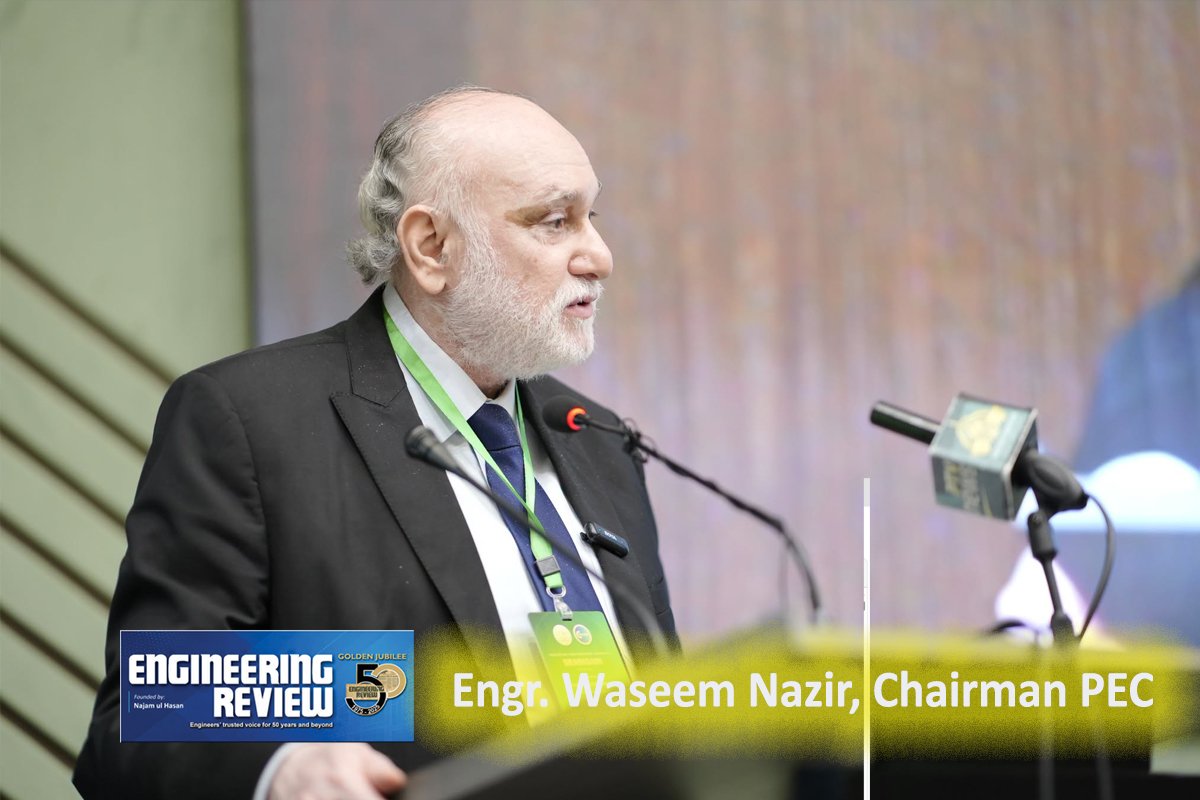
Because many of them appear to have resurfaced in the current crisis involving PEC Chairman Engineer Waseem Nazir and his opponents.
Nazir and his supporters argue that his tenure has produced significant reforms and that he has sought to prepare Pakistani engineers for the demands of a rapidly changing professional environment.
They point to professional development, modernization and other initiatives as evidence of progress during his tenure.
His critics, however, offer a sharply different account.
They allege that decision-making has become increasingly concentrated around the chairman and that the collective role of the Governing Body has been weakened. Some opponents have described his governance style as overly centralized and argue that important decisions have been made without sufficient consultation.
These are serious allegations. They need to be examined against the PEC Act, the Council’s rules, meeting records and actual institutional decisions rather than through competing political narratives.
But there is another question that cannot simply be dismissed.
Why Now?
Why have these objections become so intense at this particular moment?
According to critics, many of the issues now being raised have existed for a considerable period. If that is the case, why did opposition to the chairman’s style not emerge with the same intensity earlier?
The timing becomes even more significant because PEC is moving towards another election cycle.
That does not prove that the current opposition is politically motivated. There may be genuine institutional grievances that opponents believe have reached a point where they can no longer remain silent.
But the timing inevitably raises questions.
Were these concerns present two years ago?
If they were, why were they not challenged with the same intensity?
And if the situation has genuinely changed, what exactly changed inside PEC?
Those are questions both sides should be prepared to answer.
The chairman and his supporters can explain what they believe has been achieved during the current tenure. His opponents can explain, with evidence, where they believe the Governing Body’s authority has been compromised and why they chose this particular moment to challenge it.
The Real Question Is About Authority
Ultimately, the current controversy goes beyond Waseem Nazir or any other individual.
The central question is much bigger: Who actually governs the Pakistan Engineering Council—the chairman or the Governing Body?
If the law gives collective powers to the Governing Body, those powers must be respected.
If the law gives particular powers to the chairman, those powers must also be respected.
The solution cannot be found in personalities, political alliances or competing claims of legitimacy. It has to be found in the law and in the institutional procedures established by the PEC itself.
That is why the current dispute matters to the wider engineering community.
The PEC is not a private organization belonging to its chairman, its Governing Body members or any particular political group. It is a statutory professional institution representing Pakistan’s engineering community.
Its credibility ultimately depends on whether decisions are made transparently, collectively and according to law.
Perhaps, therefore, the most important lesson from these seven recurring observations is not that every chairman necessarily becomes overly powerful.
It is that the system must be strong enough to prevent the office from becoming more powerful than the institution itself. Because the real issue is not who occupies the chairman’s chair. The real issue is whether the chair belongs to the institution—or the institution begins to belong to the chair.
READ MORE

Pakistan, World Bank Group Agree to Accelerate Reforms and Investment-Led Growth
Federal Minister for Economic Affairs Ahad Khan Cheema met World Bank Group (WBG) President Ajay…

ECNEC Approves 11 Development Projects in Energy, Infrastructure, Healthcare, Technology
The Executive Committee of the National Economic Council (ECNEC), chaired by Deputy Prime Minister and…
Pakistan, EU Explore Cooperation in Electric Vehicle Skills Development
Advisor to the Prime Minister for Industries and Production Haroon Akhtar Khan has directed the…
NUST Honours 66 PhD Scholars and 54 Medal-Winning Undergraduates at Convocation
Federal Minister for Planning, Development and Special Initiatives Ahsan Iqbal has urged graduates of the…
IBA, AKU and Habib University Join Hands to Rethink Education in the AI Era
The Institute of Business Administration (IBA) Karachi, in collaboration with Aga Khan University (AKU) and…

ABB Reports Strong Growth as AI Data Centre Spending Surges
Swiss engineering company ABB has reported strong growth in earnings, driven by a continued surge…