

In the field of engineering for sustainability, the switch to Industry 5.0 technologies signifies a shift from mere efficiency to technologies that are technologically innovative and sustainable, considering aspects of human well-being and long-term sustainability.
While the previous industrial paradigms were mostly based on automation, productivity and mass production, Industry 5.0 prioritizes human-machine interaction. Artificial intelligence, collaborative robots, digital twins, the Internet of Things, the latest in sensors, and intelligent manufacturing platforms can contribute to engineers’ efforts to optimize resource utilization while ensuring the human element remains in key decision-making. This synergy opens up the possibility of minimizing waste, increasing operational agility and building technologically advanced and environmentally responsible production systems for industries.
AI and machine learning are emerging as valuable resources to enhance engineering process sustainability. These technologies can be able to process huge amounts of data from operation to detect patterns related to energy use, waste of materials, failure of equipment, and production inefficiency. Engineers can use predictive algorithms to predict maintenance needs in a way that can extend the life of the equipment and avoid the need to replace parts that don’t need to be replaced. The optimization of raw material and energy use through AI can also help to allocate raw material resources and energy use more effectively across production activities. Add real-time data from industry and intelligent systems can optimise operating parameters in real time to minimise environmental impacts without impacting on production requirements, thus making data-driven engineering a key element of Industry 5.0 sustainability strategies.
Another major route for Industry 5.0 sustainable engineering is via the Internet of Things. Sensors and smart devices are connected with industrial plants, enabling real-time monitoring of electricity, water, materials, emissions, temperature, pressure and the performance of the machines. This ongoing surveillance helps engineers to detect which actions are using up too many resources, and take corrective action sooner than traditional periodic checks. For instance, smart energy management systems can optimise the energy use of industrial equipment by adjusting it based on the demand and operational status, avoiding any unnecessary energy use. In the same way, water-monitoring systems with connectivity can be used to detect water use or escape that is out of the norm and aid more efficient water resource management. This will create transparency of industrial processes, enhance environmental performance and deliver organizations measurable data for sustainability assessment.
Together with the machines’ precision, all the above can contribute to sustainable engineering through collaborative robotics, or cobots. Cobots are not meant to replace workers, but are intended to work alongside humans and do repetitive, physically demanding or dangerous jobs. They could be integrated to enhance manufacturing uniformity, minimize material handling mistakes and even lower waste resulting from process variation. Human workers are still able to take responsibility for creative work, contextualized work, and ethical decisions, while in the case of standardized work, the robot takes the place of the human worker. It is a human-machine collaboration and as such represents the human-centered concept of Industry 5.0, and can be used to develop production environments where sustainability is also taken into account along with productivity, workplace safety or employee involvement.
The digital twin approach is especially useful in the field of sustainable engineering, as it enables physical systems, machines, buildings, or production lines to be modeled in a dynamic manner. These virtual environments can then be used by engineers to test out different operating conditions prior to making changes in actual facilities. For instance, a digital twin can be leveraged to explore the impact of changes in production plans, machines settings, energy inputs, and material flows on resource use and emissions. This function can minimize the need of repeated physical experiments and can enable the organizations to find the inefficient processes early. Digital twins can be used to link design, operations, and sustainability goals across the lifecycle of industrial assets, enabling scenario analysis and optimizing operations ongoing.
Industry 5.0 is also reshaping the sustainable engineering aspect by means of additive manufacturing and advanced materials. Additive manufacturing can generate complex parts by depositing the material in a controlled amount, which could limit the losses of materials in conventional subtractive manufacturing processes. Computational design techniques can also be used by engineers to create lightweight structures, which have a required mechanical performance with fewer resources. Participating in such processes with the use of recycled, bio-based or otherwise less impactful materials can continue to bring sustainability benefits throughout the entire product development cycle. The environmental benefit of more advanced manufacturing, however, is related to the usage of electricity, raw materials, the durability of parts, and how the parts can be recovered at the end of their life. Thus, it is necessary for engineers to assess technologies throughout their entire life cycle, not just for production efficiency, when adopting Industry 5.0.
Enabling the successful adoption of Industry 5.0 technologies also requires organizational skills, workforce development and responsible technology governance. For advanced systems, engineers and technicians need to be adept at data analysis, automation, cyber security, digital modeling and sustainability concepts, all at once. Organizations might then have to fund interdisciplinary training to enable workers to work effectively with intelligent technologies. Simultaneously, considerations need to be made regarding data privacy, algorithmic transparency, cyber security and unequal access to high-tech solutions when implementing such solutions. Sustainable engineering can’t be addressed solely with the deployment of high tech digital technologies; it involves having organizational policies that recognize technology use responsibly, inclusively and through measurable environmental and social goals.
Industry 5.0 technologies offer sustainable engineering a chance to become intelligent, adaptive and human-centric industrial ecosystems. The most potential lies in combining technologies rather than using technologies as stand-alone solutions: IoT can provide operational data, AI can analyze it and make simulations of improvements possible and collaborative robots can execute optimized processes under human guidance. These interconnections can help reduce resource use, waste, downtime and environmental impacts, and enhance the resilience of industry. Organizations need to look towards the integration of digital innovation with circular-economy principles, renewable energy, human expertise and life-cycle thinking if they are to play a key role in future sustainable engineering practices. Industry 5.0 can therefore be used as a guideline to create industrial systems that strive to be economical whilst also considering environmental and human issues.
READ MORE
Engr. Waseem Asghar re-elected ACEP Chairman
Engr. Waseem Asghar has been re-elected Chairman of the Association of Consulting Engineers Pakistan (ACEP)…

Adoption of Industry 5.0 Technologies in Sustainable Engineering
In the field of engineering for sustainability, the switch to Industry 5.0 technologies signifies a…

Pakistan Cables recognized at 3rd International Solar Technology Excellence Awards 2026
Pakistan Cables Ltd. has been recognized as the exclusive category winner for Solar DC Cables…
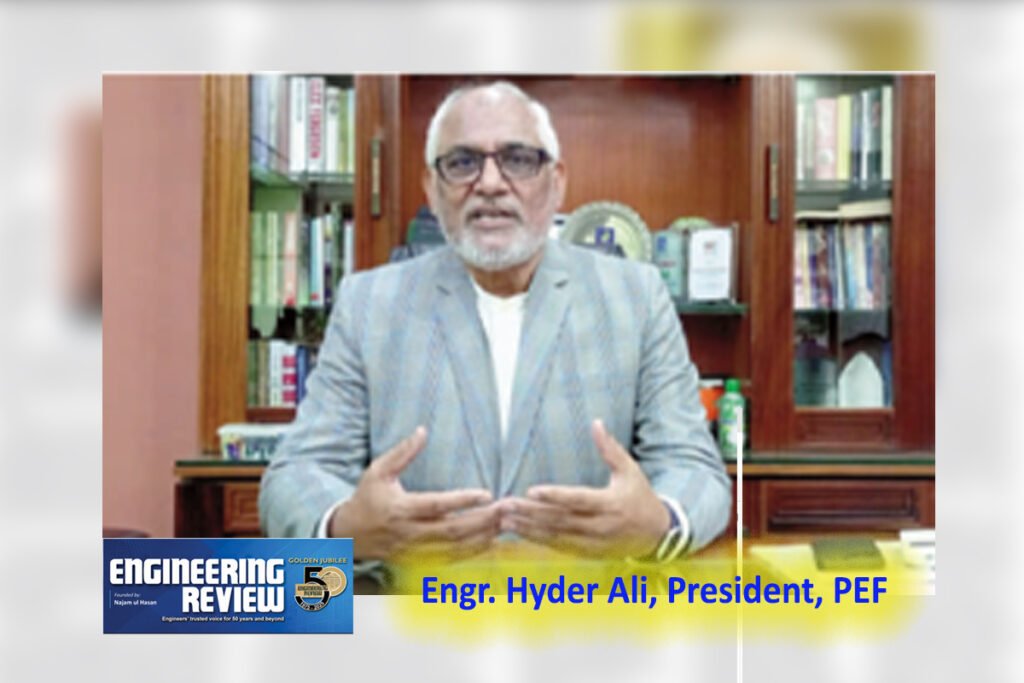
PEC Deadlock: How Did the Two-Year Crisis Develop?
The Pakistan Engineering Council (PEC) is facing a serious institutional deadlock, raising questions about how…
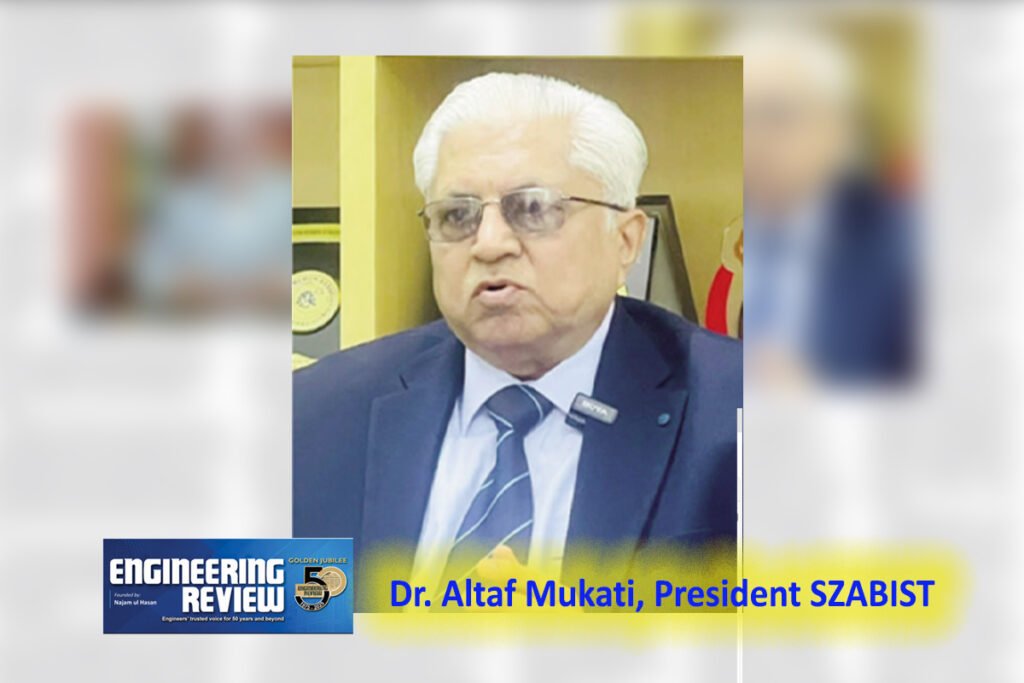
Prof. Dr. Altaf Mukati appointed SZABIST President
Prof. Dr. Muhammad Altaf Mukati has been appointed President of Shaheed Zulfikar Ali Bhutto Institute…
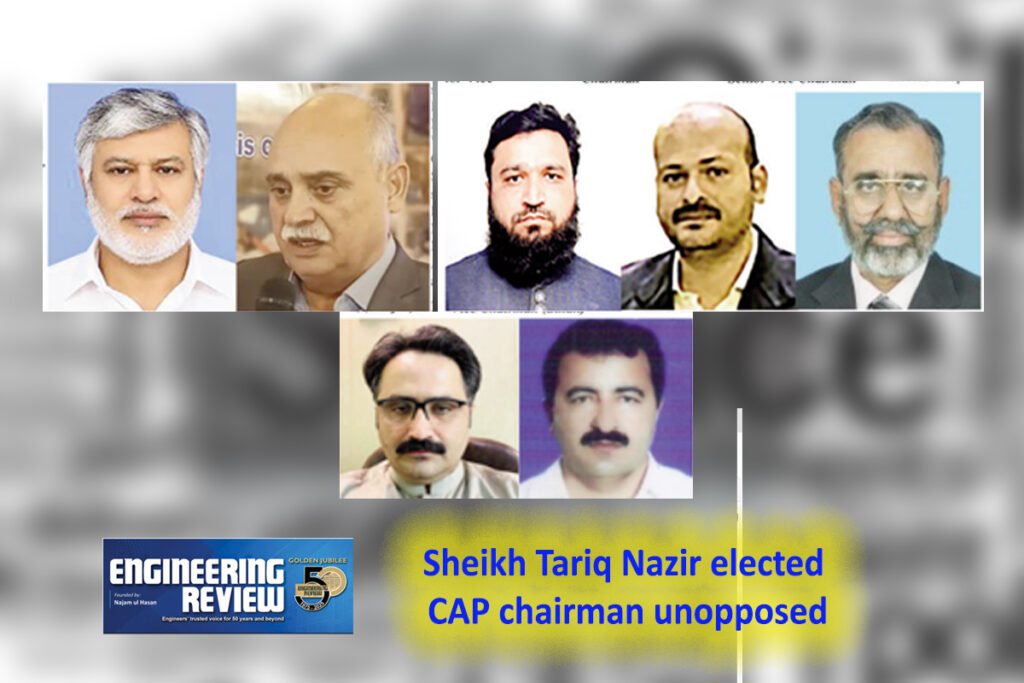
Sheikh Tariq Nazir elected CAP chairman unopposed
Sheikh Tariq Nazir has been elected unopposed as Chairman of the Constructors Association of Pakistan…