
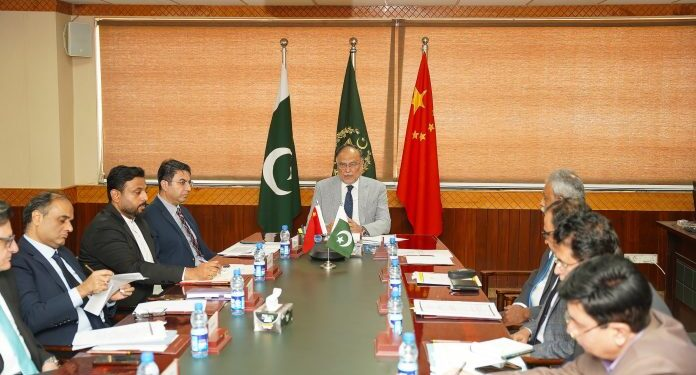
Federal Minister for Planning, Development and Special Initiatives Ahsan Iqbal reviewed progress on the implementation of the China-Pakistan Economic Corridor (CPEC) Action Plan for 2025–2029, calling for faster progress on projects and priorities agreed with China.
Chairing a review meeting, the minister assessed the first year of implementation of the action plan, which was finalised during Prime Minister Muhammad Shehbaz Sharif’s visit to China in August 2025. He directed ministries to ensure timely implementation of CPEC Phase-II priorities.
Ahsan Iqbal said Pakistan-China relations had remained strong during challenging periods, highlighting China’s investment during Pakistan’s energy crisis. He said CPEC Phase-I brought around $25 billion in Chinese investment and added nearly 8,000 megawatts to Pakistan’s power-generation capacity. He also cited the development of Thar coal and the fibre-optic network among the major achievements of the first phase.
He said CPEC Phase-II would build on these foundations by focusing on business-to-business cooperation, industrial development, agricultural modernisation, minerals, human capital and technology. The priorities, he added, were closely aligned with the five pillars of the government’s URAAN Pakistan initiative through the Growth, Livelihood, Innovation, Green Economy and Openness corridors.
The Growth Corridor will focus on expanding industrial and agricultural capacity and increasing exports, while the Livelihood Corridor will support social development and less-developed regions. The Innovation Corridor will strengthen Pakistan’s information technology sector and provide young people with modern technological skills. The Green Economy Corridor will focus on climate resilience, water and food security and agricultural modernisation.
The minister highlighted a government programme to send 1,000 agricultural experts to China for training in modern farming technologies. He said the initiative would help develop skilled human resources and support a “Green Revolution 2.0” through improved seeds, mechanisation, efficient water use and climate-resilient crops.
Ahsan Iqbal stressed that the private sector would have a central role in unlocking the economic potential of CPEC Phase-II, while the government would focus on creating an enabling environment for investment and business partnerships. He described expanding exports as a “national emergency” and said the target of reaching $100 billion in exports by 2035 was essential for Pakistan’s economic future.
He called for stronger cooperation between the government and private sector to improve competitiveness and establish “Made in Pakistan” as a globally recognised brand. He also stressed the need for political stability, reforms and effective governance to convert Pakistan’s recent diplomatic and strategic gains into economic progress.
“Pakistan does not need to heat its roads; Pakistan needs to heat its economy,” Ahsan Iqbal said, urging political forces to prioritise economic development and work towards a self-reliant, export-oriented economy. – ERMD
READ MORE

Sindh Expands Mobile Healthcare Services Across 17 Districts
The Sindh government is working to improve the efficiency of its mobile health unit system…

Pakistan, World Bank Group Agree to Accelerate Reforms and Investment-Led Growth
Federal Minister for Economic Affairs Ahad Khan Cheema met World Bank Group (WBG) President Ajay…

ECNEC Approves 11 Development Projects in Energy, Infrastructure, Healthcare, Technology
The Executive Committee of the National Economic Council (ECNEC), chaired by Deputy Prime Minister and…
Pakistan, EU Explore Cooperation in Electric Vehicle Skills Development
Advisor to the Prime Minister for Industries and Production Haroon Akhtar Khan has directed the…
NUST Honours 66 PhD Scholars and 54 Medal-Winning Undergraduates at Convocation
Federal Minister for Planning, Development and Special Initiatives Ahsan Iqbal has urged graduates of the…
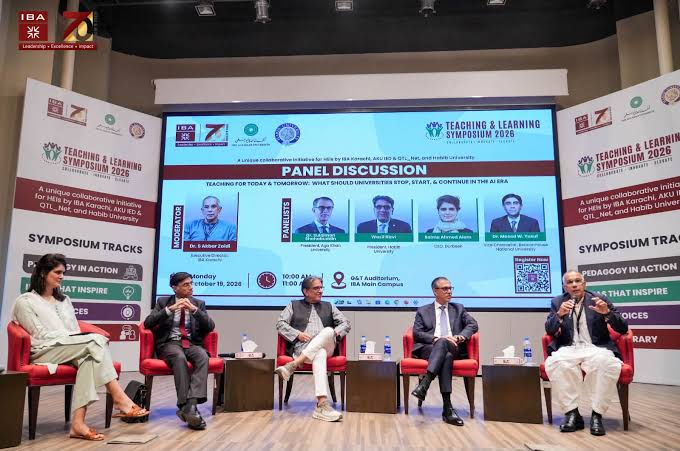
IBA, AKU and Habib University Join Hands to Rethink Education in the AI Era
The Institute of Business Administration (IBA) Karachi, in collaboration with Aga Khan University (AKU) and…