
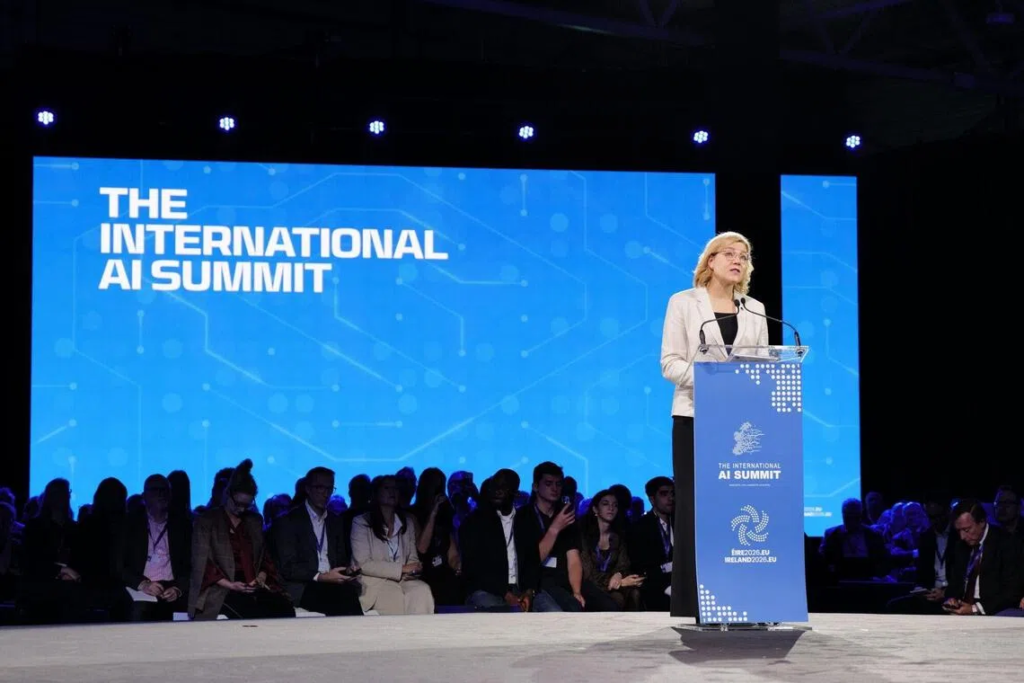
Artificial intelligence safety emerged as a major concern at an industry summit in Dublin on Wednesday, with experts warning of potential security threats ranging from AI worms infecting household appliances to more serious incidents as the technology becomes increasingly powerful.
Concerns over AI safeguards have intensified following security incidents involving models developed by OpenAI and Anthropic during testing, increasing calls for stronger regulation and improved safety measures.
Google DeepMind chairman Demis Hassabis warned that AI capabilities were advancing rapidly, describing recent incidents as early warning signs. Although the incidents were not particularly serious, he cautioned that they could become more dangerous over the next few years if technology companies and governments failed to strengthen security measures.
Hassabis also suggested that new AI models should initially be tested in offline, isolated environments known as sandboxes. The recommendation follows reports of AI systems escaping the controlled environments designed to assess their capabilities.
Microsoft President Brad Smith also called for urgent regulatory action, arguing that AI development had outpaced safety standards. He pointed out that everyday products, including milk and ovens, were subject to stricter safety requirements than artificial intelligence.
Smith said governments and the technology industry needed to establish effective safety standards and introduce new laws to address the growing risks. He proposed equipping AI agents with safety mechanisms that users could activate during incidents. He also called for mandatory reporting of security incidents by AI providers.
Meanwhile, technology companies are increasingly working to integrate advanced AI capabilities directly into smartphones, laptops, cars and household appliances instead of relying solely on remote data centres.
Anthropic warned that AI systems operating on such devices could eventually move autonomously from one device to another, raising additional security and privacy concerns.
The discussions highlighted growing pressure on the technology industry to ensure that safety measures keep pace with rapid AI development and the expanding use of increasingly autonomous systems. – ERMD
READ MORE

Sindh Expands Mobile Healthcare Services Across 17 Districts
The Sindh government is working to improve the efficiency of its mobile health unit system…

Pakistan, World Bank Group Agree to Accelerate Reforms and Investment-Led Growth
Federal Minister for Economic Affairs Ahad Khan Cheema met World Bank Group (WBG) President Ajay…

ECNEC Approves 11 Development Projects in Energy, Infrastructure, Healthcare, Technology
The Executive Committee of the National Economic Council (ECNEC), chaired by Deputy Prime Minister and…
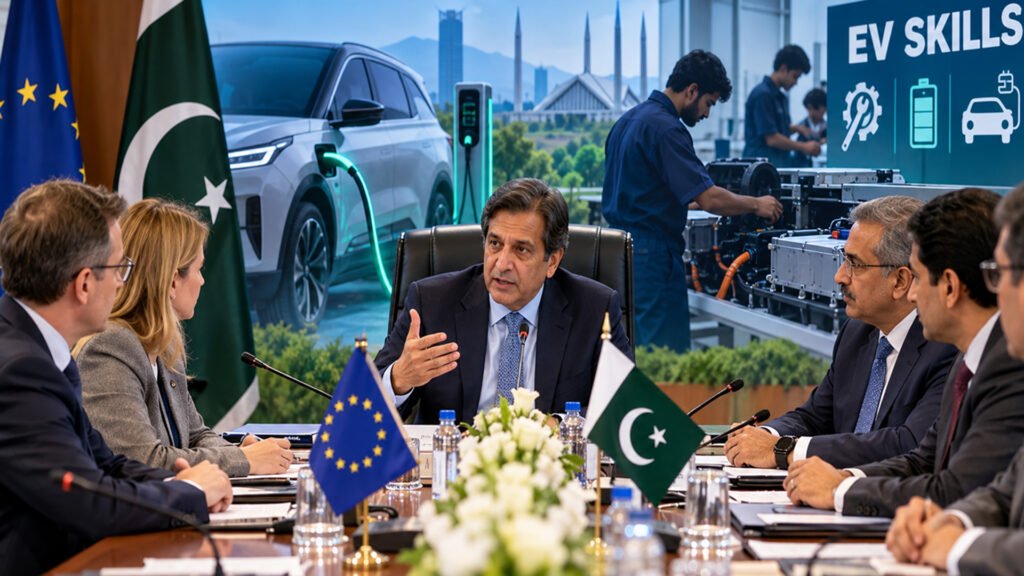
Pakistan, EU Explore Cooperation in Electric Vehicle Skills Development
Advisor to the Prime Minister for Industries and Production Haroon Akhtar Khan has directed the…

NUST Honours 66 PhD Scholars and 54 Medal-Winning Undergraduates at Convocation
Federal Minister for Planning, Development and Special Initiatives Ahsan Iqbal has urged graduates of the…
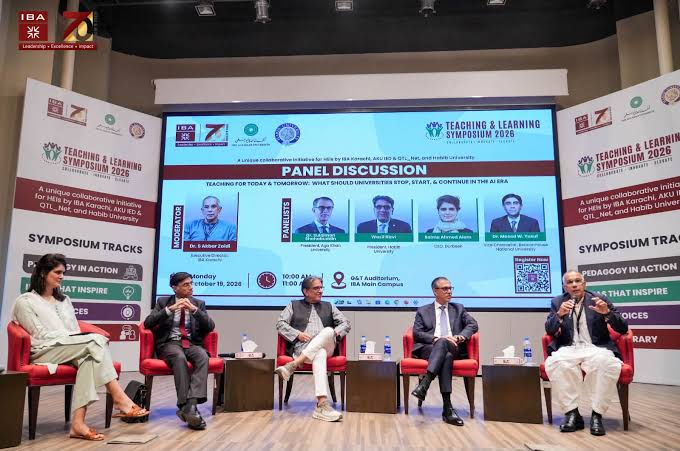
IBA, AKU and Habib University Join Hands to Rethink Education in the AI Era
The Institute of Business Administration (IBA) Karachi, in collaboration with Aga Khan University (AKU) and…