Anthropic PBC has introduced a new software standard designed to help artificial intelligence (AI) assistants interact more effectively and safely with robots, scientific equipment and manufacturing hardware.
The AI company has released its Model Hardware Standard (MHS) as a research preview, allowing developers and industry stakeholders to test how its Claude AI assistant can work with physical equipment before the framework is made more widely available.
MHS is designed to provide AI systems with structured information about how hardware operates, reducing reliance on paper manuals or specialised knowledge held by a limited number of experts. For example, a manufacturer could use the standard to define how an AI system can safely control a factory robot arm by setting limits on its speed, movement and operating angles.
The launch comes as interest grows in applying AI to robotics, manufacturing and scientific research. Anthropic said stakeholders in these sectors can join a waitlist to test the framework, which it eventually plans to open-source, allowing hardware manufacturers to create their own MHS specifications. The company did not provide a timeline for a broader release.
Jonah Cool, a partnerships and deployment executive at Anthropic’s life sciences division, said the framework could help scientists operate complex equipment that might otherwise require specialised technical expertise.
Anthropic compared MHS to its Model Context Protocol (MCP), a standard that helps AI assistants connect with third-party software and applications. According to the company, MHS aims to bring similar interoperability to the physical world, particularly in laboratories and facilities that rely on large numbers of devices.
The company has already tested the framework with industry stakeholders including Amazon Web Services, Danaher, Hugging Face and Raspberry Pi. In one demonstration, Anthropic said a scientist was able to provide Claude with an experimental design, after which the AI assistant carried out the experiment using hardware configured with the MHS specification.
The initiative reflects the growing push by AI companies to move generative AI beyond software applications and into real-world environments, including robotics, manufacturing and scientific research. – TS/ERMD
READ MORE

Zong Launches 5G Home Broadband Service in Pakistan
Zong has launched Z HomeFi, a 5G fixed wireless access (FWA) home broadband service, aiming…
BYD Eyes Ultra-Fast EV Charging Technology for Pakistan
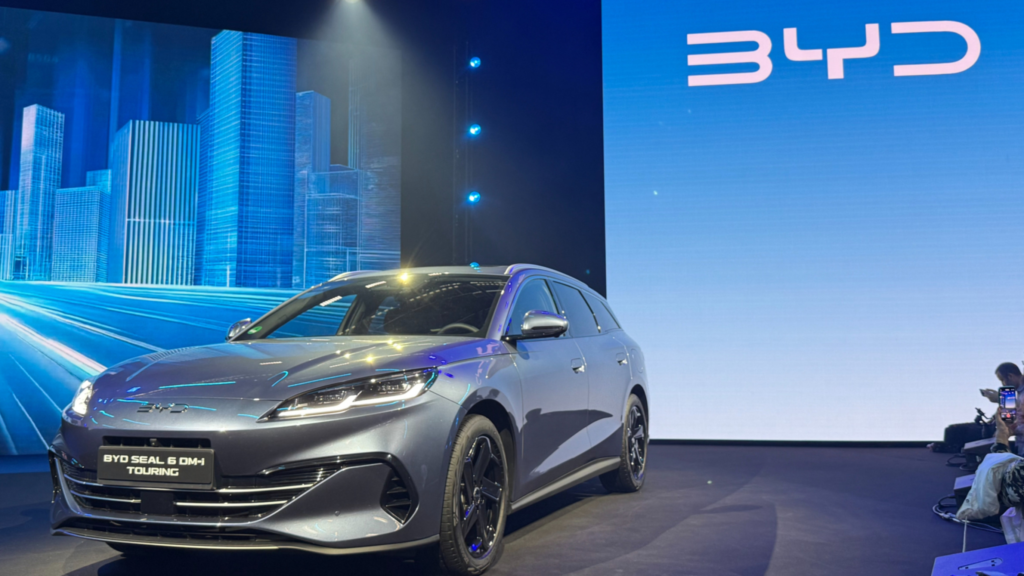
Chinese electric vehicle (EV) manufacturer BYD is in discussions with its Pakistani partner, Mega Motor…

Game-Based Digital Therapies Show Mixed Results in Treating Children with ADHD
Stimulant medications are among the most common treatments for children with attention-deficit/hyperactivity disorder (ADHD), helping…

Henri Kagan and Kenso Soai Awarded 2026 Nobel Prize in Chemistry
Scientists Henri Kagan and Kenso Soai have been awarded the 2026 Nobel Prize in Chemistry…

In Memory of Mohammad Akram Sheikh Chairman United Wire Industries
Mohammad Akram Sheikh Chairman United Wire Industries With profound sorrow, we remember Mr. Mohammad Akram…
IEEE Education Society Karachi Section Hosts Dr. Chi-Un Lei Webinar
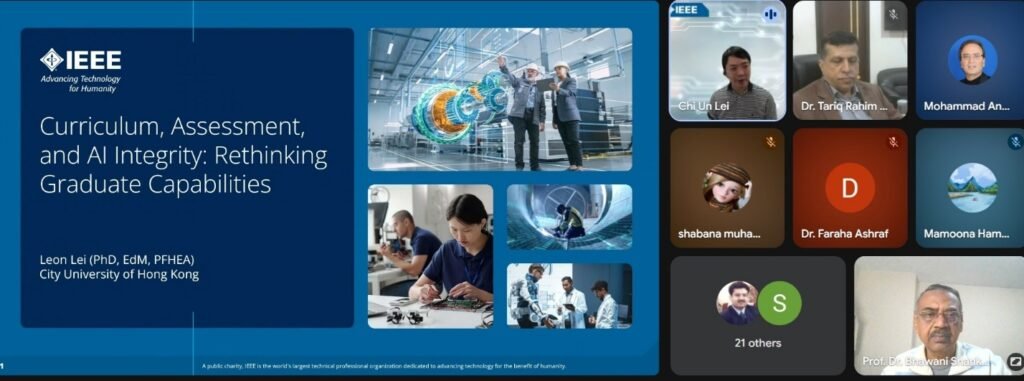
Rethinking Graduate Education in Age of AI Chair IEEE Education Society, Karachi Section, Prof Dr…