
PAKISTAN
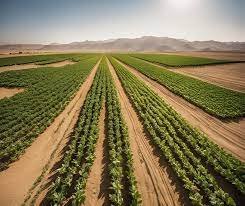
The Barani Agricultural Research Institute (BARI), a dryland research institute in Chakwal, Punjab has developed more than 60 crop varieties and a range of water-saving technologies that are strengthening agricultural resilience across the region.
BARI Director Dr. Nadeem Ahmed said the institute has produced improved varieties of wheat, groundnut, oilseeds, pulses, vegetables, and several high-value fruit crops. Alongside crop development, BARI has introduced soil-moisture conservation techniques and high-efficiency irrigation technologies that help farmers maximize output with limited water resources.
Established in 1979, BARI was created to address the unique challenges of the Potohar plateau, where agriculture depends entirely on rainfall. Unlike canal-irrigated regions of Punjab, farmers in the Potohar region face severe water scarcity, fluctuating rainfall patterns, and poor soil moisture retention. “There was a great need to establish such an institute to address issues related to crop productivity, yield enhancement and water deficiency,” Dr. Ahmed noted.
Over the decades, the institute has expanded into a comprehensive research hub, working across multiple disciplines to enhance both crop and water-use efficiency. Its breakthroughs include fruit varieties such as peach, grapes, pistachio, pecan nut and avocado—crops that offer farmers higher returns under dryland conditions.
Beyond research, BARI plays a significant role in building the capacity of Pakistan’s agricultural workforce. The institute regularly offers training workshops and seminars for scientists, extension workers, students and farmers. “We ensure that our research reaches farming communities so they can enhance their livelihoods by adopting the technologies we develop,” Dr. Ahmed said. The institute also facilitates research and internship programmes for students, encouraging the next generation of agricultural professionals.
Among its most notable achievements is the successful promotion of olive cultivation. Through extensive propagation, training and value-chain development, BARI has enabled the Potohar region to become Pakistan’s centre of excellence for olive production. The institute has also introduced blackberry as a profitable, high-value crop for small farmers, offering new income opportunities within short cropping windows.
The Punjab Barani Tract—stretching across 14 districts including Attock, Rawalpindi, Jhelum, Chakwal and parts of Sialkot, Narowal, Gujrat, Khushab, Mianwali, Jhang, Bhakkar, Layyah, DG Khan and Rajanpur—forms the backbone of Punjab’s dryland agriculture. It contains nearly 75% of the province’s forest resources and about 10 million acres of premium rangelands, regarded among the best in the world.
– APP/ERMD
MORE NEWS

Zong Launches 5G Home Broadband Service in Pakistan
Zong has launched Z HomeFi, a 5G fixed wireless access (FWA) home broadband service, aiming…

BYD Eyes Ultra-Fast EV Charging Technology for Pakistan
Chinese electric vehicle (EV) manufacturer BYD is in discussions with its Pakistani partner, Mega Motor…

Game-Based Digital Therapies Show Mixed Results in Treating Children with ADHD
Stimulant medications are among the most common treatments for children with attention-deficit/hyperactivity disorder (ADHD), helping…

Henri Kagan and Kenso Soai Awarded 2026 Nobel Prize in Chemistry
Scientists Henri Kagan and Kenso Soai have been awarded the 2026 Nobel Prize in Chemistry…

In Memory of Mohammad Akram Sheikh Chairman United Wire Industries
Mohammad Akram Sheikh Chairman United Wire Industries With profound sorrow, we remember Mr. Mohammad Akram…

IEEE Education Society Karachi Section Hosts Dr. Chi-Un Lei Webinar
Rethinking Graduate Education in Age of AI Chair IEEE Education Society, Karachi Section, Prof Dr…