
By Ramesh Raja
Pakistan’s Highways Under Pressure
Pakistan has invested billions of rupees in developing one of the region’s largest highway networks, and the National Highway Authority (NHA) deserves recognition for transforming national connectivity. Yet many highways are deteriorating long before their intended design life. The principal reason is not poor engineering but uncontrolled overloading. While road infrastructure has expanded significantly, an effective axle load management system has not kept pace, making highway sustainability a growing national concern.
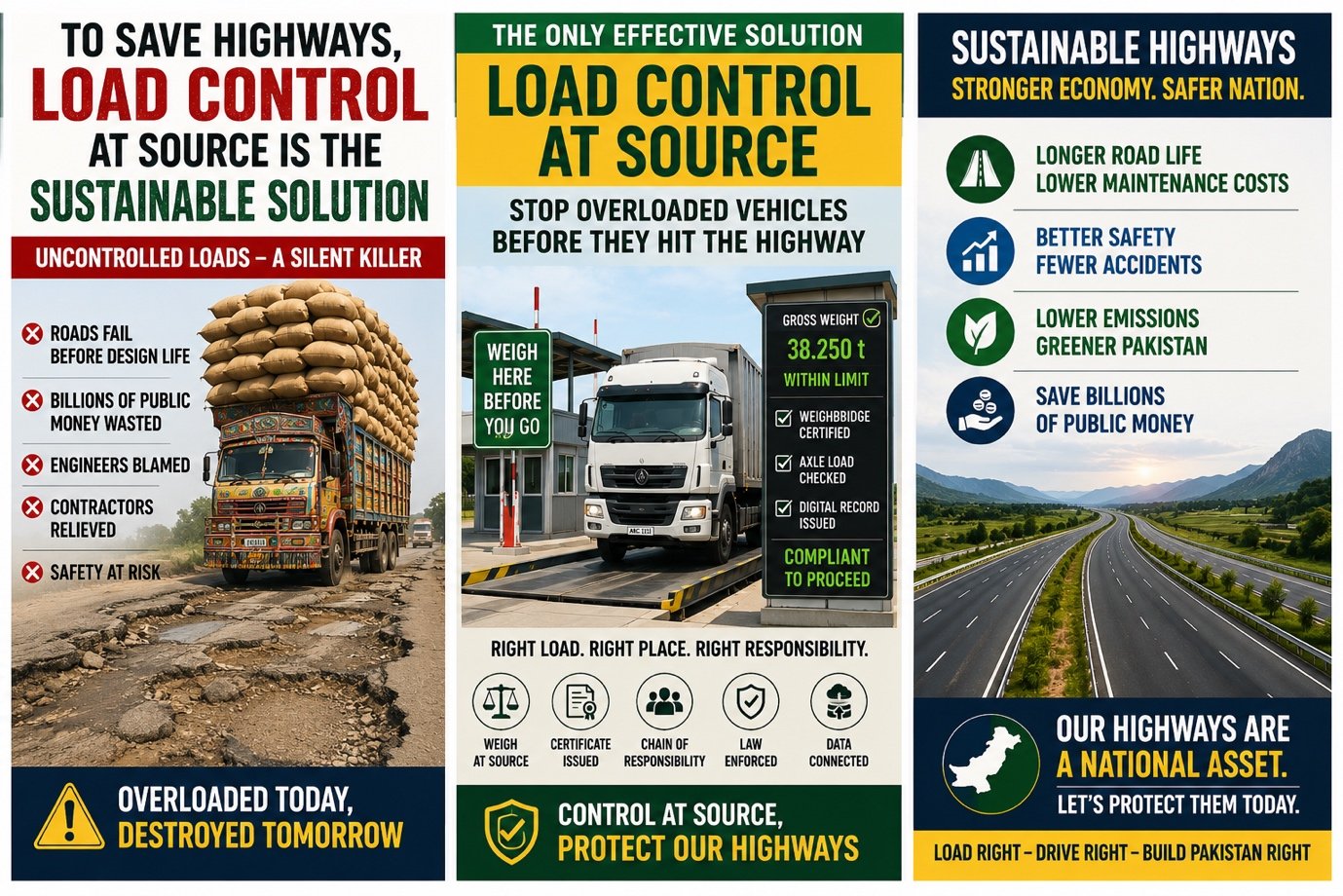
The National Highway Authority (NHA) has constructed more than 15,000 kilometres of national highways and motorways during its three decades of existence, with hundreds of additional kilometres currently under construction. However, the sustainability and service life of these valuable public assets remain under serious threat due to the government’s ineffective enforcement of axle load control. As a result, many newly constructed roads deteriorate well before their design life, often within a few years, and engineers are unfairly blamed for these failures. In many cases, premature deterioration caused by overloading also relieves contractors of contractual responsibility. Unless strict load control laws are implemented and effectively enforced, billions of rupees of public investment in Pakistan’s road infrastructure will remain at risk.
The Imbalance in Freight Transport
Globally, road transport is the dominant mode of freight because it provides flexibility and door-to-door delivery. However, countries with efficient railway systems transport heavy bulk commodities such as coal, iron ore, steel, cement, petroleum products, grain and containers by rail over long distances, preserving highways and reducing transport costs. In Pakistan, decades of underinvestment in railway freight have shifted the overwhelming burden of cargo movement onto roads, accelerating pavement deterioration and increasing maintenance costs.
Sources of Loads
Pakistan’s largest freight generators include agriculture, cement, steel, construction materials, mining, oil and gas, petroleum refineries, fertilizers, chemicals, textiles, power generation, FMCG, containerized imports and exports, and major infrastructure projects. These loads originate from seaports, dry ports, industrial estates, logistics parks, warehouses, airports, wholesale markets, border terminals and freight stations. Major logistics operators, including National Logistics Corporation (NLC), Agility Logistics Pakistan and Gerry’s Freight Services, transport these goods across the country. Once trucks leave these facilities, however, there is often little to prevent overloading before they enter the national highway network.
The Only Effective Solution
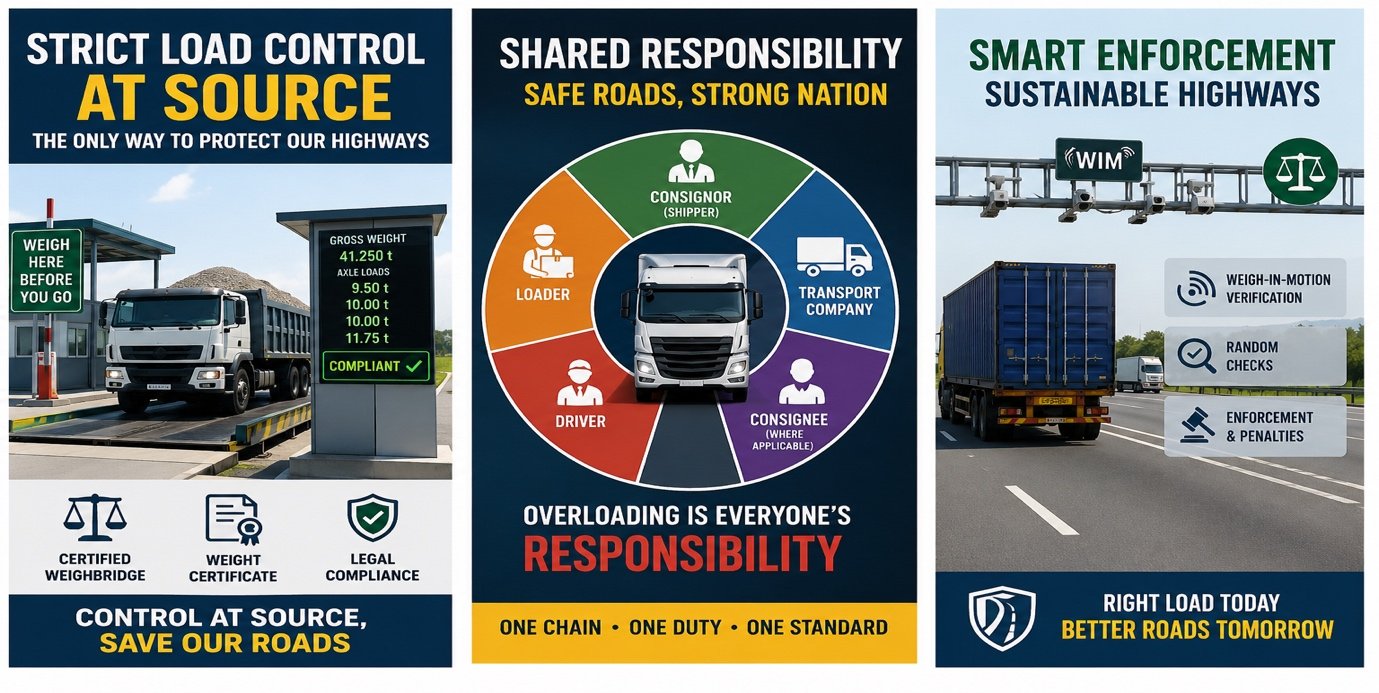
The most practical and sustainable answer is Load Control at Source (LCAS). Every major freight-generating facility should be legally required to install certified digital weighbridges. No truck should be permitted to leave a loading point unless both its gross vehicle weight and axle loads comply with legal limits. A secure electronic weight certificate should accompany every vehicle and be accessible to enforcement agencies for verification.
Shared Responsibility, Not Driver Alone
Pakistan should adopt a Chain of Responsibility (CoR) framework, making the consignor, loader, transport company, driver and, where applicable, the consignee jointly responsible for overloading. Penalties should apply to every party contributing to the violation, eliminating commercial incentives to overload vehicles and encouraging compliance throughout the freight supply chain.
Enforcing the Law
The National Highways and Motorway Police (NH&MP) should be strengthened and designated as the lead enforcement agency for axle load regulations. Certified weighbridges at loading points should be integrated with a national digital database, while Weigh-in-Motion (WIM) systems and roadside weigh stations should conduct random verification to ensure that the recorded weight matches the actual load carried on highways.
Looking Beyond Roads
At the same time, Pakistan should gradually shift heavy bulk commodities such as coal, cement, steel, fertilizers, petroleum products and containers to rail wherever feasible. Revitalising railway freight and developing dedicated freight corridors on major highways would reduce pressure on road infrastructure, improve transport efficiency and extend pavement life.
Way forward
Roads are among Pakistan’s most valuable national assets, yet they cannot remain sustainable without effective load management. The solution is neither repeated rehabilitation nor stricter roadside inspections alone. The only lasting answer is to prevent overloading before trucks enter the highway network. Strict laws for Load Control at Source, backed by digital monitoring, shared legal responsibility and consistent enforcement, are the cornerstone of sustainable highways in Pakistan.
READ MORE

Pakistan, World Bank Group Agree to Accelerate Reforms and Investment-Led Growth
Federal Minister for Economic Affairs Ahad Khan Cheema met World Bank Group (WBG) President Ajay…

ECNEC Approves 11 Development Projects in Energy, Infrastructure, Healthcare, Technology
The Executive Committee of the National Economic Council (ECNEC), chaired by Deputy Prime Minister and…

Pakistan, EU Explore Cooperation in Electric Vehicle Skills Development
Advisor to the Prime Minister for Industries and Production Haroon Akhtar Khan has directed the…

NUST Honours 66 PhD Scholars and 54 Medal-Winning Undergraduates at Convocation
Federal Minister for Planning, Development and Special Initiatives Ahsan Iqbal has urged graduates of the…

IBA, AKU and Habib University Join Hands to Rethink Education in the AI Era
The Institute of Business Administration (IBA) Karachi, in collaboration with Aga Khan University (AKU) and…

ABB Reports Strong Growth as AI Data Centre Spending Surges
Swiss engineering company ABB has reported strong growth in earnings, driven by a continued surge…