
A new variant of malware capable of giving cyber attackers remote access to compromised systems has been detected in cyber-espionage operations targeting organizations and government entities in Pakistan, India, Myanmar, Mongolia and Russia.
According to a report by Kaspersky’s Global Research and Analysis Team (GReAT), researchers identified an updated version of CoolClient linked to the HoneyMyte advanced persistent threat (APT) group, also known as Mustang Panda. The malware was observed as part of a 2026 cyber-espionage campaign targeting organizations across Asia and Russia.
The latest CoolClient variant uses a digitally signed kernel driver, software that operates deep within the Windows operating system, to conceal the malware on infected devices. Researchers said the technique can make the malware more difficult to detect, investigate and remove.
In the observed attacks, the threat actor used PlugX, another backdoor commonly associated with initial compromises, to deliver components of CoolClient to targeted systems.
The malware is designed to maintain a low profile while protecting its files and registry entries from inspection or modification. It also enables attackers to maintain control over compromised devices.
Researchers found that the attackers established persistence by creating a scheduled task that automatically launched a file named defender.exe after a system restart, using the highest available local Windows privileges. The file then loaded a malicious library, triggering the CoolClient infection process.
Kaspersky GReAT security researcher Fareed Radzi said the technique could allow the malware to remain active on compromised systems while concealing important traces and making it harder for security teams to investigate or remove the infection. – ERMD
READ MORE

Pakistan, World Bank Group Agree to Accelerate Reforms and Investment-Led Growth
Federal Minister for Economic Affairs Ahad Khan Cheema met World Bank Group (WBG) President Ajay…

ECNEC Approves 11 Development Projects in Energy, Infrastructure, Healthcare, Technology
The Executive Committee of the National Economic Council (ECNEC), chaired by Deputy Prime Minister and…

Pakistan, EU Explore Cooperation in Electric Vehicle Skills Development
Advisor to the Prime Minister for Industries and Production Haroon Akhtar Khan has directed the…

NUST Honours 66 PhD Scholars and 54 Medal-Winning Undergraduates at Convocation
Federal Minister for Planning, Development and Special Initiatives Ahsan Iqbal has urged graduates of the…
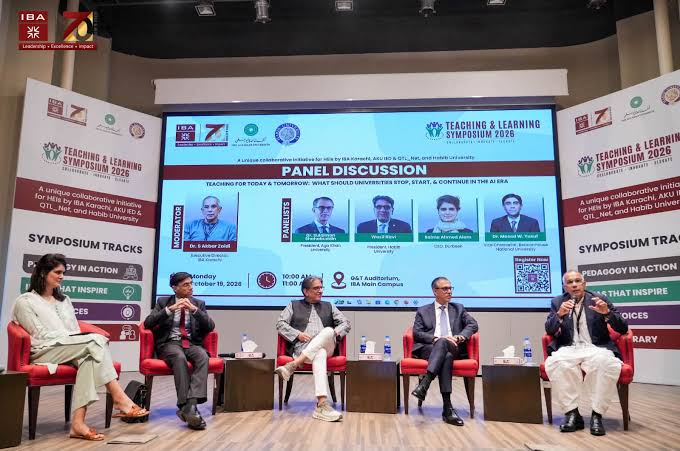
IBA, AKU and Habib University Join Hands to Rethink Education in the AI Era
The Institute of Business Administration (IBA) Karachi, in collaboration with Aga Khan University (AKU) and…

ABB Reports Strong Growth as AI Data Centre Spending Surges
Swiss engineering company ABB has reported strong growth in earnings, driven by a continued surge…