
PAKISTAN
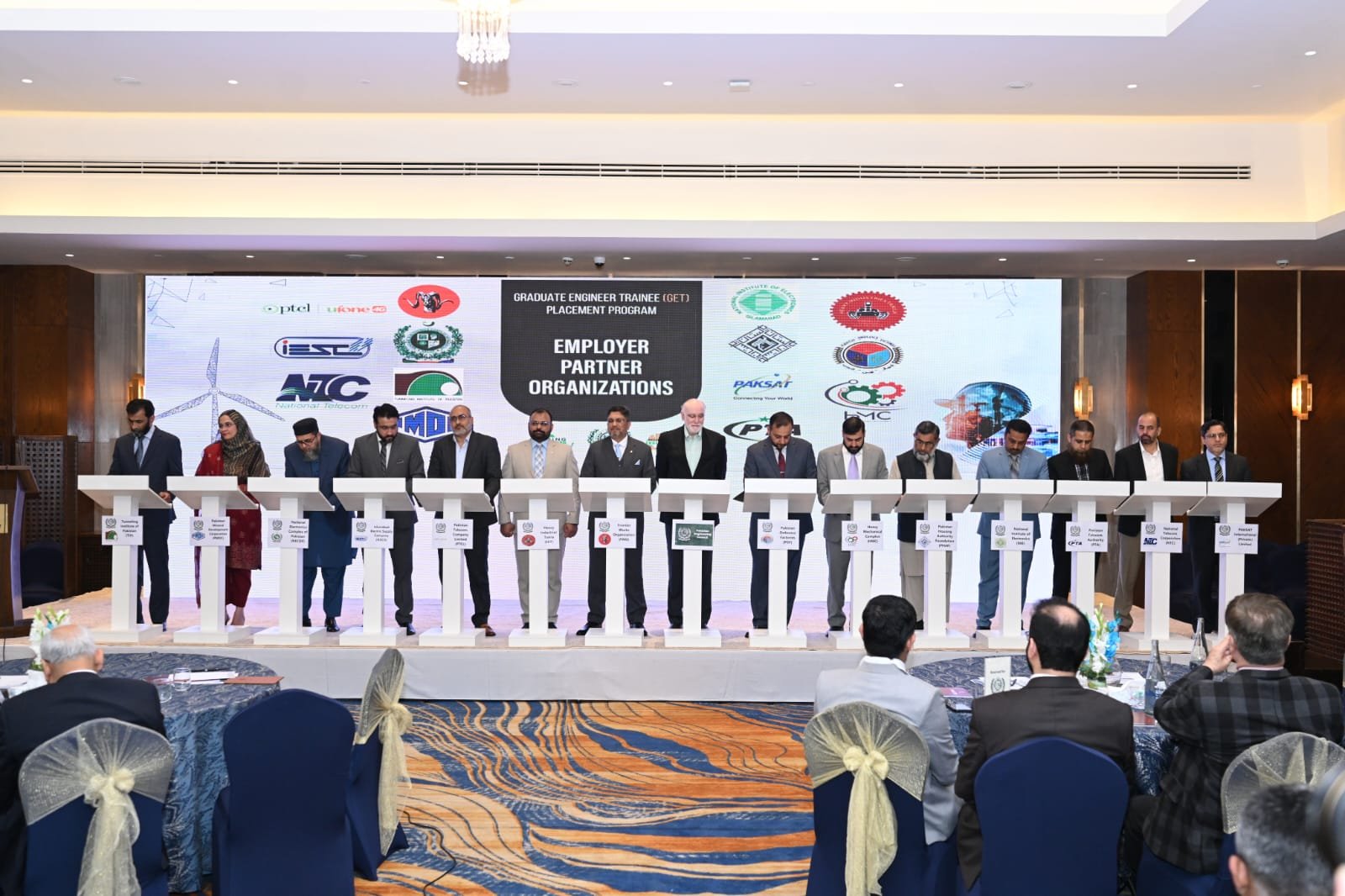
In a major step toward strengthening the professional competence of Pakistan’s young engineers, the Pakistan Engineering Council (PEC) has signed Memoranda of Understanding (MoUs) with 14 leading organizations under its flagship Graduate Engineer Trainee (GET) Placement Program. The ceremony, held in Islamabad, was attended by PEC Chairman Engr. Waseem Nazir, senior engineers, and representatives from both the public and private sectors.
The program — often described as a “house job for engineers” — seeks to bridge the gap between academic learning and practical application by offering structured, hands-on training opportunities to fresh graduates.
Partner organizations include the Frontier Works Organization (FWO), PTCL, Tunneling Institute of Pakistan (TIP), National Institute of Electronics (NIE), National Electronics Complex of Pakistan (NECOP), National Telecommunication Corporation (NTC), Pakistan Telecommunication Authority (PTA), Pakistan Mineral Development Corporation (PMDC), Heavy Industries Taxila (HIT), Heavy Mechanical Complex (HMC), Pakistan Ordnance Factories (POF), Islamabad Electric Supply Company (IESCO), PAKSAT International, and the Pakistan Housing Authority Foundation (PHAF).
A Long-Needed Step Forward
Engineering graduates and professionals have long demanded such a structured, practical training program, noting that academic qualifications alone are not enough to prepare young engineers for the realities of the field. The GET program aims to fill that gap by offering a six-month training cycle, including five months of field exposure and one month of soft skills development — a format reminiscent of the house-job model successfully practiced in the medical profession.
Addressing the ceremony, Chairman PEC Engr. Waseem Nazir said the initiative would help graduates transition smoothly from classroom theory to workplace practice.
“This program is about turning knowledge into competence,” he said. “We want our engineers to be industry-ready, confident, and capable of contributing to Pakistan’s national development.”
He added that similar partnerships have already been established with key organizations in other parts of the country, reflecting PEC’s plan to expand the initiative nationwide.
A Familiar Model — But with Lessons to Learn
Observers note that this is not PEC’s first attempt at such an initiative. During the tenure of former Chairman Engr. Najeeb Haroon, a similar placement program was launched and hailed as a major success by the Council. However, no formal analysis or audit of that program’s outcomes was ever conducted. Over time, reports of mismanagement and irregularities surfaced — allegations that were never formally investigated.
This history has made the engineering community cautiously optimistic about the new program. Many hope that this time PEC will ensure transparency, accountability, and measurable outcomes, avoiding the administrative lapses that tainted previous efforts.
Industry Response and Expectations
Representatives of the 14 partner organizations praised PEC’s renewed focus on practical training, describing the collaboration as a timely and visionary effort to align academic output with industry needs. They emphasized that Pakistan’s economic and industrial growth depends on a workforce of engineers who are not only theoretically sound but also technically skilled and adaptable.
One industry representative remarked that programs like GET could “reshape the professional culture of engineering in Pakistan” — provided the process remains transparent, consistent, and results-oriented.
Toward a Competent and Competitive Workforce
For Pakistan’s thousands of young engineers entering a competitive job market each year, the Graduate Engineer Trainee Program represents both an opportunity and a test. If implemented effectively, it could become a model for sustainable professional development — a platform where learning meets application and potential turns into performance.
As one senior engineer at the ceremony put it, “This is not just a program; it’s an investment in the country’s technical future. But this time, we must make sure it delivers.” – Appeared in ER, Issue – II, 2025
READ MORE LATEST NEWS
Zong Launches 5G Home Broadband Service in Pakistan
Zong has launched Z HomeFi, a 5G fixed wireless access (FWA) home broadband service, aiming…

BYD Eyes Ultra-Fast EV Charging Technology for Pakistan
Chinese electric vehicle (EV) manufacturer BYD is in discussions with its Pakistani partner, Mega Motor…

Game-Based Digital Therapies Show Mixed Results in Treating Children with ADHD
Stimulant medications are among the most common treatments for children with attention-deficit/hyperactivity disorder (ADHD), helping…
Henri Kagan and Kenso Soai Awarded 2026 Nobel Prize in Chemistry
Scientists Henri Kagan and Kenso Soai have been awarded the 2026 Nobel Prize in Chemistry…
In Memory of Mohammad Akram Sheikh Chairman United Wire Industries
Mohammad Akram Sheikh Chairman United Wire Industries With profound sorrow, we remember Mr. Mohammad Akram…
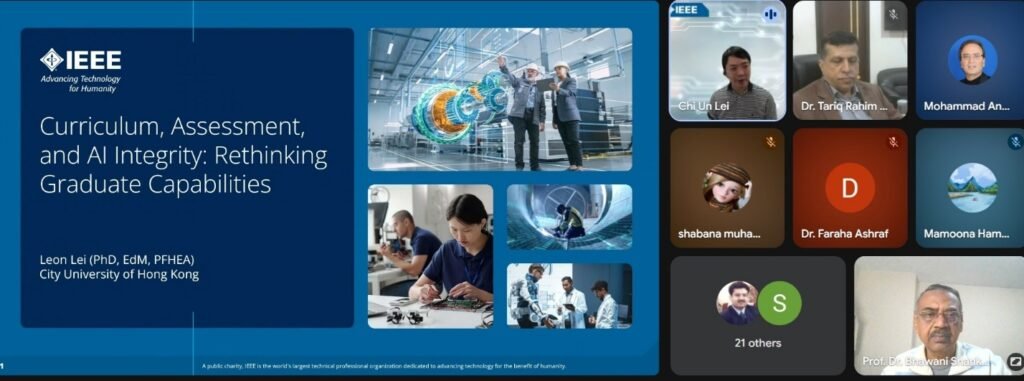
IEEE Education Society Karachi Section Hosts Dr. Chi-Un Lei Webinar
Rethinking Graduate Education in Age of AI Chair IEEE Education Society, Karachi Section, Prof Dr…