

Singapore is set to enforce new laws aimed at strengthening protections against online sexual abuse, including the creation of explicit images using artificial intelligence (AI) without a person’s consent.
The legislation, which takes effect on August 17, introduces a new offence covering the production of intimate images without consent, including AI-generated material, Singapore’s Home Affairs Ministry said.
Those convicted can face up to two years in prison, a fine, or both. If the material depicts a child under 14, offenders face mandatory imprisonment of up to two years and may also be fined or sentenced to caning.
The new rules also expand Singapore’s ability to prosecute people suspected of grooming minors overseas before committing sexual offences. Authorities can pursue such cases if either the alleged offender or victim travelled from Singapore before the offence occurred.
Offenders convicted of grooming children abroad and subsequently committing sexual offences will face tougher penalties. Where the victim is under 14, the punishment can include up to seven years in prison.
Home Affairs Minister Sim Ann said previously that the legislation was designed to remove obstacles to enforcement while reducing the production and availability of AI-generated abusive material.
The government has argued that such content can contribute to a cycle of exploitation by increasing the supply of abusive material and potentially encouraging further offences.
Singapore also continues to permit judicial caning for certain serious crimes, including some sexual offences.
However, separate amendments taking effect on August 17 will reduce the use of mandatory corporal punishment for several offences, including piracy, attempted robbery and possession of illegal weapons. In these cases, caning will become discretionary rather than compulsory.
The changes reflect Singapore’s broader efforts to strengthen laws covering emerging forms of online abuse while updating penalties for other offences. The new provisions are expected to give authorities greater powers to address technology-enabled sexual exploitation and offences involving children across borders. – TS/ERMD
READ MORE

Pakistan, World Bank Group Agree to Accelerate Reforms and Investment-Led Growth
Federal Minister for Economic Affairs Ahad Khan Cheema met World Bank Group (WBG) President Ajay…

ECNEC Approves 11 Development Projects in Energy, Infrastructure, Healthcare, Technology
The Executive Committee of the National Economic Council (ECNEC), chaired by Deputy Prime Minister and…

Pakistan, EU Explore Cooperation in Electric Vehicle Skills Development
Advisor to the Prime Minister for Industries and Production Haroon Akhtar Khan has directed the…

NUST Honours 66 PhD Scholars and 54 Medal-Winning Undergraduates at Convocation
Federal Minister for Planning, Development and Special Initiatives Ahsan Iqbal has urged graduates of the…
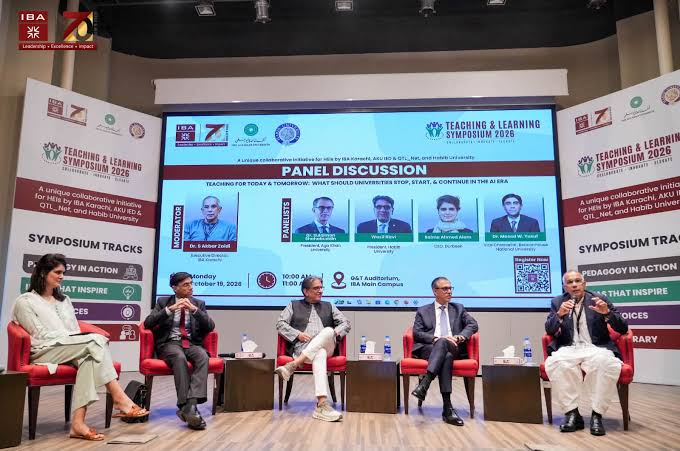
IBA, AKU and Habib University Join Hands to Rethink Education in the AI Era
The Institute of Business Administration (IBA) Karachi, in collaboration with Aga Khan University (AKU) and…

ABB Reports Strong Growth as AI Data Centre Spending Surges
Swiss engineering company ABB has reported strong growth in earnings, driven by a continued surge…