
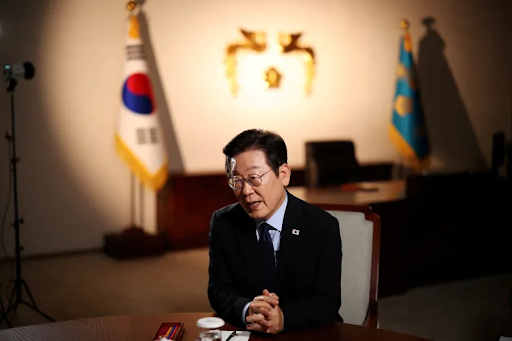
South Korea has laid out a sweeping industrial strategy focused on semiconductor chips and artificial intelligence projects as President Lee Jae Myung pledges to cement overwhelming industry leadership with investments of hundreds of billions of dollars over several years.
Flanked by the heads of the world’s two biggest memory chipmakers, Lee cast the initiative on Monday as a “great leap forward” centred on the “triple axis” of semiconductors, physical AI and data centres.
“We must secure the core elements of AI faster than any other country,” the president said in a televised address.
The world’s two largest memory chipmakers, Samsung Electronics and SK Hynix, will invest 800 trillion won ($518bn) with suppliers to build two new chip fabrication sites each in South Korea’s southwest, Industry Minister Kim Jung-kwan said.
Lee said the country’s southwestern city of Gwangju and South Jeolla province will also invest 5 trillion to 20 trillion won ($3.2bn to $13bn) in the projects.
Kim said a further 81 trillion won ($52.5bn) is expected to be invested for a chip-packaging cluster in the Chungcheong area near Seoul.
The government also unveiled plans to build AI data centres in the region, backed by 550 trillion won ($356bn) in investments from the SK Group, GS Group and Naver.
“By 2035, an additional 10-gigawatt AI data centre will be built with a total investment exceeding 18.4 gigawatts and 1,000 trillion won,” or $648bn, Science Minister Bae Kyung-hoon announced.
The announcement marks the government’s boldest push yet to align South Korea’s AI and chip ambitions with Lee’s pledge to narrow regional disparities and revive economies beyond the Seoul metropolitan area.
The opposition has criticised the plan, arguing that his government’s decision to locate a second semiconductor cluster in Honam, the traditional electoral stronghold of his liberal Democratic Party, is driven more by regional politics than by industrial logic.
They have accused the government of pressuring memory chipmakers to invest in the region to bolster political support rather than allowing companies to choose the most commercially viable locations.
As part of the overall initiative, the southwest would be the home of new, large chip production clusters, Lee said, in part to use the rich power resources yet untapped there.
The president defended the proposed southwestern chip hub in a series of X posts over the weekend, rejecting criticism that it favours a region where 85 percent of voters backed him in last year’s presidential election.-ERMD
READ MORE

40 Major Media Groups Join Coalition to Protect Journalism from AI Copyright Violations
Forty major media organisations, including The New York Times, The Economist and Agence France-Presse (AFP),…
Zong Launches 5G Home Broadband Service in Pakistan
Zong has launched Z HomeFi, a 5G fixed wireless access (FWA) home broadband service, aiming…
BYD Eyes Ultra-Fast EV Charging Technology for Pakistan
Chinese electric vehicle (EV) manufacturer BYD is in discussions with its Pakistani partner, Mega Motor…

Game-Based Digital Therapies Show Mixed Results in Treating Children with ADHD
Stimulant medications are among the most common treatments for children with attention-deficit/hyperactivity disorder (ADHD), helping…
Henri Kagan and Kenso Soai Awarded 2026 Nobel Prize in Chemistry
Scientists Henri Kagan and Kenso Soai have been awarded the 2026 Nobel Prize in Chemistry…
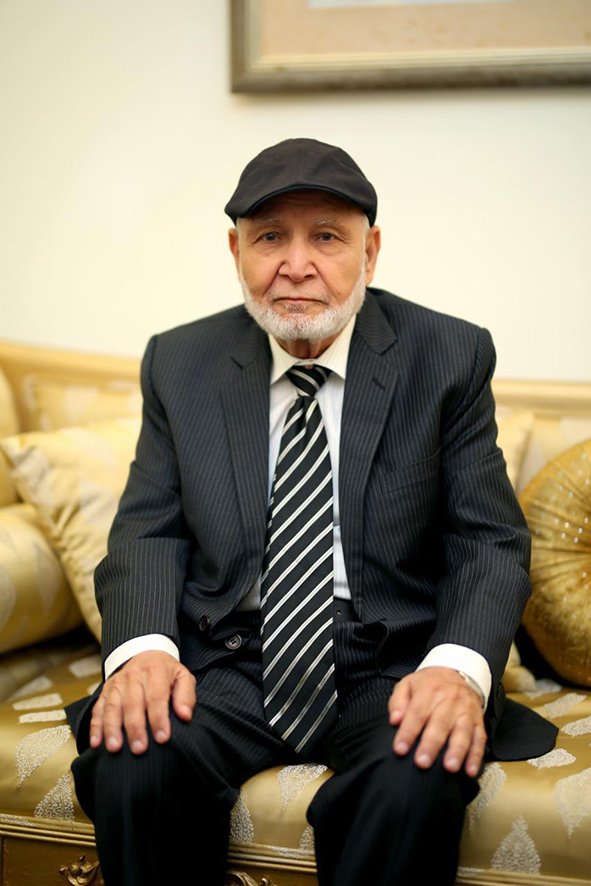
In Memory of Mohammad Akram Sheikh Chairman United Wire Industries
Mohammad Akram Sheikh Chairman United Wire Industries With profound sorrow, we remember Mr. Mohammad Akram…