
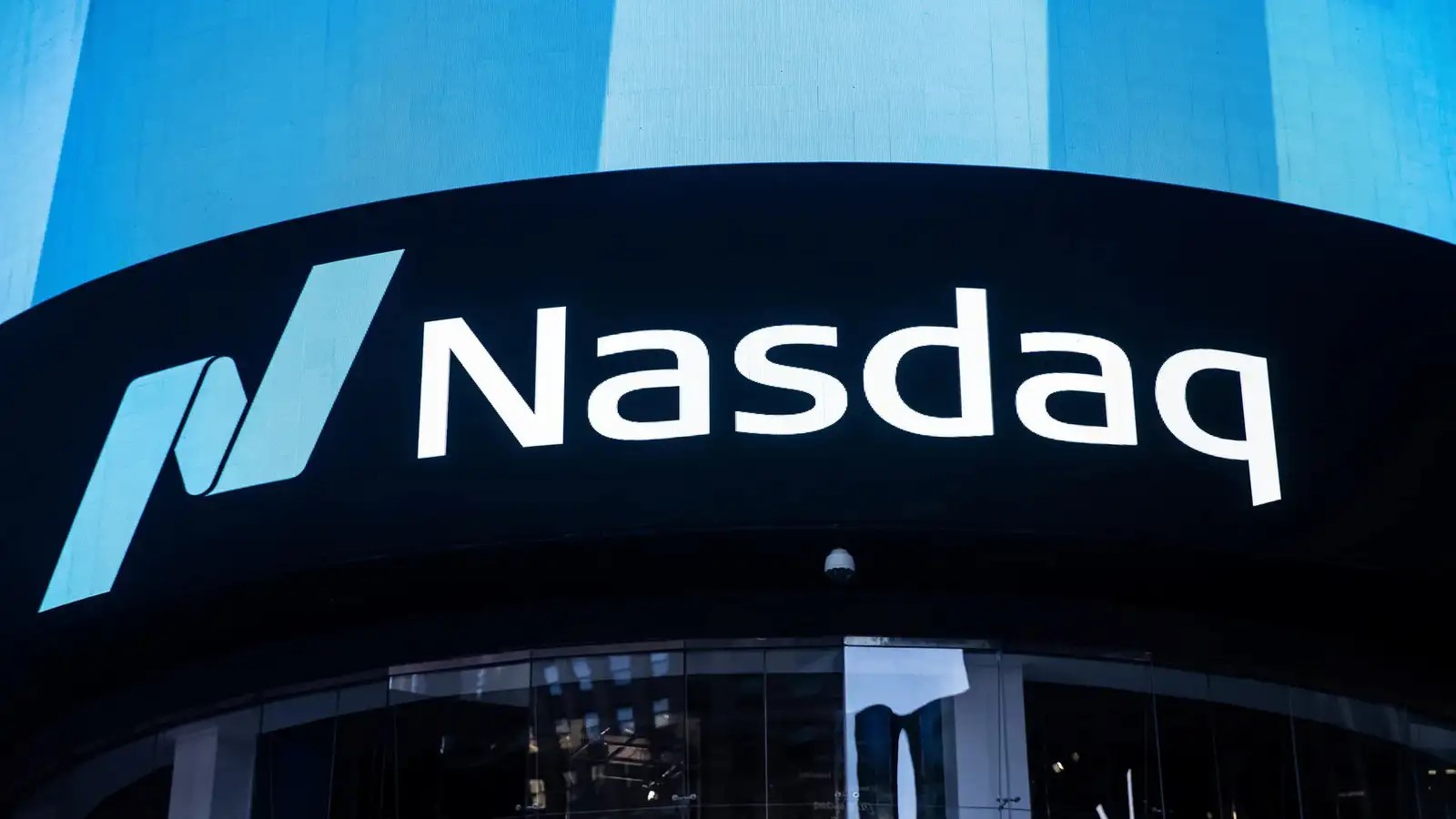
A sharp selloff in technology stocks pushed the Nasdaq 100 toward a potential loss of more than $1 trillion in market value on Tuesday, as investor concerns over artificial intelligence spending and rising interest rates weighed heavily on major technology and semiconductor companies.
The decline was led by SpaceX, whose market capitalization fell below $2 trillion for the first time since its U.S. market debut. The company has shed more than $600 billion in value over the past three trading sessions, with its shares falling 3.6 percent in premarket trading to $149.10.
Despite its recent losses, SpaceX remains about 9 percent above its initial public offering price of $135. The stock’s decline follows a strong post-listing rally that has recently begun to lose momentum.
Futures linked to the Nasdaq 100 fell 2.5 percent, indicating a drop of more than 700 points for the index. Based on Reuters calculations, a decline of nearly 2.8 percent would wipe out approximately $1.15 trillion in market capitalization.
Semiconductor stocks, which have been among the biggest beneficiaries of the artificial intelligence boom this year, also came under significant pressure. Intel fell 6.8 percent, while Advanced Micro Devices (AMD) declined 5.2 percent in premarket trading.
Memory chip manufacturers were among the hardest hit. Micron Technology dropped 8 percent, SanDisk lost 9.2 percent, and Western Digital fell 7.5 percent. Similar weakness was also reported among South Korean memory chip producers.
The broader technology sector remained under pressure, with six of Wall Street’s so-called “Magnificent Seven” companies trading lower. Alphabet declined 2.1 percent, Amazon fell 1 percent, Tesla dropped 3 percent, Nvidia lost 3 percent, and Apple slipped 0.4 percent.
If the losses persist, these technology giants are expected to erase a combined $345 billion in market value.
Market sentiment has also been affected by growing concerns over the enormous investments being made in artificial intelligence infrastructure.
While major technology firms continue to commit billions of dollars to expand their AI capabilities, investors are increasingly seeking evidence that these investments will generate sufficient financial returns.
Adding to the pressure are expectations of tighter monetary policy in the United States. Traders are now anticipating a total of 50 basis points in interest rate increases by the end of the year, according to market projections, reflecting concerns that the Federal Reserve could maintain a more hawkish stance to combat inflation.
The combination of rising borrowing costs, uncertainty over AI-related returns, and a broad technology sector pullback has intensified volatility across global equity markets and raised concerns about the sustainability of recent gains in high-growth technology stocks.-ERMD/TS
READ MORE
Zong Launches 5G Home Broadband Service in Pakistan
Zong has launched Z HomeFi, a 5G fixed wireless access (FWA) home broadband service, aiming…
BYD Eyes Ultra-Fast EV Charging Technology for Pakistan
Chinese electric vehicle (EV) manufacturer BYD is in discussions with its Pakistani partner, Mega Motor…

Game-Based Digital Therapies Show Mixed Results in Treating Children with ADHD
Stimulant medications are among the most common treatments for children with attention-deficit/hyperactivity disorder (ADHD), helping…

Henri Kagan and Kenso Soai Awarded 2026 Nobel Prize in Chemistry
Scientists Henri Kagan and Kenso Soai have been awarded the 2026 Nobel Prize in Chemistry…

In Memory of Mohammad Akram Sheikh Chairman United Wire Industries
Mohammad Akram Sheikh Chairman United Wire Industries With profound sorrow, we remember Mr. Mohammad Akram…

IEEE Education Society Karachi Section Hosts Dr. Chi-Un Lei Webinar
Rethinking Graduate Education in Age of AI Chair IEEE Education Society, Karachi Section, Prof Dr…