

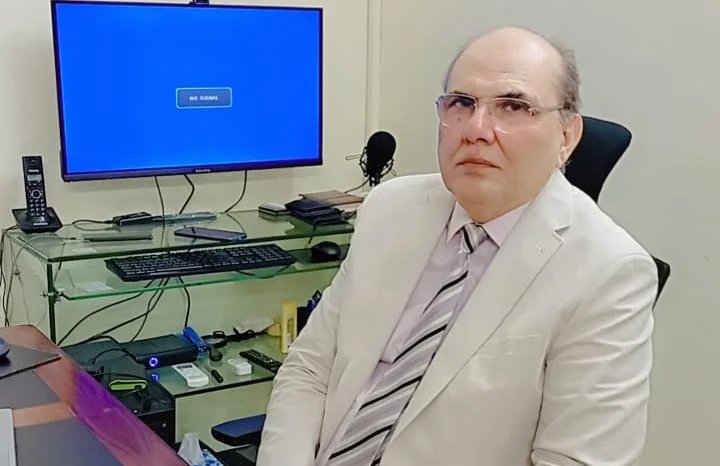
Engr. Tahir Sultan
Engr. Tahir Sultan on Technology, Policy, and the Future of Civil Engineering
Engr. Tahir Sultan is a seasoned civil engineer with extensive experience in infrastructure development, geotechnical investigations, and power transmission projects. He is the founder and principal of FirmDcon, an engineering and consulting firm actively engaged in surveys, subsoil investigations, and infrastructure-related services. Under his leadership, FirmDcon has adopted modern engineering tools, including drone-based surveys, GPS, satellite imagery, and digitized laboratory testing, enabling greater accuracy and efficiency in project execution.
Engr. Tahir Sultan is also a strong advocate for professional development and engineering education. He is the founding force behind the Pakistan Society of Civil Engineers (PSCE), a professional platform established to promote continuous learning, knowledge sharing, and ethical engineering practices through regular technical lectures and engagement with senior engineers in Pakistan and abroad.
How Technology Is Affecting Civil Engineering
There are four factors that affect civil engineering at the moment in Pakistan. The cost of modern machines is expensive, including duties, which in return affects the cost of projects. In Pakistan, the rates do not match the actual cost that includes the use of modern technology. Then, if we look at technology like AI, modern machines are controlled by modern software. You need operators with high skills, and they also require training.
Moreover, the next factor is quality. It begins with the client, and at this stage, government policies come into effect. Our policies either do not bind you or do not include provisions to ensure quality work using modern machines and processes. For instance, look at batching plants versus coffee-pot mixers for concrete mixing. A batch plant user does not receive a justified rate for the project — how will such a contractor work? The same issue exists in deep excavations, where modern methods are required to ensure there is no collapse. For ensuring safety, there is no policy. In this situation, projects become unfeasible for those who use technology and modern processes.
Let alone big projects done by foreign companies here, we should make strict regulations for common projects in the country. Only then will we start improving — and it will take time.
Firm Dcon & New Technologies
We use made-in-Pakistan conventional machines in the field. If we use modern machines, they are expensive and do not make us competitive. However, we have set up a modern laboratory for soil testing, and the testing machines are modern and imported. We have trained people, and slowly and gradually we are digitizing the machines. We have digitized the unconfined compression test and rock testing machines; they are now program-based. Some machines are in the process of being imported from China. In sum, we are digitizing our local machines, and some we are importing.
Benefits of the Use of Technology
The use of modern technology has benefited us a lot, especially in topographic surveys. We are using drones in surveys and have abandoned older technologies. We are using satellite images and GPS. All this has saved 60 percent of our time. We directly retrieve data from these sources and use it. The good thing is that everyone is using these machines now, so the increase in rates has become a norm in this area of work.
Export of Consulting Services
Saudi Arabia has created a good environment for our companies. At the moment, two Pakistani companies are working very well there in EPC. We are in transmission; I do not know more details though. However, I have not witnessed any other Pakistani company in general construction there. The Saudi government has facilitated companies, and I am also trying to set up a company there, and others are also considering it.
We have worked in Nigeria in the past and helped a company in EPC grow into a mature company that is now working there independently. We can export our services in Africa as well. In contrast, Pakistani companies have to learn from Saudi Arabia. The Pakistan government, however, does not seem to attach importance to Africa. The government is entangled in its own issues.
We have been advocating for setting up a construction bank for a long time, but those in power are unable to understand that the industry will not pick up without such measures. They do not realize that no industry can generate more employment than the construction industry.
New Technologies and Academia
I think there are not many issues with engineering universities, and the curriculum is aligned with the world. The real issue is the mushroom growth of universities that do not have quality faculty, along with problems linked to the Pakistan Engineering Council (PEC).
Another issue is related to teaching methodology. It must be seriously looked into. Books have disappeared from universities. Teachers provide only notes, and thus the creativity of students has been severely affected. You still find outstanding candidates, but that is due to their own effort.
We should bring books back into institutions and connect them with online libraries. Examinations should be made creative so that students are tested in real terms. To achieve this, teachers should be improved. But not only that — the overall standard of education must be enhanced.
The government spends 0.8 percent of GDP on education, whereas elsewhere it is between 4 and 6 percent. Research and development should receive priority, at least at the master’s level. Research should focus on our own problems and remain connected with society. Looking at the international ratings of our universities, very few fall within the top thousand. If our curriculum is good, then where is the problem? Because we don’t spend on education and don’t enhance faculty standards.
Engr. Tahir Sultan and Civil Society
We conceived the Pakistan Society of Civil Engineers (PSCE) in 2018 and got it registered in 2020. Until now, we have organized 85 monthly online lectures. Each lecture contains half a CPD point — meaning six points a year for engineers. Many well-known engineers who serve internationally have been our resource persons.
Unfortunately, we are still unable to open a bank account for the last five years, as it is a non-profit organization and the government places many restrictions. We, the founding members, are putting in our efforts to run it. All the lectures are available on our website and YouTube channel.
We have also set up a WhatsApp group with around 350 members. It has greatly helped young engineers who seek expert advice in the group.
Firm Dcon
We are working on the 765 kV line from Dasu to Mansehra and then to Islamabad, which is linked with the grid. It is the first of its kind. We have completed the topographic survey. Now we are working on a warehouse for the project — a large undertaking. Moreover, we are also working on the Lyari Expressway subsoil investigation; it is a small project. Besides that, there are other projects on which we are at the final stages of negotiation. – By Muhammad Salahuddin
WATCH THE INTERVIEW
READ MORE
Gul Ahmed Textile Mills Limited Appoints Mohammed Zaki Bashir as CEO
PAKISTAN Gul Ahmed Textile Mills Limited (GATM) has appointed Mohammed Zaki Bashir as its Chief…

Lucky Cement Limited Subsidiary Enters Partnership with GAC Group
PAKISTAN Lucky Cement Limited has announced that its subsidiary, Lucky Motor Corporation Limited (LMC), has…
OGDCL Announces Start of Production from Spinwam-1 Discovery
PAKISTAN Oil and Gas Development Company Limited (OGDCL) has announced the commencement of gas and…
Pakistan, Netherlands Explore Expanded Energy Cooperation
PAKISTAN Federal Minister for Petroleum Ali Pervaiz Malik held a meeting with H.E. Robert Jan…
Proposal to Establish Blue Economy Sectoral Council to Boost Exports
PAKISTAN Rana Ihsaan Afzal Khan, Coordinator to the Prime Minister on Commerce, held a meeting…

Pakistan raises climate concerns at Arctic Circle Rome Forum
WORLD Federal Minister for Climate Change Musadik Masood Malik represented Pakistan at the Arctic Circle…
Leave a Reply