
INDUSTRY PERSPECTIVE
Lessons from Big 5 Construct Saudi 2026
By Eng. Javeria Asad
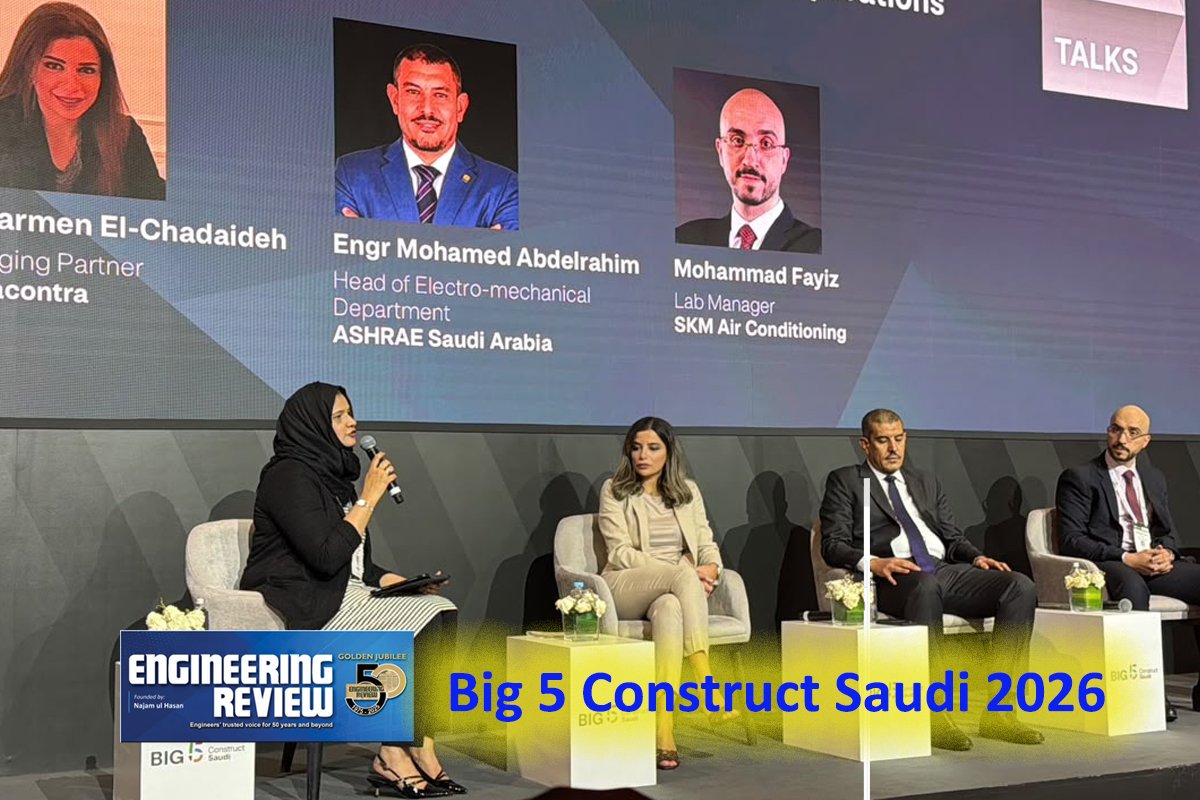
Saudi Arabia’s construction programme requires HVAC systems to perform after handover. This issue shaped the Big 5 Talks panel Bridging the Gap Between HVAC Design, Installation and FM Operations, which I moderated at Big 5 Construct Saudi 2026 on 2 September in Riyadh.
Big 5 Construct Saudi 2026
Held at the Riyadh Front Exhibition and Conference Center from 30 August to 2 September, Big 5 Construct Saudi gathered more than 1,000 exhibitors from over 50 countries. dmg events organized the exhibition under the patronage of Saudi Arabia’s Ministry of Industry and Mineral Resources. It included HVACR Saudi Arabia, FM and Clean Saudi Arabia, Heavy Saudi Arabia, and Totally Concrete Saudi Arabia, connecting the disciplines that shape a building from construction through operation.
Panel expertise
The panel combined three perspectives. Dr. Carmen El-Chadaideh, Managing Partner at Klimacontra, brought a manufacturing and technical sales perspective covering air movement, filtration, fire and smoke systems, air distribution, and air handling units. Eng. Mohamed Abdelrahim contributed 24 years of work across ownership, consultancy, design, contracting, and district cooling. Eng. Mohammad Fayiz, HVAC Laboratory Manager at SKM Air Conditioning, added expertise in equipment testing, validation, certification, and AHRI committee work. I guided the discussion from my experience with consultants, contractors, and manufacturers.
Where the HVAC gap begins
The gap often starts before equipment selection. Architectural plans may leave limited space for plant rooms, shafts, duct routes, access panels, and maintenance clearances. Later changes to glazing, facade materials, insulation, occupancy, or room use can increase the cooling load and reduce the energy performance assumed during design. Consultants must then produce a compliant system within constraints they did not create. Manufacturers are expected to meet the consultant’s specifications and certification requirements, but certified equipment will still underperform when actual site conditions differ from the design basis.
Contractors receive the design after many decisions are fixed. Programme and cost pressures can limit their ability to resolve coordination problems. Substituting ductwork, insulation, dampers, filters, valves, diffusers, grilles, sensors, or controls may alter airflow, pressure, indoor air quality, and energy use. Every substitution should therefore receive technical review and appear in consultant-approved as-built drawings. Without accurate records, the FM team inherits a system that may differ from both the design documents and the operating manuals.

Testing commissioning and handover
Factory certification confirms equipment performance under defined test conditions. Site testing and commissioning must verify the installed system as a whole. That process should check airflow and water balancing, sensor calibration, control sequences, safety interlocks, BMS integration, alarms, and operation under realistic loads. Commissioning cannot be reduced to confirming that equipment starts. It must demonstrate that components interact correctly and that the completed system delivers the required comfort, ventilation, safety, and efficiency.
Facility management should participate before handover because operators understand access, maintenance frequency, spare-part availability, recurring faults, and staff capability. A useful handover package should include approved as-built drawings, equipment schedules, control narratives, commissioning results, operating and maintenance manuals, warranties, spare-parts recommendations, and practical training. FM teams should also monitor energy use, temperature, humidity, runtime, alarms, setpoint changes, pressure, airflow, and repeated complaints. These indicators can expose sensor drift, manual overrides, control faults, and gradual performance loss.
Shared responsibility for Saudi projects
For Saudi Arabia, HVAC reliability directly affects occupant wellbeing, asset life, indoor environmental quality, and electricity demand. Vision 2030 projects, Expo 2030 Riyadh, and preparations for the FIFA World Cup 2034 make lifecycle performance especially important. The panel’s conclusion was practical. Architects must protect MEP space, consultants must communicate design intent, manufacturers must verify compliant performance, contractors must install and document accurately, and FM teams must operate against measured data. Closing the gap requires shared responsibility from concept design through operation, with real building results informing the next project.
About the author
Eng. Javeria Asad is a mechanical and HVAC engineer with experience across consulting, contracting, manufacturing, and project coordination. She chairs the Women in ASHRAE Committee, Saudi Arabia Chapter, and is an author, trainer, technical and motivational speaker, certified optimism coach, and Distinguished Toastmaster.
Event reference: www.big5constructsaudi.com
READ MORE

Zong Launches 5G Home Broadband Service in Pakistan
Zong has launched Z HomeFi, a 5G fixed wireless access (FWA) home broadband service, aiming…

BYD Eyes Ultra-Fast EV Charging Technology for Pakistan
Chinese electric vehicle (EV) manufacturer BYD is in discussions with its Pakistani partner, Mega Motor…

Game-Based Digital Therapies Show Mixed Results in Treating Children with ADHD
Stimulant medications are among the most common treatments for children with attention-deficit/hyperactivity disorder (ADHD), helping…

Henri Kagan and Kenso Soai Awarded 2026 Nobel Prize in Chemistry
Scientists Henri Kagan and Kenso Soai have been awarded the 2026 Nobel Prize in Chemistry…
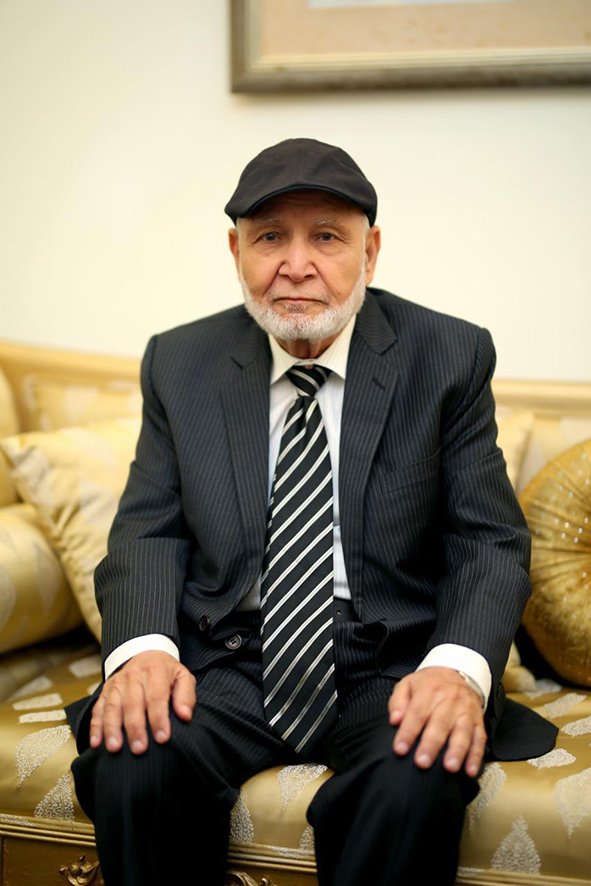
In Memory of Mohammad Akram Sheikh Chairman United Wire Industries
Mohammad Akram Sheikh Chairman United Wire Industries With profound sorrow, we remember Mr. Mohammad Akram…

IEEE Education Society Karachi Section Hosts Dr. Chi-Un Lei Webinar
Rethinking Graduate Education in Age of AI Chair IEEE Education Society, Karachi Section, Prof Dr…