
PAKISTAN
Federal Minister for National Food Security and Research, Rana Tanveer Hussain, met with the Canadian High Commissioner to Pakistan, H.E. Tarik Ali Khan, to discuss expanding bilateral cooperation in agriculture, food safety, and technology transfer. Both sides reaffirmed their commitment to strengthening agricultural trade and building a mutually beneficial partnership.
Minister Hussain emphasized that Pakistan and Canada share long-standing relations based on mutual respect and development cooperation, noting that agriculture remains a vital area of collaboration. He highlighted Pakistan’s growing food market and potential for agri-industrial development, with a population exceeding 250 million offering vast opportunities for Canadian exports and joint ventures in agri-technology, processing, and value addition.
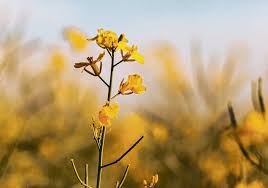
The Minister stated that Pakistan is actively working to diversify edible oil imports, reducing its heavy reliance on palm oil—valued at over USD 4 billion annually—and shifting towards canola and soybean oils, which are healthier and more sustainable. He added that domestic canola cultivation is being encouraged to boost farmer incomes, substitute imports, and promote local processing industries, with government support in technology transfer and market facilitation.
On trade facilitation, Minister Hussain informed the High Commissioner that the Ministry of Climate Change has approved 43 GMO events, and the final notification is under process. Once issued, this will enable clearance for GMO canola imports from Canada. He assured that all measures are aligned with international biosafety and food safety standards. Appreciating Canada’s offer to host a Pakistani delegation to visit Canadian laboratories and inspection facilities, he said such collaboration would build mutual trust and pave the way for lifting the current moratorium on GMO canola imports.
The Minister also proposed enhanced cooperation in hybrid seed development, livestock breeding, embryo transfer technology, and feed formulation. He expressed interest in joint ventures for agricultural machinery manufacturing, noting that Canadian expertise could help modernize Pakistan’s farming infrastructure. Furthermore, he sought Canada’s technical support in finalizing Pakistan’s BSE negligible risk dossier and Foot-and-Mouth Disease (FMD) control program, which would open doors to high-value global meat markets.
He appreciated the ongoing coordination with the Canadian Food Inspection Agency (CFIA) on veterinary health certification and the export of live animals, day-old chicks, and hatching eggs. He emphasized the importance of CFIA certification for expanding Pakistan’s exports of halal gelatin, sheep casings, and processed chicken, reaffirming Pakistan’s commitment to supplying safe and high-quality halal food products.
High Commissioner Tarik Ali Khan praised Pakistan’s growing agricultural potential and efforts to promote sustainable farming and food security. He said Canada values its partnership with Pakistan and sees strong prospects for expanding trade, particularly in oilseeds, pulses, cereals, and edible oils. He reaffirmed that Canada maintains world-class biosafety standards and expressed confidence that closer regulatory cooperation will facilitate the resumption of GMO canola imports.
The High Commissioner invited Pakistan to participate in the 19th Annual Canadian Summit on Food Safety (April 8–9, 2026) and confirmed a Canadian delegation’s participation in the Pakistan Edible Oil and Seed Exporters Conference in January 2026. He also shared Canada’s success in food processing—particularly in French fries, frozen vegetables, and value-added products—and offered to share Canadian technology and expertise to strengthen Pakistan’s agro-industrial sector.
Concluding the meeting, Minister Rana Tanveer Hussain welcomed Canada’s proposals and suggested forming a Joint Working Group (JWG) to follow up on certification, market access, and technical cooperation. He reaffirmed Pakistan’s determination to expand agricultural trade with Canada, focusing on technology transfer, food safety, and sustainable resource management.
Both sides agreed to maintain close coordination through regular consultations and exchange of delegations to further deepen agricultural and economic ties between the two friendly nations. – PID/ERMD
LATEST
Zong Launches 5G Home Broadband Service in Pakistan
Zong has launched Z HomeFi, a 5G fixed wireless access (FWA) home broadband service, aiming…

BYD Eyes Ultra-Fast EV Charging Technology for Pakistan
Chinese electric vehicle (EV) manufacturer BYD is in discussions with its Pakistani partner, Mega Motor…

Game-Based Digital Therapies Show Mixed Results in Treating Children with ADHD
Stimulant medications are among the most common treatments for children with attention-deficit/hyperactivity disorder (ADHD), helping…

Henri Kagan and Kenso Soai Awarded 2026 Nobel Prize in Chemistry
Scientists Henri Kagan and Kenso Soai have been awarded the 2026 Nobel Prize in Chemistry…
In Memory of Mohammad Akram Sheikh Chairman United Wire Industries
Mohammad Akram Sheikh Chairman United Wire Industries With profound sorrow, we remember Mr. Mohammad Akram…
IEEE Education Society Karachi Section Hosts Dr. Chi-Un Lei Webinar
Rethinking Graduate Education in Age of AI Chair IEEE Education Society, Karachi Section, Prof Dr…