
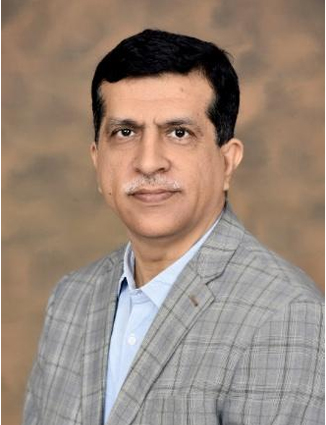
By Prof. Dr. Tariq Rahim Soomro, SMIEEE
For the past few years, I have watched a quiet panic spread through faculty lounges and administrative meetings. The catalyst is Large Language Models (LLMs) like ChatGPT, Gemini, DeepSeek, and Claude. The initial reaction—widespread bans, AI detectors, and threats of academic integrity violations—was understandable, but misguided. As a computer scientist and an academician, I argue that this “blockade mindset” is not only pointless, but actively harmful to our students and our institutions. We are failing our students because we are clinging to a pre-digital pedagogy. If higher education is to survive the AI era, faculty members must stop policing and start teaching. We need a fundamental shift from a mindset of prohibition to a mindset of integration and embracement.
The Current Mindset
The prevailing logic among many faculty members is that if a student uses AI to generate text or code, the student has not learned. This rests on an outdated assumption that “thinking” is solely a solitary, slow, and struggle-filled process. Consequently, top management has wasted millions on ineffective “AI detection” software—tools that are notoriously biased against non-native English speakers and easily fooled. This mindset fails for three reasons. First, AI is now a background utility, like electricity or the Internet; you cannot ban it in the dorm room, while allowing it in the library. Second, the modern workplace explicitly requires AI literacy. By banning AI, we are sending graduates into a workforce, where they are less productive than their peers. Third, the “gotcha” model of education destroys trust. When students fear punishment for using the best tool available, they hide their usage rather than learning ethical applications.
The Future Mindset
The future university must view AI not as a cheating device, but as a cognitive exoskeleton—a tool that enhances, rather than replaces, human reasoning. This requires a complete redesign of assessment and pedagogy, especially from primary education to higher education.
Faculty members must adopt “process-oriented” teaching methodologies. Instead of grading a final essay, we should grade the dialogue between the student and the AI. For example, in computer science, asking a student to write a sorting algorithm from scratch is now a waste of time. Instead, ask them to use AI to generate three different sorting algorithms, then write a critical report on their time complexity, memory usage, and edge cases. The student learns architecture and evaluation, which are higher-order skills than syntax memorization.
Logical Reasonings
Banning AI in education is equivalent to banning calculators in the 1980s after the invention of the microprocessor. Initially, math teachers worried students would forget arithmetic. They were right—students stopped doing long division by hand. But they learned algebra, calculus, and statistics. The goal shifted from computation to application. Similarly, we must shift from information retrieval to information synthesis. AI is here; it is not leaving. Our choice is not whether students use it, but whether they use it intelligently.
Prohibiting AI tools actively harms disadvantaged students. Wealthy students will always have access to private tutors and undetectable, premium AI models. Poor students, relying on outdated library terminals and university proctoring software, will be left behind. By officially allowing and teaching AI use, level the playing field. When an institution provides a standard AI tool and trains everyone to use it, we eliminate the underground economy of cheating and replace it with transparent skill-building.
The traditional lecture—where a professor distributes facts that students regurgitate—is obsolete. AI is a better fact-dispenser than any human. The unique value of a human professor is now context, ethics, and creativity. We must teach students how to ask the right questions (prompt engineering), how to verify answers (lateral reading), and how to apply solutions to messy, real-world problems (experiential learning). Faculty who refuse to adopt these methodologies are not protecting standards; they are renouncing their only remaining unique value proposition.
For university top management, the risk is existential. If you maintain that a degree represents “knowledge earned without AI assistance,” you will lose the market. Corporate recruiters already report that they prefer candidates with proven AI augmented workflow skills over traditional high-GPA candidates. If universities do not certify AI literacy, private bootcamps and corporate academies will. Management must rewrite academic integrity policies to define unauthorized AI use (e.g., copying without attribution) versus authorized use (e.g., brainstorming or first draft generation). Faculty must be given release time and training to redesign 20 30% of their assessments for this new paradigm.
A Call to Action To my fellow faculty
Stop asking “How do I catch them?” and start asking “How do I challenge them?” Design assignments, where raw AI output is a starting line, not a finish line. To administrators: Fund faculty development, not surveillance software. Change the honor code to reward transparency. The AI era does not spell the end of higher education. It spells the end of lazy higher education. The professors who will thrive are those who treat AI as a co-pilot. The institutions that will lead are those that change their mindset from prohibition to permission (positive integration). Let us not be the gatekeepers of a dead past. Let us be the architects of an augmented future.
Disclaimer: Article is fine-tuned using DeepSeek. Prof. Dr. Tariq Rahim Soomro, is the Rector, at the Institute of Business Management (IoBM), Karachi and is having more than 31 years of experience in academia and industry. He can be reached at tariqsoomr@gmail.com
READ MORE
40 Major Media Groups Join Coalition to Protect Journalism from AI Copyright Violations
Forty major media organisations, including The New York Times, The Economist and Agence France-Presse (AFP),…
Zong Launches 5G Home Broadband Service in Pakistan
Zong has launched Z HomeFi, a 5G fixed wireless access (FWA) home broadband service, aiming…
BYD Eyes Ultra-Fast EV Charging Technology for Pakistan
Chinese electric vehicle (EV) manufacturer BYD is in discussions with its Pakistani partner, Mega Motor…
Game-Based Digital Therapies Show Mixed Results in Treating Children with ADHD
Stimulant medications are among the most common treatments for children with attention-deficit/hyperactivity disorder (ADHD), helping…
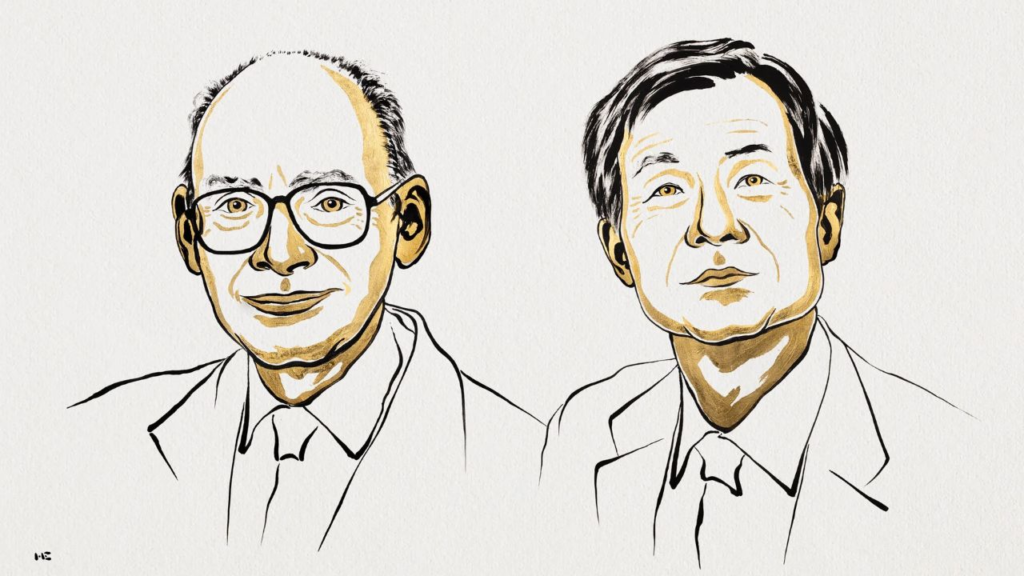
Henri Kagan and Kenso Soai Awarded 2026 Nobel Prize in Chemistry
Scientists Henri Kagan and Kenso Soai have been awarded the 2026 Nobel Prize in Chemistry…

In Memory of Mohammad Akram Sheikh Chairman United Wire Industries
Mohammad Akram Sheikh Chairman United Wire Industries With profound sorrow, we remember Mr. Mohammad Akram…