

Regular aerobic exercise may help reduce some of the harmful effects associated with exposure to nanoplastics, according to a study by researchers from Wenzhou University and the University of Hong Kong.
Nanoplastics are extremely small plastic particles that can form as larger plastic products such as bottles, food containers and packaging break down. Researchers have raised concerns that these particles can enter the human body through food and other sources and may travel through the bloodstream to different organs.
In the study, Chinese researchers examined the effects of nanoplastic exposure in fish and found that the particles accumulated in the ovaries and interfered with reproductive hormones. The exposed animals also showed changes in behaviour and increased levels of stress hormones.
The research, published by the Federation of American Societies for Experimental Biology (FASEB), found that aerobic exercise appeared to lessen several of these effects. Activities that increase cardiovascular activity, such as running, cycling and other forms of aerobic exercise, were associated with reduced biological changes caused by nanoplastic exposure.
The researchers also observed that exercise helped reverse disruptions to the gut microbiome linked to the presence of nanoplastics in the digestive system. They described aerobic exercise as a potential “exposure modifier” that could influence how the body responds to nanoplastic exposure.
However, the findings are based on experiments in fish and do not establish that exercise can prevent or reverse nanoplastic-related health effects in humans. Further research will be needed to determine whether similar effects occur in people.
The study comes amid growing concern over the long-term presence of microplastics and nanoplastics in the environment. Researchers continue to investigate how widespread exposure may affect human health and whether lifestyle or environmental measures can reduce potential risks.-ERMD/TS
READ MORE
Zong Launches 5G Home Broadband Service in Pakistan
Zong has launched Z HomeFi, a 5G fixed wireless access (FWA) home broadband service, aiming…

BYD Eyes Ultra-Fast EV Charging Technology for Pakistan
Chinese electric vehicle (EV) manufacturer BYD is in discussions with its Pakistani partner, Mega Motor…

Game-Based Digital Therapies Show Mixed Results in Treating Children with ADHD
Stimulant medications are among the most common treatments for children with attention-deficit/hyperactivity disorder (ADHD), helping…

Henri Kagan and Kenso Soai Awarded 2026 Nobel Prize in Chemistry
Scientists Henri Kagan and Kenso Soai have been awarded the 2026 Nobel Prize in Chemistry…

In Memory of Mohammad Akram Sheikh Chairman United Wire Industries
Mohammad Akram Sheikh Chairman United Wire Industries With profound sorrow, we remember Mr. Mohammad Akram…
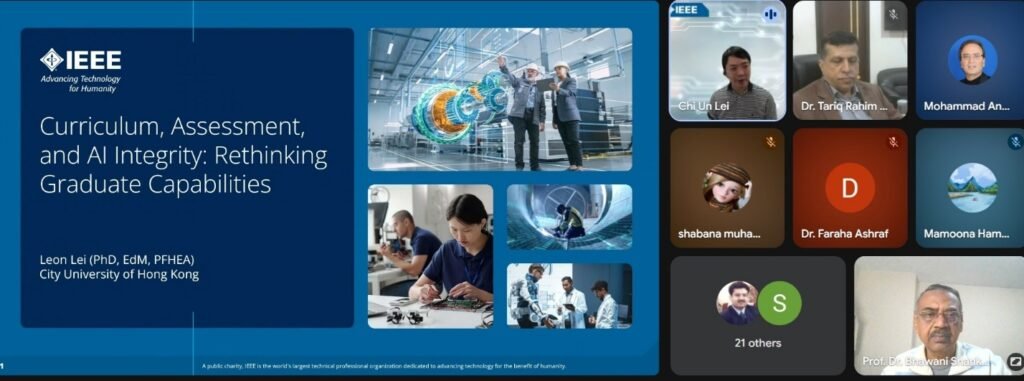
IEEE Education Society Karachi Section Hosts Dr. Chi-Un Lei Webinar
Rethinking Graduate Education in Age of AI Chair IEEE Education Society, Karachi Section, Prof Dr…