
Artificial intelligence has reached a new milestone after two Chinese technology companies announced that their AI models achieved perfect scores at this year’s International Mathematical Olympiad (IMO), one of the world’s most prestigious mathematics competitions.
Huawei and Xiaohongshu said their AI systems each scored 100 per cent on the same problems given to contestants at the 2026 IMO, marking the first time AI models have reportedly achieved full marks under the competition’s official judging process. The companies were the first to announce their results, although other AI developers are expected to release their scores in the coming days.
Xiaohongshu said its model, dots-note-3.0, demonstrated that large language models are now capable of solving the competition’s most difficult mathematical problems without human assistance. The company noted that no previous large language model had achieved a perfect score under the IMO’s official evaluation process. Huawei said its AI system, Celia, showed strong problem-solving capabilities across a range of advanced mathematical disciplines.
This year’s Olympiad, held in Shanghai, featured 666 contestants from around the world, with only seven human participants achieving perfect scores, according to the official scoreboard. Contestants, all under the age of 20, completed the examination before AI companies received the questions. The firms said their models solved the problems within the official time limit and without any human intervention before their answers were submitted for grading.
The achievement marks another significant step in AI’s rapid progress. In 2025, AI models developed by Google and OpenAI reached gold medal-level performance but fell short of perfect scores. Deedy Das, a partner at US investment firm Menlo Ventures, said he independently tested this year’s IMO questions on four leading AI models from OpenAI, Anthropic, Axiom Math and China’s Moonshot AI, with each reportedly scoring the maximum 42 points, describing the development as evidence that the “frontier of AI” has moved beyond Olympiad-level mathematics. – ERMD
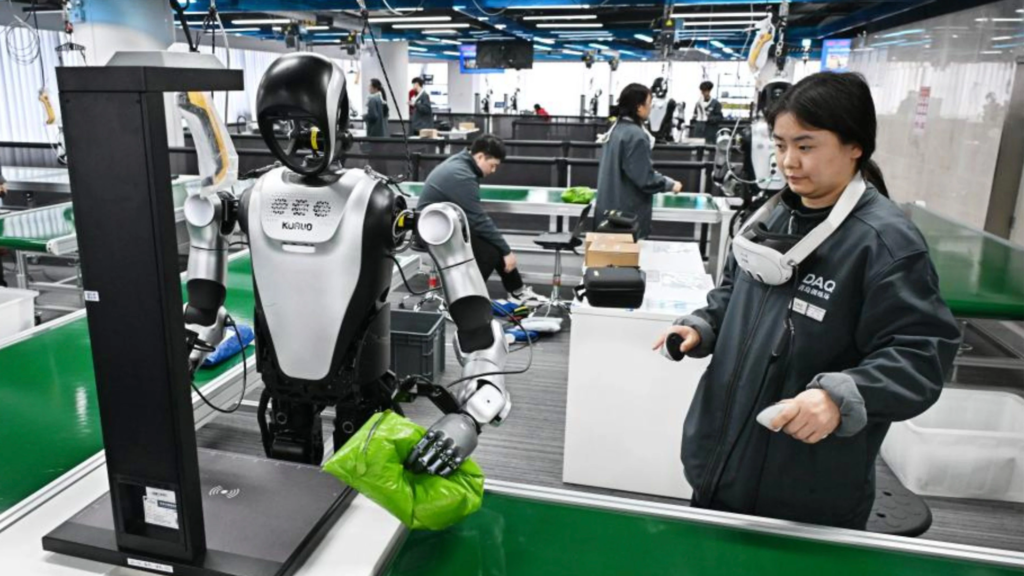
China’s Robot Trainers Turn Household Chores into AI Training Data
Across China, a growing number of freelance workers are training robots by performing everyday household…
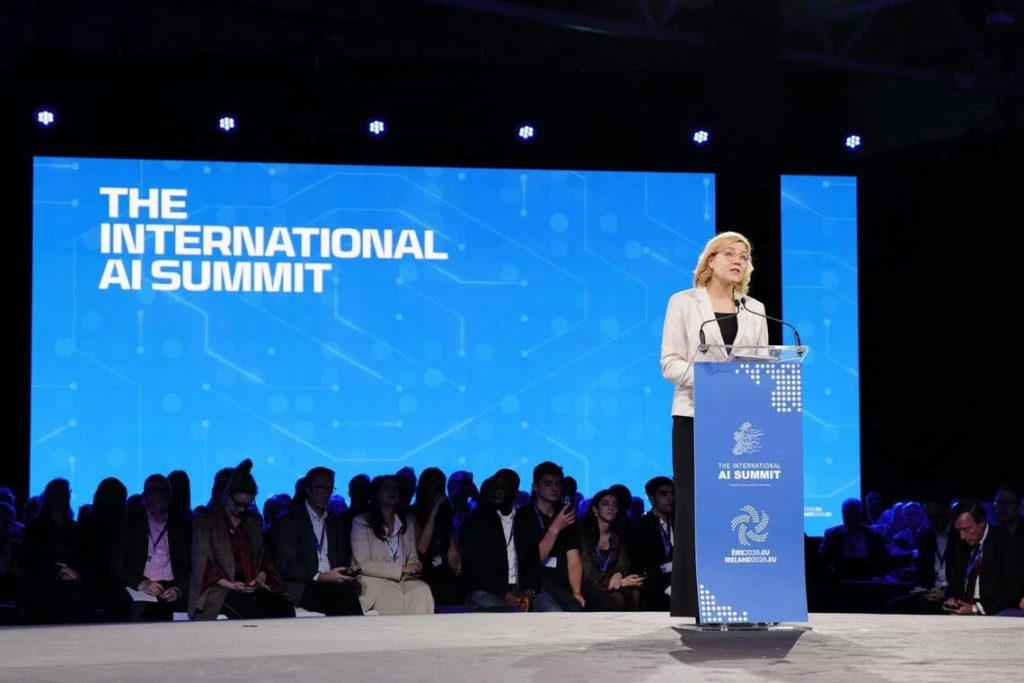
AI Safety Concerns Dominate Dublin Summit as Experts Warn of Emerging Threats
Artificial intelligence safety emerged as a major concern at an industry summit in Dublin on…

40 Major Media Groups Join Coalition to Protect Journalism from AI Copyright Violations
Forty major media organisations, including The New York Times, The Economist and Agence France-Presse (AFP),…

Zong Launches 5G Home Broadband Service in Pakistan
Zong has launched Z HomeFi, a 5G fixed wireless access (FWA) home broadband service, aiming…
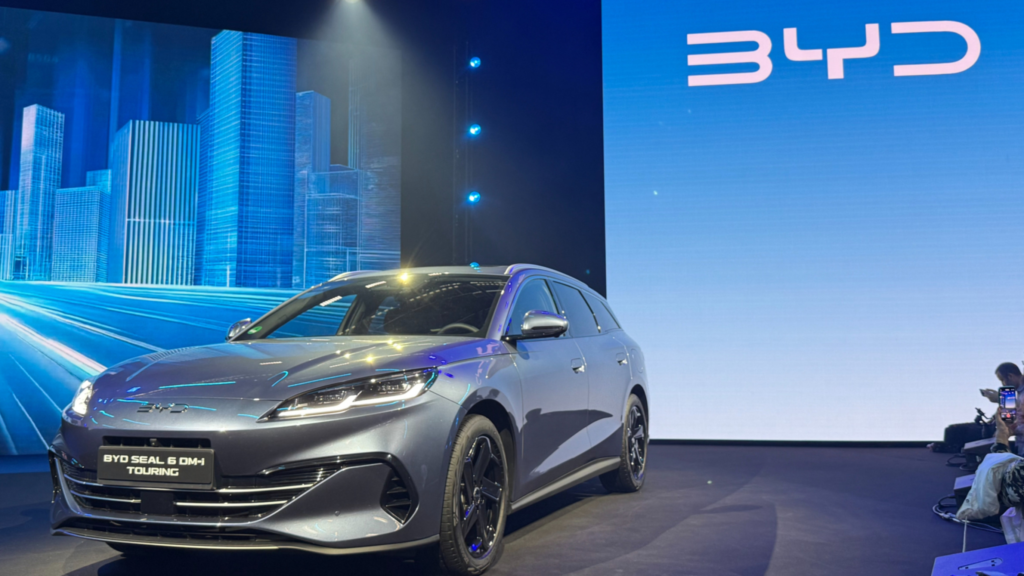
BYD Eyes Ultra-Fast EV Charging Technology for Pakistan
Chinese electric vehicle (EV) manufacturer BYD is in discussions with its Pakistani partner, Mega Motor…
Game-Based Digital Therapies Show Mixed Results in Treating Children with ADHD
Stimulant medications are among the most common treatments for children with attention-deficit/hyperactivity disorder (ADHD), helping…