

Pakistan is moving towards opening its telecommunications market to low Earth orbit (LEO) satellite broadband operators, marking a major shift in the country’s approach to satellite connectivity.
For decades, satellite communications were largely focused on business services, while the Space and Upper Atmosphere Research Commission (Suparco) managed space assets and the Pakistan Telecommunication Authority (PTA) regulated terrestrial communications. The emergence of LEO broadband has created a need for a dedicated regulatory framework.
The process gained momentum after Starlink engaged with the PTA in 2021. Pakistan approved its National Space Policy in December 2023, followed by Pakistan Space Activities Regulatory Board (PSARB) rules. In April 2026, the PTA finalised a licensing framework that formally recognised satellite broadband as a service category.
The licence permits broadband, backhaul, bandwidth provision and corporate intranet services, but excludes direct-to-device connectivity, mobile satellite services, Earth stations in motion and broadcasting.
Operators must be locally incorporated and establish a gateway earth station in Pakistan within 18 months. Domestic traffic must pass through the gateway, while user data must remain in the country. They must also provide lawful interception capabilities to enable authorised monitoring of specific users.
Commercial terms include a one-time licence fee of $500,000 and recurring charges of about 2.5pc of annual gross revenue, covering spectrum and Universal Service Fund contributions. An additional 6pc levy will support space development research.
The framework excludes Azad Jammu and Kashmir and Gilgit-Baltistan from the licensed service area, despite their potential need for satellite connectivity due to limited terrestrial infrastructure.
Several international operators, including Starlink, Amazon’s Project Kuiper and China’s Qianfan, have expressed interest in entering the Pakistani market.
The remaining step is the detailed regulatory framework from PSARB. The board has sought recommendations from London-based Access Partnership, but the framework is yet to be finalised. Its completion will determine when commercial LEO broadband services can begin in Pakistan. – ERMD
READ MORE

China’s Robot Trainers Turn Household Chores into AI Training Data
Across China, a growing number of freelance workers are training robots by performing everyday household…
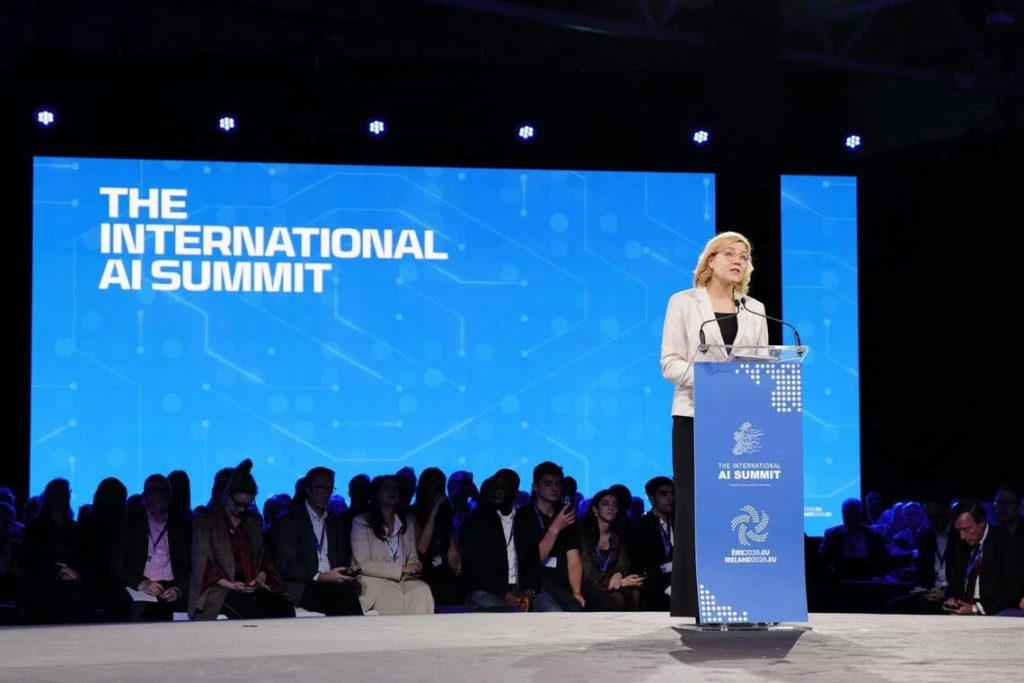
AI Safety Concerns Dominate Dublin Summit as Experts Warn of Emerging Threats
Artificial intelligence safety emerged as a major concern at an industry summit in Dublin on…

40 Major Media Groups Join Coalition to Protect Journalism from AI Copyright Violations
Forty major media organisations, including The New York Times, The Economist and Agence France-Presse (AFP),…
Zong Launches 5G Home Broadband Service in Pakistan
Zong has launched Z HomeFi, a 5G fixed wireless access (FWA) home broadband service, aiming…

BYD Eyes Ultra-Fast EV Charging Technology for Pakistan
Chinese electric vehicle (EV) manufacturer BYD is in discussions with its Pakistani partner, Mega Motor…

Game-Based Digital Therapies Show Mixed Results in Treating Children with ADHD
Stimulant medications are among the most common treatments for children with attention-deficit/hyperactivity disorder (ADHD), helping…